

Antique Semainier
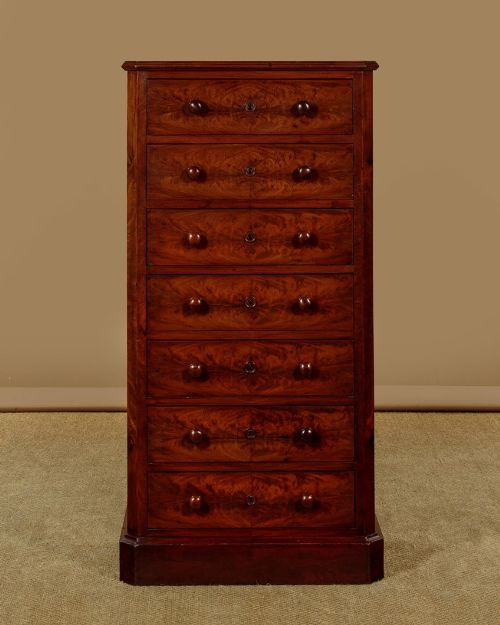
An antique semainier provides seven slim drawers for the week's storage, combining French vertical elegance with practical height.
Antique Semainier
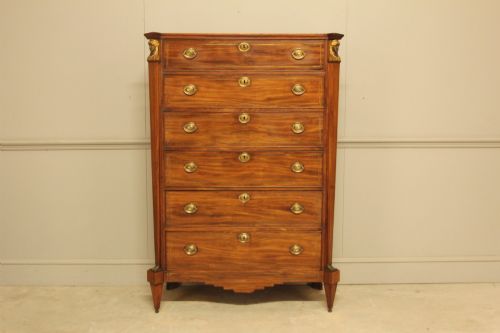
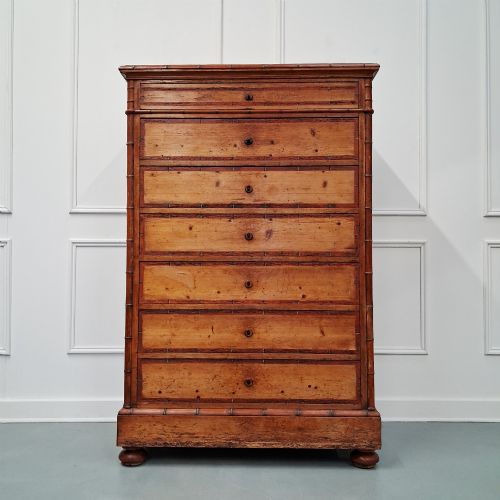
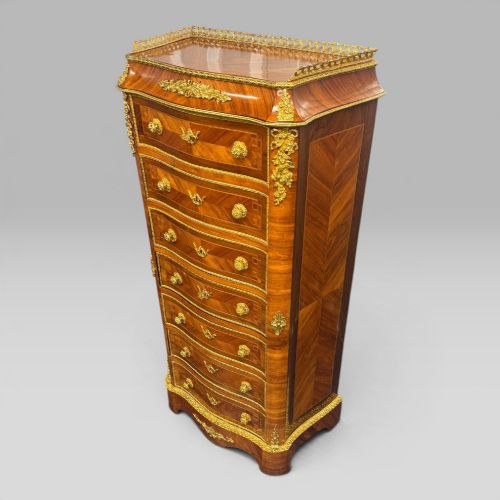
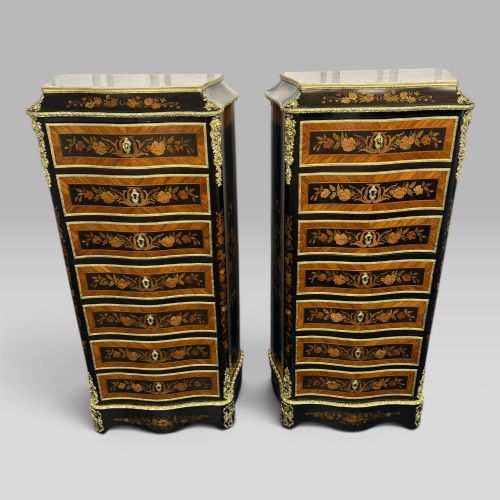
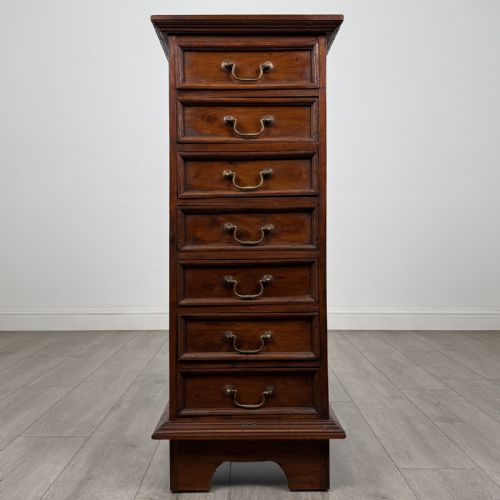
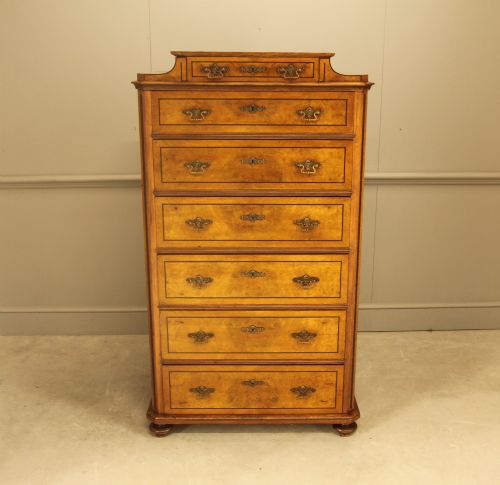
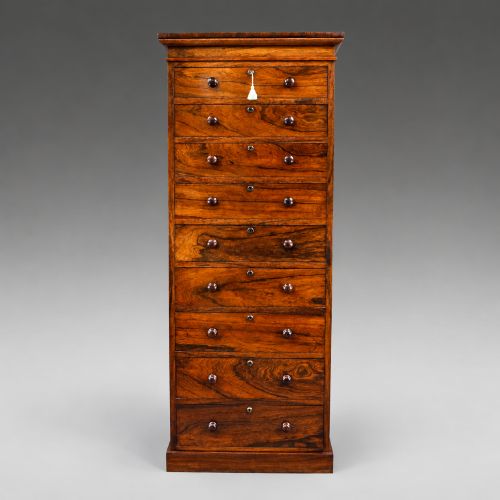
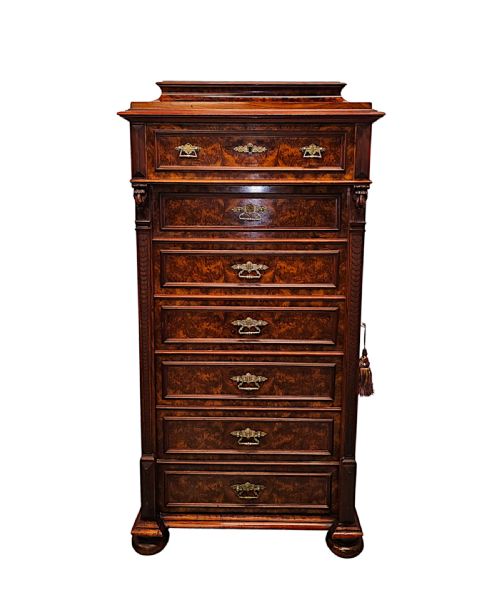
An antique semainier is a tall, narrow chest traditionally designed with seven drawers, one for each day of the week. This form appears across the nineteenth century and into the twentieth, frequently taking the guise of a French tall chest, a Wellington chest, or a pillar chest.
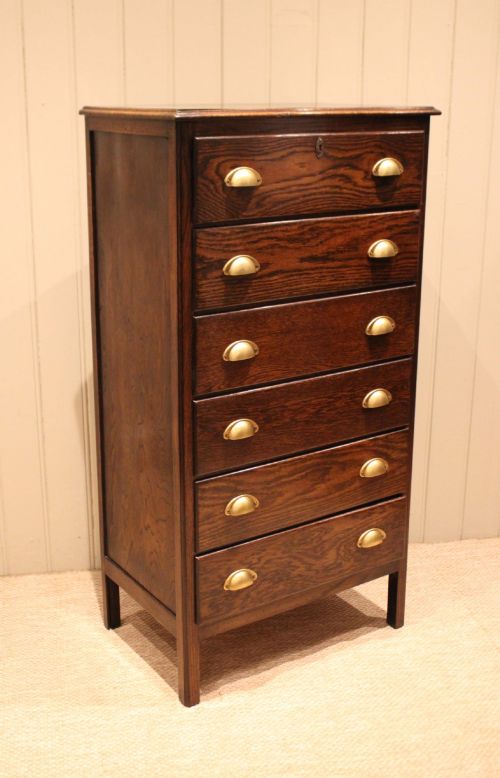
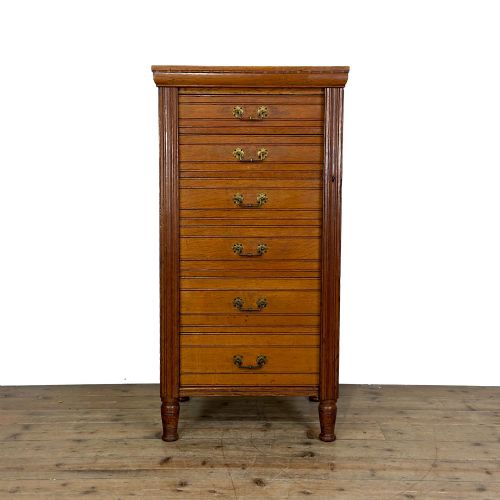
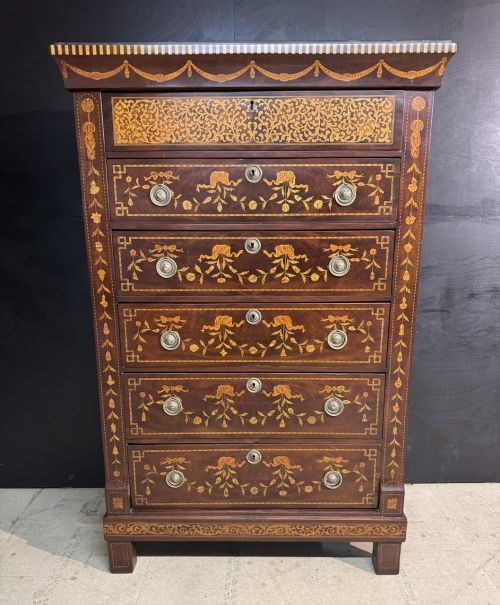
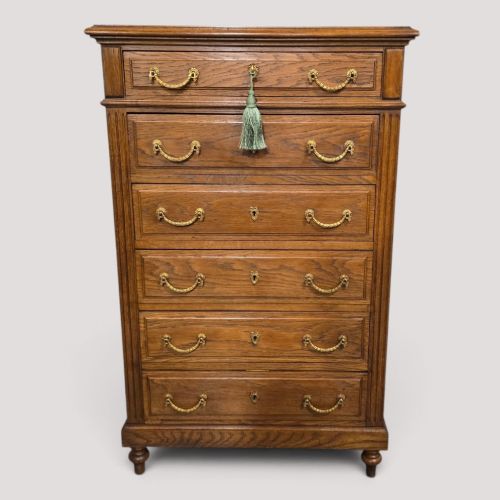
Buyers will encounter various regional interpretations on this page, ranging from French walnut and mahogany examples to British Victorian mahogany and oak pieces. These cabinets make efficient use of floor space while offering substantial vertical storage capacity in bedrooms or studies.
The tall proportions define the type, often paired with marble tops in French iterations or secure locking mechanisms in British Wellington chests. Walnut, mahogany, and oak form the primary timber vocabulary across these varied continental and domestic workshops.
Materials and Construction
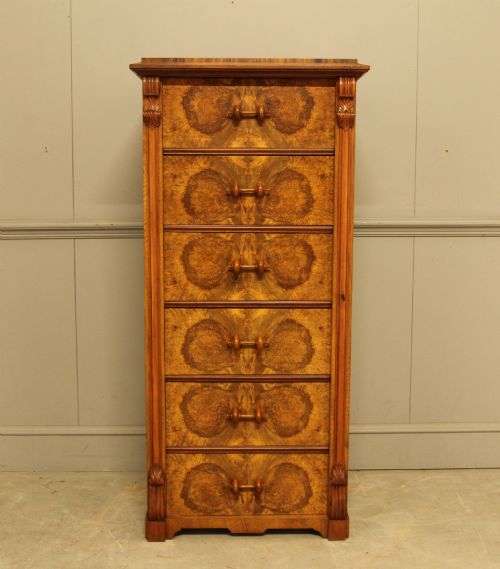
Cabinetmakers utilised dense hardwoods such as mahogany, walnut, and rosewood, frequently applying burr walnut veneer, marquetry, or parquetry to the exterior surfaces. Brass hardware and inset marble tops appear regularly, adding weight and contrasting texture to the polished timber bodies.
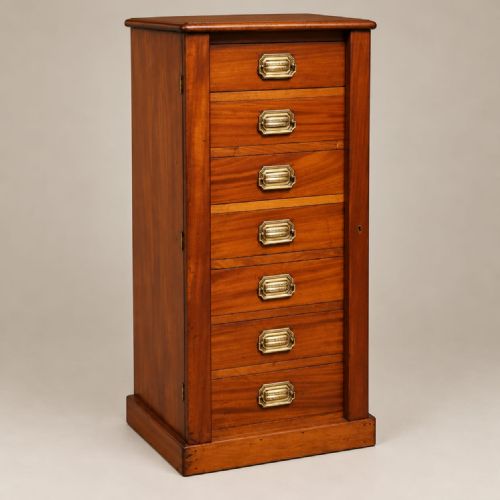
Joinery follows traditional carcass construction with dovetailed drawer boxes and fitted locking stiles, particularly in Wellington chests where a hinged side pilaster secures all drawers simultaneously. Frame and panel methods accommodate seasonal wood movement in larger oak and mahogany chests.
Antique Semainier Retail Price Guide 2026
Typical asking prices for semainier among the pieces listed under this phrase on Sellingantiques today, from the lower quarter to the upper quarter. They describe what is for sale here now, not the wider market.
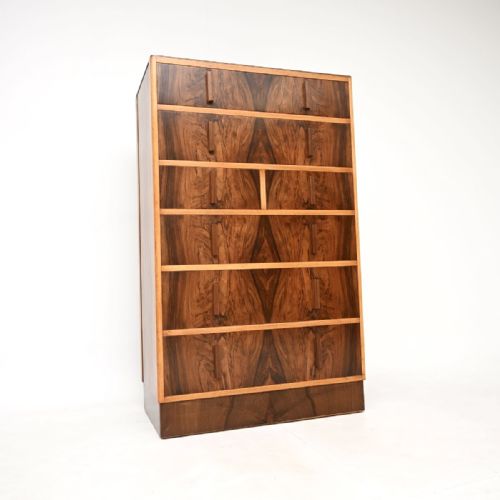
Listings span the nineteenth and twentieth centuries, featuring periods from Victorian and Edwardian to Art Deco and French Empire.
Evaluating Craftsmanship
Quality rests upon the selection of timber figures, where matched burr veneers or continuous grain patterns across the drawer fronts elevate a piece above standard stock. The crispness of marquetry inlay and the precise fitting of secondary woods inside the drawers demonstrate the maker's hand.
Structural integrity reveals itself in the smooth action of the seven drawers and the condition of original locking mechanisms. Pieces retaining their fitted marble tops, original brass mounts, and unbroken veneer surfaces command greater appreciation.
Gillows·Maple and Co·Betty Joel
The Antique Semainier Glossary
- Semainier
- A tall, narrow seven-drawer chest originating in France, traditionally intended to hold a week's supply of linen or garments.
- Wellington Chest
- A sturdy British tall chest featuring a hinged locking flap on the right side that secures every drawer in place.
- Marquetry
- Decorative patterns formed by fitting together thin veneers of different coloured woods, ivory, or shell onto a carcass.
- Parquetry
- A geometric mosaic of wood pieces used for decorative floors and cabinet surfaces, creating repeating patterns like cubes or chequers.
- Pillar Chest
- A tall, cylindrical or column-like chest of drawers designed for narrow spaces, often executed in mahogany or rosewood.
Antique Semainier: Frequently Asked Questions
What is a semainier used for?
Originally designed in France to hold seven days of clothing or linen, each drawer corresponding to a specific day of the week.
Today, they serve as versatile tall storage chests for bedrooms or tight spaces where floor area is restricted.
How do I spot a Wellington chest?
A Wellington chest is identified by its tall, narrow proportions and a hinged vertical locking bar on the side.
Swinging this locking bar open allows the drawers to be pulled out, a design originally intended to secure valuables.
Are these pieces French or British?
The listings include both French semainiers and British Wellington chests, alongside Dutch marquetry and Swedish walnut examples.
French versions frequently feature marble tops and rich veneers, while British pieces rely on solid mahogany or oak.
How do I fit a tall chest into a room?
Their narrow footprint allows them to occupy tight wall spaces or corners where standard wide chests cannot fit.
Pairing them beside a bed or in a dressing alcove makes efficient use of their vertical height without dominating the room.