
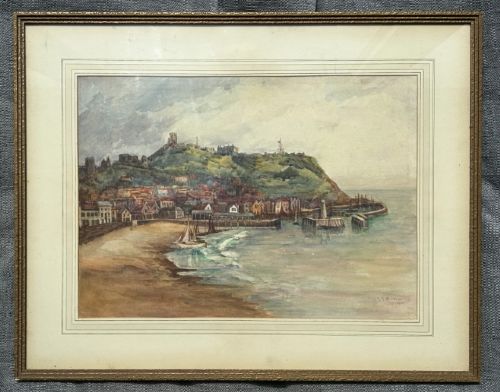


Yorkshire Watercolour Painting
A yorkshire watercolour painting captures the changing light of northern coasts and dales through historic pigments laid down on paper.
Yorkshire Watercolour Painting
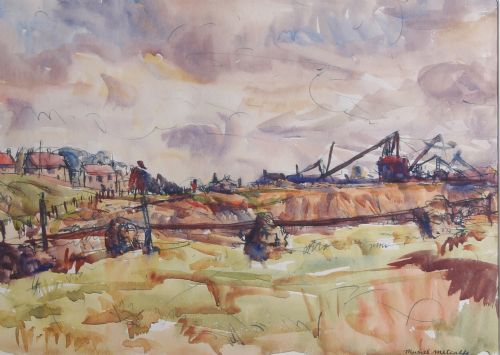
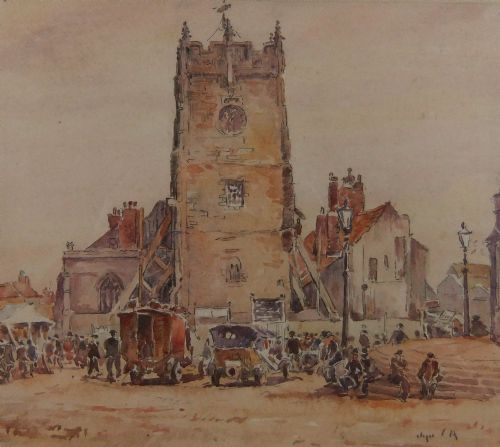
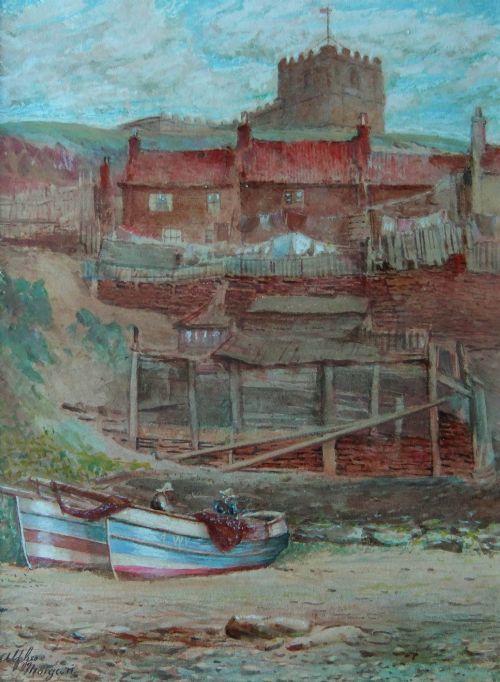
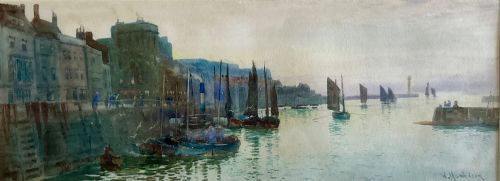
A yorkshire watercolour painting depicts the distinctive landscapes, maritime scenes, and historic architecture of the northern county from the nineteenth and twentieth centuries. The examples encountered on this page range from Victorian views of Whitby harbour and ruined abbeys to mid-century rural scenes of the Yorkshire Dales and Wharfedale.
The subjects focus heavily on coastal villages like Staithes and Robin Hood's Bay, alongside inland landmarks such as Bolton Castle and Richmond. Artists frequently recorded local industry, from herring drifters and fishing dockyards to harvesting in rural fields and cottages nestled in deep valleys.
Most surviving pieces date from the early twentieth century and the Victorian era, executed on paper as framed paintings. These works vary from detailed topographical records to atmospheric interpretations influenced by British impressionism and modern British movements.
How They Were Made
These watercolours rely on delicate pigments suspended in water, applied directly to absorbent paper supports using fine brushes. Artists built up transparent washes of colour to capture coastal mist, river valleys, and changing cloud formations over the moors.
Many works incorporate touches of ink or bodycolour to define architectural details in historic abbey ruins and crowded fishing ports. Framing behind glass protected the water-soluble pigments from moisture and fading over generations.
Several coastal watercolours preserve the exact grit of sea salt and sand swept up by nineteenth-century gales.
What Varies in Quality
Quality rests on the artist's command of light and atmospheric perspective, distinguishing a flat topographical record from a living coastal or moorland view. Master hands use the white of the paper purposefully to generate luminosity in skies and foaming water.
Compositional strength and confident brushwork separate accomplished painters from casual jobbing artists of the period. The best sheets demonstrate economy of line and an assured balance between architectural structures and natural landscapes.
Alfred George Morgan·Fred Lawson·George Graham·John Syer·Joseph Pighills
The Yorkshire Watercolour Painting Glossary
- Watercolour
- A paint consisting of pigment suspended in a water-based solution, applied to paper. It allows for transparent washes that let the bright white of the paper shine through the pigment layers.
- Bodycolour
- Watercolour paint mixed with a white pigment to make it opaque. Artists used this technique to add highlights and solid areas of light to skies and crashing waves.
- Diptych
- A painting comprising two separate panels or sheets hinged or displayed together. These works often show paired views of local landmarks such as abbey ruins and adjacent churchyards.
- Seascape
- A work depicting the sea, coastal cliffs, harbours, and maritime activity. These subjects were particularly popular among artists working along the Yorkshire coast.
- Topographical
- Representing specific real-world places, buildings, and local views with descriptive accuracy. These paintings serve as historical records of towns and villages before later development.
Yorkshire Watercolour Painting: Frequently Asked Questions
What subjects appear most often?
The compositions focus heavily on northern coastal scenes, fishing ports, and ruined abbeys. Artists frequently painted Whitby harbour, Staithes, and the rolling expanses of Wensleydale.
Inland views also feature rural villages, stone bridges, and farming landscapes across the Yorkshire Dales. Historic townscapes in York and Richmond recur throughout the period.
How do I date a piece?
Dating relies on stylistic clues, framing materials, and inscribed signatures or dates left by the artist. Victorian examples tend towards tighter architectural detail and darker nineteenth-century palettes.
Early twentieth-century works often adopt looser brushwork associated with British impressionism. Mid-century pieces introduce brighter tones and simplified forms characteristic of later regional art.
Where should I hang these?
Watercolours require careful placement away from direct sunlight to prevent the pigments from fading over time. Hanging them in dim hallways or controlled interior lighting preserves the delicate washes of colour.
They pair well with traditional or contemporary interiors when mounted behind protective glass with neutral framing. Keeping them away from damp walls protects the underlying paper support.
Who were these artists?
The creators include local northern painters who lived and worked in the county, alongside visiting artists drawn to the dramatic coastline. Many exhibited widely and specialised in capturing regional landscapes and maritime life.
Some developed lifelong associations with specific villages like Staithes or Haworth, documenting rural trades and changing seasonal weather.