

Rural Countryside Painting
A rural countryside painting captures the quiet of fields, rivers and village lanes, offering a lasting window into past pastoral life.
Rural Countryside Painting
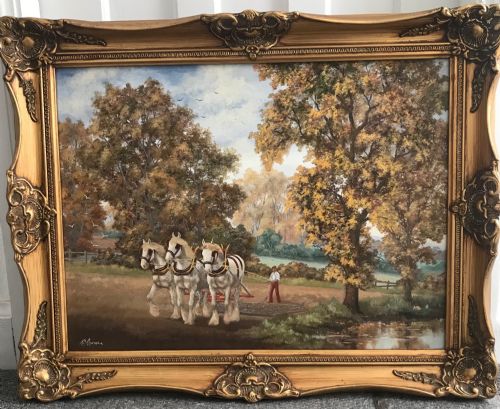
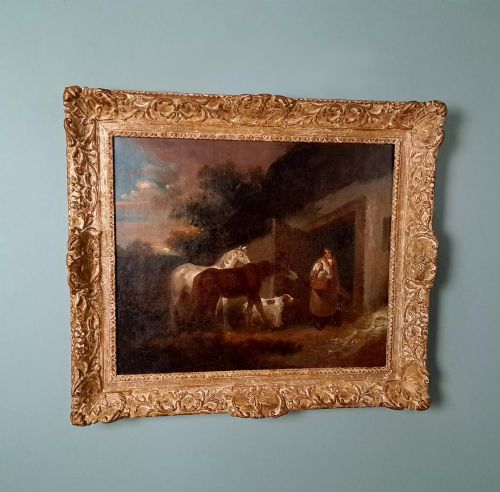
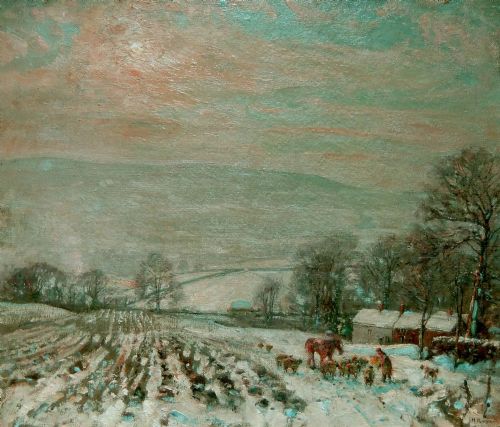
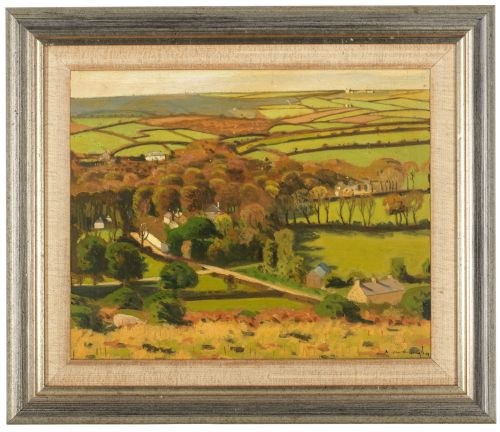
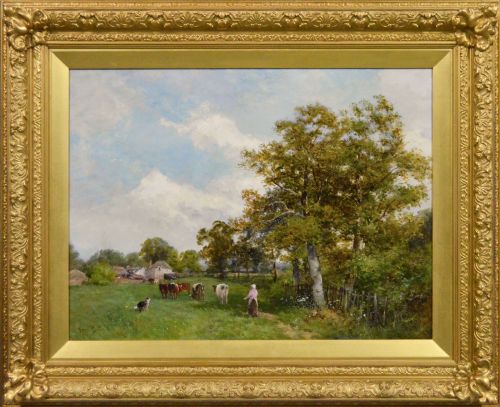
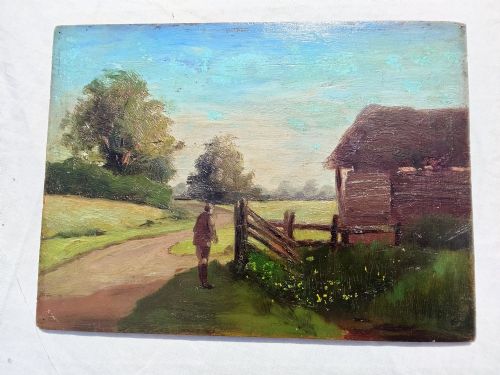
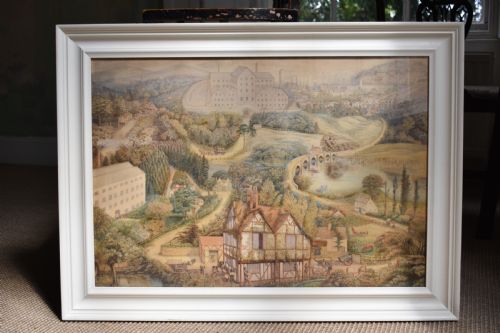
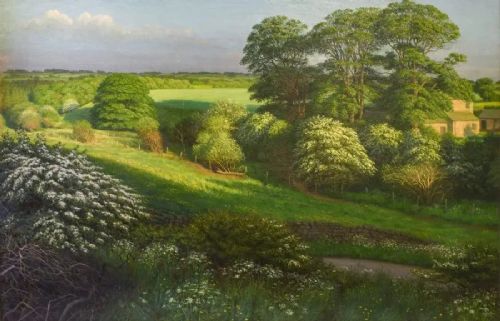
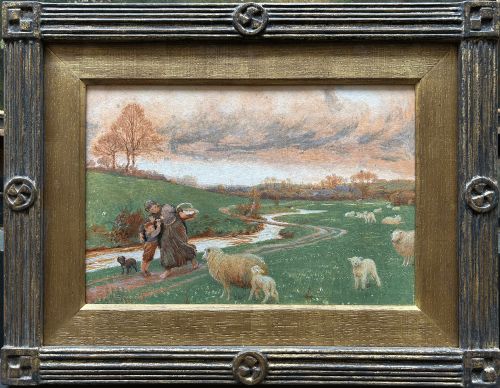
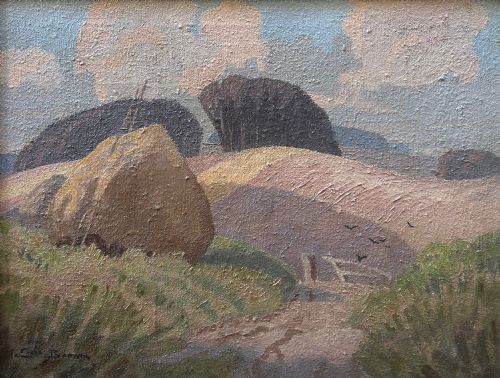
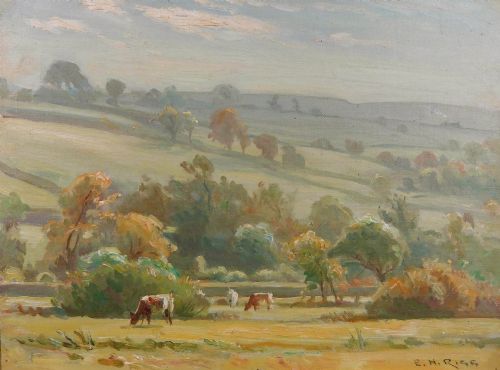
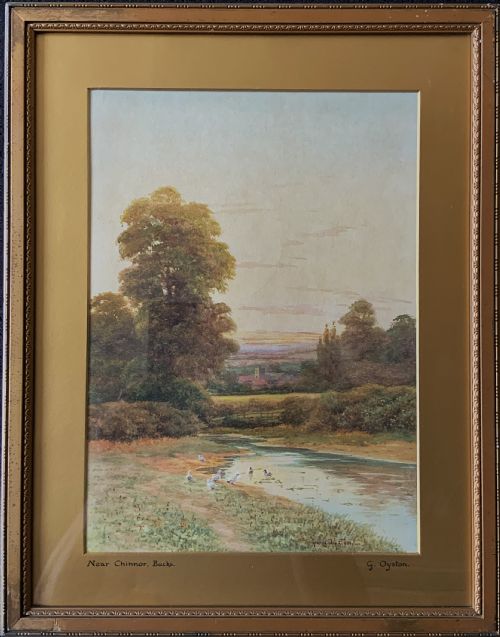
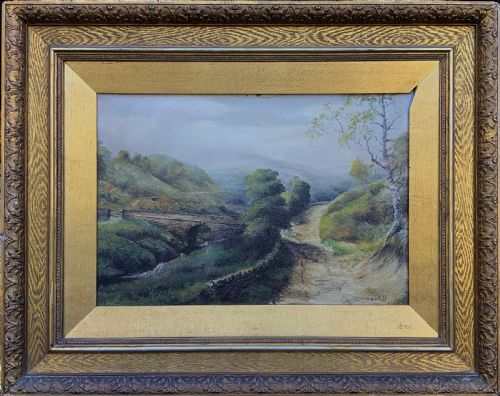
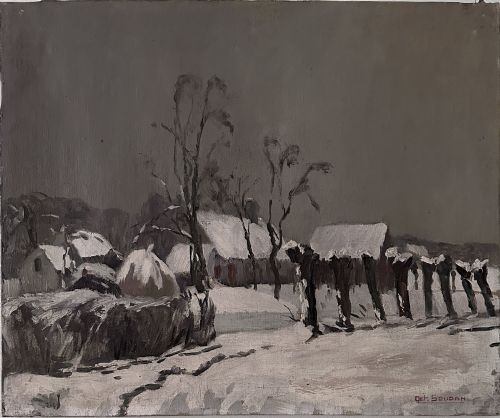
A rural countryside painting depicts fields, farms, rivers and country lanes, often populated by figures, livestock or working horses. These artworks range from intimate watercolours on paper to large oil paintings on canvas or wooden board.
The pieces available span the nineteenth century through the mid twentieth century, encompassing Victorian pastoral scenes, Edwardian views and British Impressionist interpretations. Landscapes often record specific local geographies, from Yorkshire dales and Cornish country lanes to Kentish pastures and riverside cottages.
How they were made
Artists relied primarily on oil paint applied to canvas or wooden board, as well as watercolour paint on paper, framed behind glass. Canvas surfaces allowed for rich, layered brushwork that built up texture in foliage, earth and skies.
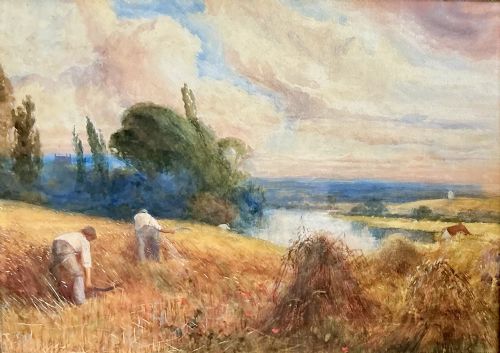
Watercolour works utilised fluid washes of pigment on paper to capture the changing light of rural weather, riverbanks and harvested fields. Many pieces were housed in period wood frames that complemented the tonal depth of the landscape.
Several canvases faithfully record sheep crowding narrow country lanes, ensuring the traffic jams of the past involved wool rather than wheels.
What varies in quality
Quality rests upon the artist's handling of light, atmosphere and spatial depth, distinguishing a compelling composition from a routine topographical record. Masterful brushwork gives vitality to water, foliage and animal forms, whereas weaker examples rely on rigid lines and flat colour.
The preservation of the pigment and the original substrate determines the enduring clarity of the scene. Well maintained oils retain their depth without extensive overpainting, and watercolours maintain their subtle hues without excessive fading from sunlight.
William Joseph Shayer Senior·Herbert Royle·Robert Morson Hughes·David Bates·George Oyston·Frederick Hines·John Horace Hooper·Owen Bowen·Charles Clair·Edgar Woollatt·Henry Charles Fox·Fred Lawson·Reginald Grange Brundrit·James William Booth·William Hoggatt·William Sydney Cooper
The Rural Countryside Painting Glossary
- British Impressionism
- A style of painting emerging in the late nineteenth and early twentieth centuries characterised by visible brushstrokes and an emphasis on natural light.
- Watercolour
- A paint consisting of water-soluble pigments used on paper to produce transparent washes of colour.
- Pastoral
- A genre of art depicting rural life and landscapes in an idealized or tranquil manner.
- Canvas
- A heavy woven fabric stretched across a wooden frame to serve as a durable surface for oil paint.
- Provenance
- The documented history of ownership that establishes the authenticity and origin of an artwork.
Rural Countryside Painting: Frequently Asked Questions
How do I date an old landscape painting?
Dating relies on stylistic clues, framing techniques, and the materials used for the canvas or paper support. Clothing styles of any figures depicted and the handwriting on the reverse also offer reliable chronological markers.
Reference to recorded exhibition dates or artist biographies helps narrow the timeline further. Comparing the handling of light and pigment to dated works by the same school provides additional certainty.
Were these artworks painted outdoors?
Many artists sketched preliminary studies outdoors in the countryside, capturing immediate effects of weather and natural light directly from life. These quick watercolours and oil sketches often served as the foundation for larger studio compositions.
Other works were composed entirely within the studio using those field sketches and memory as reference. The method depended heavily on the scale of the piece and the prevailing artistic practices of the period.
How should I hang and light my painting?
Hang the artwork away from direct sunlight and strong artificial heat sources to protect the canvas or paper from fading and drying out. Stable indoor humidity prevents warping in wooden panels and maintains the integrity of the paint layers.
Use dedicated picture lights with low heat emission, such as LED bulbs, mounted above the frame. This highlights the brushwork and tonal nuances without damaging the pigments over time.
What subjects besides landscapes appear in these works?
Agricultural scenes featuring haymaking, ploughing teams, and livestock such as sheep and shire horses frequently accompany the countryside views. Domestic animals and working figures help establish a narrative sense of daily rural life.
Architectural elements such as thatched cottages, village bridges, local breweries, and gypsy caravans also provide focal points. These details ground the landscape in specific regional traditions across Britain.