


English Village Art
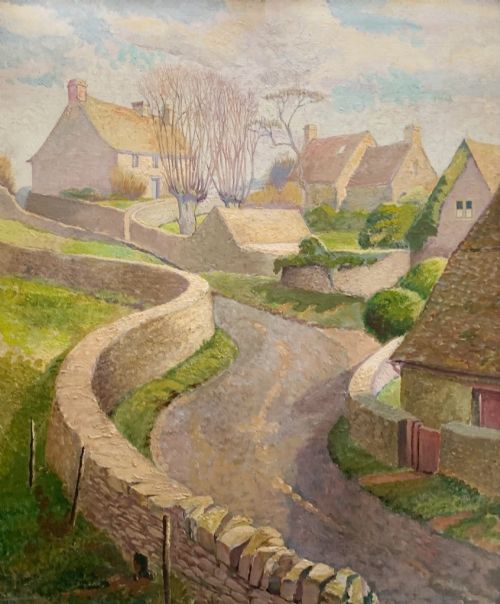
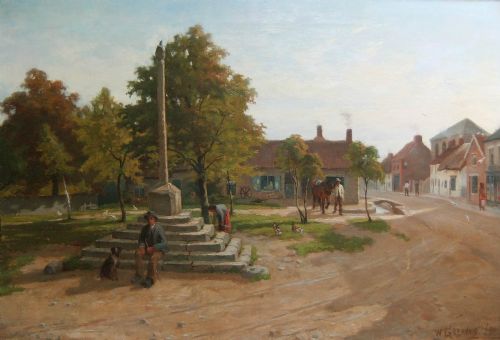
English village art captures rural settlement scenes through historical watercolours and oil paintings.
English Village Art
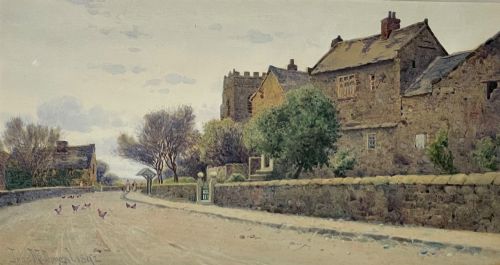
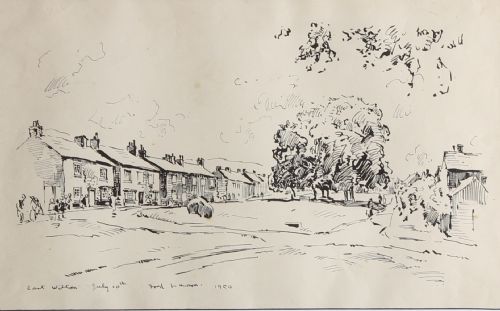
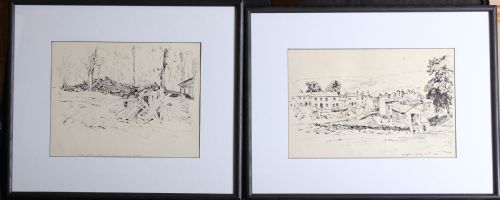
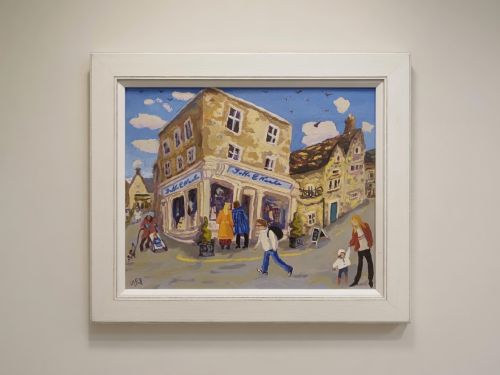
When you search for english village art, you are looking at historical depictions of rural settlements across Britain, recorded in watercolours, oils on canvas, and ink drawings. The pieces on this page span from the Victorian period through the mid-twentieth century, capturing recognizable regional localities from Yorkshire to Sussex.
The most common versions met here are topographical watercolours and oil paintings executed by regional artists who documented rural streetscapes, parish churches, and farming communities. These works preserve vanished village layouts and local architecture as they appeared generations ago.
How They Were Made
The physical construction relies primarily on watercolour pigment applied to paper or oil paint laid upon stretched canvas or wooden panels. Artists utilised traditional brushes and ground pigments to achieve depth in landscape foliage and architectural stonework.
Framing often involves period wood mouldings, occasionally with gilt finishes, which protect the fragile paper or canvas supports from environmental damage over decades of display.
Several canvases quietly record horses standing patiently outside village inns while children congregate near nineteenth-century fairs.
What Varies in Quality
Quality rests upon the artist's command of perspective, light, and atmospheric depth within the topographical composition. Superior examples convey a convincing sense of place and weather, whereas lesser pieces rely on rigid formulaic rendering.
The condition of the paper or canvas also dictates worth, as foxing, damp stains, or crude retouching diminish the integrity of the original pigment layer.
John McDougal·Fred Lawson·Arthur Tucker·Joseph Thors·Alfred Rimmer
The English Village Art Glossary
- Topographical
- Depicting a specific real-world place accurately. These paintings serve as historical records of actual village locations.
- Watercolour
- A paint medium consisting of water-soluble pigments on paper support. It requires a deft hand since mistakes cannot easily be painted over.
- Oil on canvas
- Pigment suspended in drying oil applied to a woven fabric stretched over a wooden frame. This medium allows for rich texture and deep colour layering.
- Genre scene
- A painting depicting aspects of everyday life by portraying ordinary people engaged in common activities. Such works often feature villagers at fairs or children playing near cottages.
- Naïve art
- Work produced by an artist lacking formal academic training, characterised by a childlike perspective and simplified proportions.
English Village Art: Frequently Asked Questions
What periods do these paintings date from?
The works span from the Victorian era and the nineteenth century through the mid-twentieth century. Many pieces reflect artistic traditions of the Edwardian period and later decades.
Dates are determined by stylistic evidence, signatures, and framing methods typical of specific historical eras.
How were these village scenes used?
These paintings were created to hang in domestic interiors as picturesque records of rural life and familiar local countryside. They allowed collectors to celebrate specific regional landscapes and parish views.
Many functioned as records of travel or commemorative pieces of artists' home counties.
How do I live with historical watercolours?
Watercolours require careful placement away from direct sunlight to prevent the pigments from fading over time. Glazing with conservation-grade glass helps protect the paper from ultraviolet degradation.
Maintaining stable indoor humidity prevents foxing and mould growth on the underlying paper support.
How do I identify a regional style?
Regional styles emerge through distinct palettes and brushwork associated with specific British art groups or geographical localities. Artists often adopted local plein-air techniques to capture regional atmospheric conditions.
Signatures and inscriptions naming specific villages or counties further anchor the work to a particular school.