





Yomut Gul Rug
These yomut gul rug examples bring tribal Central Asian craftsmanship into modern interiors through geometric motifs and rich wool.
Yomut Gul Rug
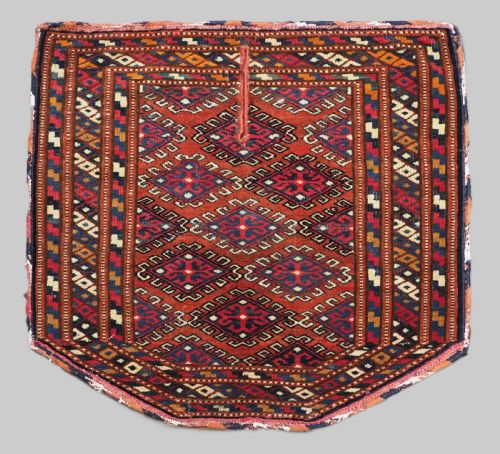
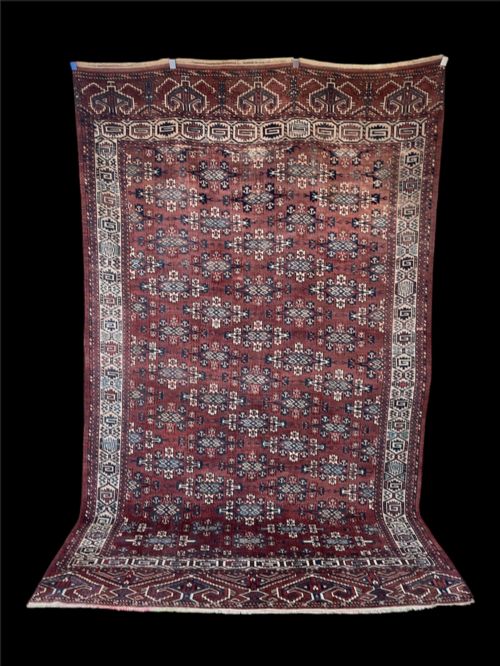
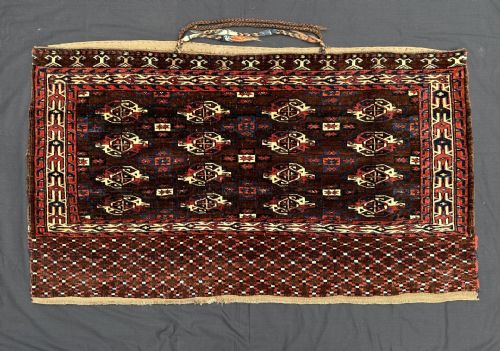
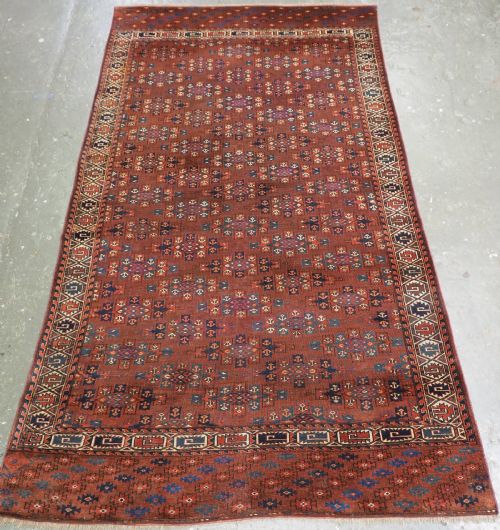
A yomut gul rug is a tribal weaving originating from the Trans-Caspian steppes of Turkmenistan, produced by Turkmen tribes in the nineteenth and early twentieth centuries. These textiles include large main carpets alongside smaller format pieces such as torbas, chuvals, saddle covers, and asmalyk style wall hangings.
Buyers searching for a yomut gul rug most frequently encounter torba face fragments and main carpets displaying characteristic octagonal gul motifs like the kepse, dyrnak, and aishk patterns. The formats vary from square storage bag faces to elongated runner proportions and expansive floor carpets.
Originating from Central Asian nomadic traditions, these tribal weavings reflect distinct tribal identities through repeating geometric medallion layouts. The surviving pieces demonstrate the practical domestic and tent furnishings of Turkmen communities across the nineteenth century.
How they were made
The construction relies on hand-spun wool foundations and pile, combined with natural dyes to create deep saturated tones across the geometric field. Cotton appears alongside wool in the structural weave of specific nineteenth century formats.
Weavers knotted wool pile onto sturdy wool warps and wefts, producing dense textile structures designed for rigorous domestic use inside nomadic dwellings. The application of natural dye recipes yields characteristic variations in shade across the wool fibres.
Nomadic weavers packed their entire household into these bags before hanging them proudly around the tent.
What varies in quality
The fineness of the knotting and the crispness of the geometric gul drawing distinguish superior examples from simpler utilitarian pieces. A tightly packed wool foundation supports intricate design execution and enduring structural integrity.
Depth and clarity of natural dye saturation separate well-preserved specimens from faded or heavy-handled items. The retention of complete borders, original backs on storage bags, and intact kilim skirt ends elevate the overall integrity of the textile.
The Yomut Gul Rug Glossary
- Gul
- A repeating octagonal medallion or primary tribal motif central to Turkmen carpet design. Each pattern identifies specific tribal lineages and regional weaving traditions.
- Torba
- A small horizontal storage bag used inside nomadic tents for household possessions. These pieces frequently survive as decorative face panels.
- Chuval
- A large rectangular storage sack utilised by Turkmen tribes for bedding and clothing. They display multiple rows of guls across the face.
- Kepse gul
- A specific diamond-lattice or stepped octagonal motif found on Yomut main carpets and torbas. It forms an interlocking grid across the field.
- Dyrnak gul
- A comb-like or buck-horn motif arranged in vertical and horizontal rows. This primary design defines numerous nineteenth century main carpets.
Yomut Gul Rug: Frequently Asked Questions
What is a gul?
A gul is a repeating octagonal medallion woven into Turkmen tribal carpets to signify tribal identity and heritage. These geometric motifs form the primary repeating pattern across the textile field.
Different tribal groups utilised distinct gul variations, allowing weavers to signal their specific lineage through these precise symbols.
How were torbas used?
Torbas served as functional storage bags inside traditional Turkmen nomadic tents for holding small household items and personal possessions. They were hung against lattice tent walls for everyday access.
Many surviving torba pieces now function as decorative wall hangings or small format display rugs.
How do I date these rugs?
Dating relies on examining the wool quality, natural dye palettes, and structural characteristics typical of nineteenth and early twentieth century production. Pieces from the 1870s and 1880s often display softer wool and deeper natural tones.
Later examples from around 1900 to 1920 exhibit slightly altered chemical dye usage and different structural tightness in the weave.
Can I hang them on walls?
These textiles adapt readily to wall display, particularly smaller formats like chuvals and torba faces that function well as textile art. Mounting requires careful support across the upper edge to distribute the weight evenly.
Displaying them vertically protects the pile from foot traffic while highlighting the intricate geometric gul patterns.