





Traditional Turkmen Chuval
These traditional turkmen chuval are tribal storage bags woven by nomadic weavers across Central Asia, prized for their rich reds and bold guls.
Traditional Turkmen Chuval
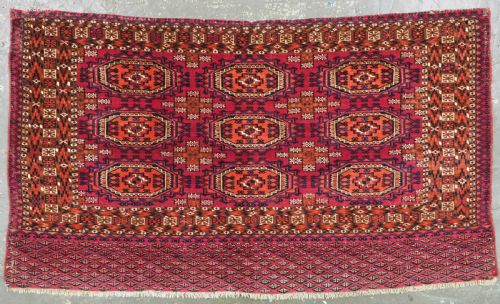
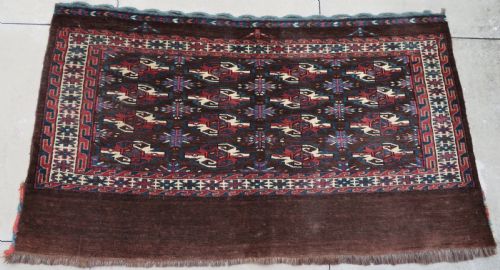
A traditional turkmen chuval is a large tent bag used by nomadic tribes for household storage, woven in rectangular formats designed to hang against yurt walls. The pieces available here span the mid nineteenth century to the start of the twentieth century, originating from regions associated with the Tekke, Yomut, Saryk, and Ersari tribes.
Most examples found on this page survive as chuval faces, though complete specimens retain their plain weave backs and flat woven details. The designs are dominated by repeating primary guls, banded layouts, and detailed elem borders at the lower skirts.
How they were made
These textiles rely on wool foundations and pile, combined with cotton used selectively for white highlights or structural contrast. Natural dyes provide the deep madder reds and secondary tones that define the palette.
Weavers constructed each bag using dense knotting techniques on sturdy warps, often finishing the lower edges with supplementary flat woven structures known as elem panels.
Listings span the mid nineteenth century to 1900, employing wool, cotton, and natural dyes across Tekke, Yomut, Saryk, and Ersari attributions.
What varies in quality
The distinction between standard and superior pieces rests on the precision of the gul drawing, the depth of the natural dye saturation, and the handling of the secondary ornament. Chuvals that retain their complete backs and integrated flat woven details command greater attention from collectors.
Finer knot density and crispness in the banded designs separate ordinary tribal work from exceptional nineteenth-century examples produced by master weavers.
The Traditional Turkmen Chuval Glossary
- Gul
- A primary medallion or octagonal stamp motif repeated across Turkmen carpets and bags. Each tribal group utilised distinct gul patterns to signal identity and lineage.
- Chuval
- A large tent storage bag produced by Central Asian nomads for domestic use. These pieces were hung inside the dwelling to hold bedding and clothing.
- Elem
- The decorated lower panel or skirt of a Turkmen chuval situated beneath the main field of guls. This section often displays intricate minor patterns or floral motifs.
- Torba
- A smaller storage bag compared to the chuval, designed for specific household items. It shares similar tribal iconography and knotting methods.
- Madder
- A natural red dye derived from the root of the Rubia plant, forming the dominant background colour of traditional Turkmen weaving. It produces rich, variable tones over time.
Traditional Turkmen Chuval: Frequently Asked Questions
What is a traditional turkmen chuval used for?
These textiles served as large functional storage bags inside nomadic tents in Central Asia. Families used them to store bedding, clothing, and household goods.
Today, collectors mount them on walls or display them as decorative tribal art within domestic interiors.
How do I identify different tribal chuvals?
Tribal attribution relies on the specific shape and drawing of the primary guls, along with the choice of secondary motifs. Tekke, Yomut, Saryk, and Ersari weavers each employed distinct structural layouts and colour palettes.
Examining the elem design and border structure also helps pinpoint the specific Central Asian origin.
Are complete bags common?
Most surviving examples exist only as chuval faces because the utilitarian plain weave backs wore out or were removed during past use. Complete pieces with their original backs and flat woven details are less common.
Finding a complete piece offers a clearer view of the original storage function.
How do I care for a textile on the wall?
Hanging a textile requires a padded support system that distributes the weight evenly across the top edge rather than pinning through the fabric. Direct sunlight should be avoided to protect the natural dyes from fading.
Gentle surface cleaning by a specialist textile conservator keeps the wool stable over time.