
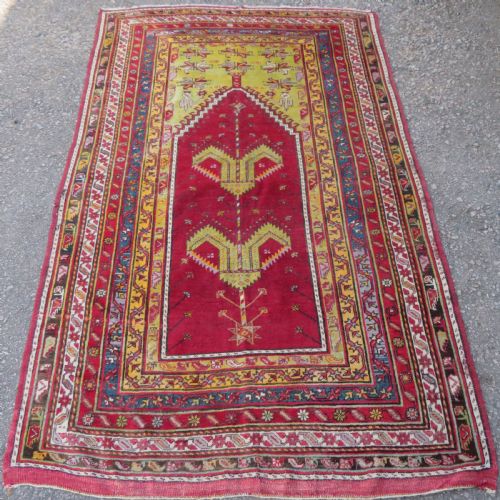
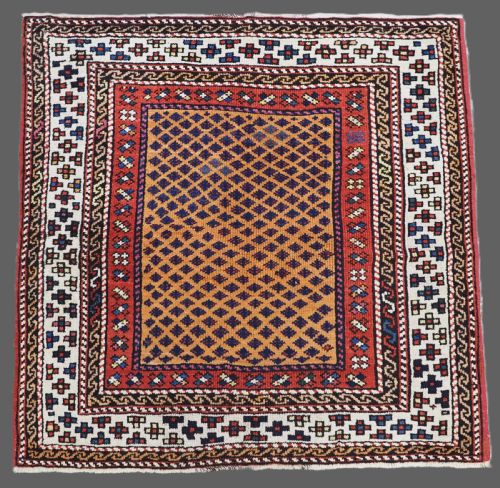


Yellow Wool Tribal Carpet
A yellow wool tribal carpet brings warmth and striking graphical geometry to a room, drawn from nineteenth and early twentieth-century weaving traditions.
Yellow Wool Tribal Carpet
When you search for a yellow wool tribal carpet, you encounter hand-knotted and flat-woven pieces originating from Anatolia, the Caucasus, Central Asia, and Persia. These textiles include village rugs, prayer rugs, runners, and spindle-bags produced by specific tribal groups.
The examples gathered here span from the early nineteenth century through to the early twentieth century. They encompass regional styles such as Kurdish, Yomut, Uzbek, Kazak, and Kirsehir.
Makers utilised distinct motifs including lattice patterns, shrub designs, and geometric medallions set against bright or mellow yellow grounds. Each piece reflects the utilitarian and artistic traditions of nomadic and village weavers.
How they were made
Weavers relied principally on wool, frequently hand-spun, combined with cotton foundations for structural support in specific regional types. Natural dyes provided the palette, yielding the characteristic yellow grounds alongside contrasting tones.
Production techniques involved knotting pile carpets on vertical looms or weaving flat-woven kilims and Soumaks. Artisans constructed these textiles to endure daily use inside tents and village dwellings.
Listings feature pieces dated from the early nineteenth century up to 1930, utilising wool, natural dyes, and cotton.
What varies in quality
Quality rests upon the crispness of the graphic design and the saturation and depth of the natural dyes used across the wool pile or flat weave. Purer yellow grounds and balanced proportions elevate certain regional rugs above standard examples.
The integrity of the weave, edge preservation, and the fineness of hand-spun wool contribute substantially to the lasting character of each textile. Variations in knot density and the precision of geometric layouts distinguish village work from finer tribal pieces.
The Yellow Wool Tribal Carpet Glossary
- Kilim
- A flat-woven textile produced without a pile. These pieces rely on interlocking weft techniques to create sharp geometric patterns.
- Soumak
- A brocade-style flat-weave technique involving wrap-sewn wefts that leave trailing threads on the reverse. This method produces a thick, durable fabric with intricate surface detail.
- Prayer rug
- A small rug featuring a mihrab or arch design indicating the direction of prayer. Weavers produced these for personal devotional use.
- Yatak
- A term designating a larger sleeping or bedding rug originating from Anatolian traditions. These examples offer deeper pile and softer wool textures.
- Ground
- The main background field colour of a rug against which medallions, lattices, and secondary motifs are displayed.
Yellow Wool Tribal Carpet: Frequently Asked Questions
Where were these tribal rugs made?
The pieces originate across Anatolia, the Caucasus, Persia, and Central Asian regions.
Nomadic and village weavers produced them within distinct tribal traditions, utilising local materials and specific regional designs.
How do I care for an old wool rug?
Protect the textile by vacuuming gently without a rotating brush and keeping it out of direct sunlight.
Professional cleaning tailored to antique wool ensures the natural dyes and fibres remain preserved over time.
What gives the yellow colour?
Dyers extracted yellow hues from plant sources and local materials using traditional natural dye methods.
These organic colourants mellow gradually with age, producing the varied golden tones seen on nineteenth-century grounds.
Are these runners suitable for hallways?
Many examples take the form of long runners designed specifically for corridors and narrow spaces.
Their durable wool construction handles foot traffic while introducing historical pattern and colour to transitional areas.