

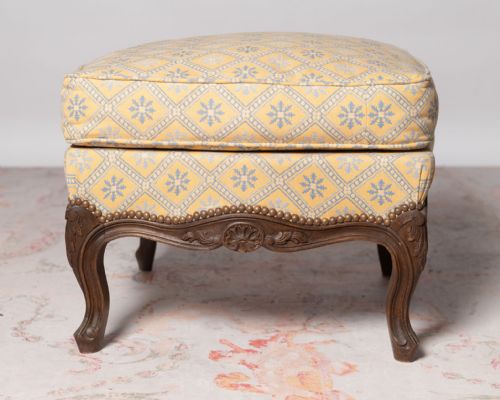


Yellow Upholstered Ottoman
A yellow upholstered ottoman brings warmth and practical seating to a room, drawing on periods from Regency to Edwardian.
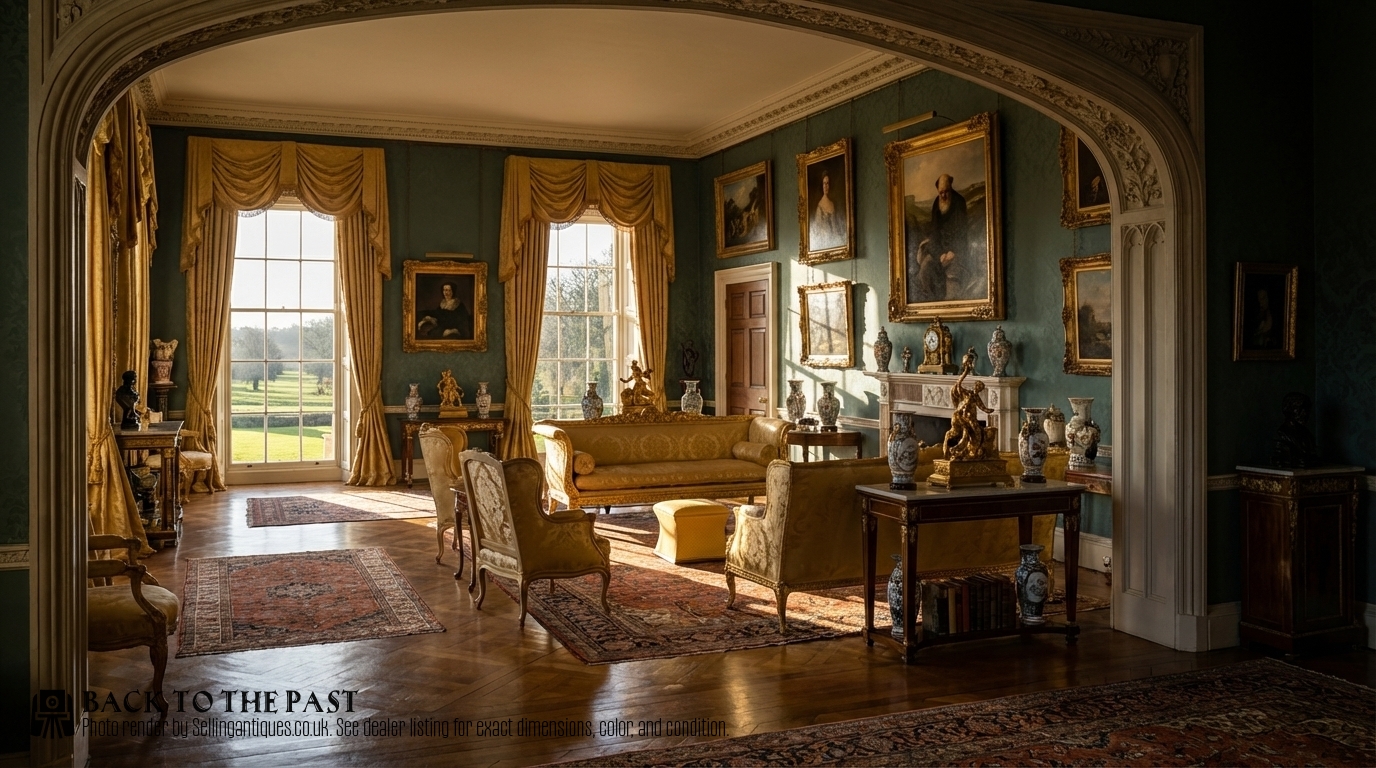
Yellow Upholstered Ottoman
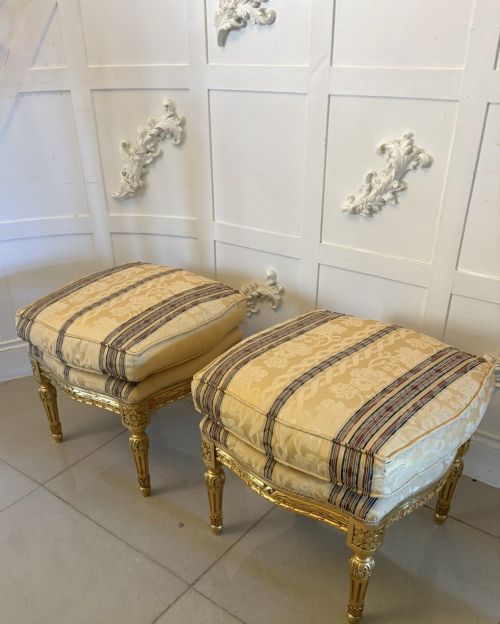
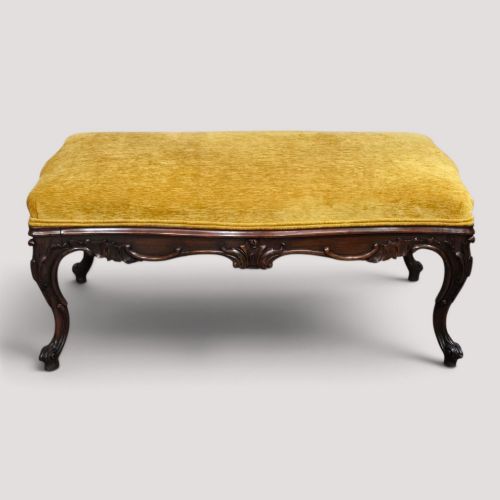
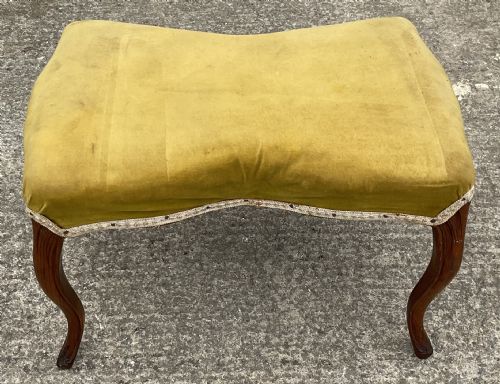
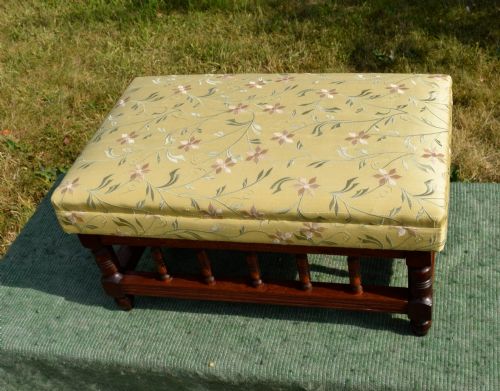
A yellow upholstered ottoman functions as a low seat, footrest or coffee table within a traditional interior scheme. When you search for a yellow upholstered ottoman, you encounter diverse forms ranging from large country house walnut pieces to long footstools and compact box stools.
The pieces on this page span the nineteenth century, the Regency era, and the early twentieth century. Walnut, mahogany, rosewood, and ebony provide the structural timber frames beneath the fabric covering.
Stools and ottomans appear in distinct regional and revival styles, including French Chateau, Anglo-Indian, Rococo Revival, and Chippendale style. Many examples feature carved cabriole legs, buttoned upholstery, or concave box trunk designs.
How they were made
Cabinetmakers constructed the frames using dense hardwoods such as mahogany, walnut, rosewood, and ebony. Skilled carvers shaped the cabriole legs and wooden rails, often incorporating fine detailing inspired by Regency and Rococo Revival tastes.
Upholsterers applied textile and velvet coverings over internal padding, sometimes utilising buttoning techniques to secure the fabric. Brass elements occasionally appeared in castors or decorative mounts on the wooden bases.
Yellow Upholstered Ottoman Retail Price Guide 2026
Typical asking prices for yellow upholstered ottoman among the pieces listed under this phrase on Sellingantiques today, from the lower quarter to the upper quarter. They describe what is for sale here now, not the wider market.
Listings feature walnut, mahogany, rosewood, and ebony frames paired with velvet and textile upholstery across the nineteenth and early twentieth centuries.
What varies in quality
The refinement of the timber carving sets finer examples apart from simpler utilitarian stools. Crisp detailing on walnut or mahogany frames indicates a higher standard of workshop production.
Proportion and scale also dictate quality, particularly in large country house stools and long footstools where structural balance matters. The selection of dense hardwoods like rosewood and ebony points to superior original commissioning.
The Yellow Upholstered Ottoman Glossary
- Ottoman
- A low upholstered seat or footstool without a back or arms, sometimes featuring an internal storage compartment. These pieces serve multiple functions in a traditional living space.
- Cabriole leg
- A furniture leg that curves outward and then tapers inward, typically ending in a pad or foot. This form is common in revival and period seating.
- Buttoned upholstery
- A method of securing padding by pulling twine through the fabric at regular intervals and fastening it with buttons. This creates a tufted surface texture.
- Regency
- A period in British design spanning the early nineteenth century, known for drawing inspiration from classical Greek, Roman, and Egyptian motifs. Pieces from this era often feature dark timbers and restrained classical lines.
Yellow Upholstered Ottoman: Frequently Asked Questions
How do I use an ottoman?
These pieces serve as extra seating around a room or as a comfortable footrest beside a chair. They also function well as low coffee tables when topped with a sturdy tray.
Larger box stools and ottomans provide concealed storage space inside the frame for blankets or small household items.
How do I date a wooden stool?
Examine the timber species and the carving style to establish the period of manufacture. Woods like rosewood and mahogany appear more frequently in earlier Regency and Victorian pieces, while specific revival styles offer further clues.
Tool marks and construction methods visible on the underside of the frame help distinguish nineteenth century workshop production from later work.
What is a cabriole leg?
A cabriole leg is a curved furniture support that swells outward at the knee and tapers inward toward the foot. This design appears frequently on seventeenth and eighteenth-century furniture and returned to favour during nineteenth-century revival periods.
Carved details on the knee often indicate the stylistic influence, such as Rococo or Chippendale designs.
Can I place these on carpets?
These sturdy wooden and upholstered pieces sit securely on both carpets and wooden flooring. Many period examples feature small castors on the feet to assist with movement across room surfaces.
Ensure the weight is distributed evenly to protect delicate antique pile carpets from indentation.