



Antique French Tabouret
An antique french tabouret is a seat of distinction, offering compact elegance and rich historic character to any interior.
Antique French Tabouret
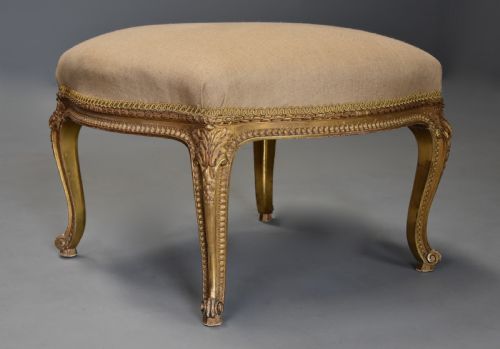
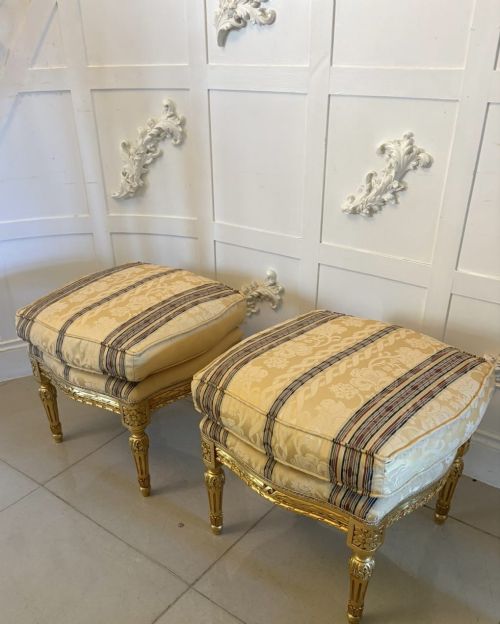
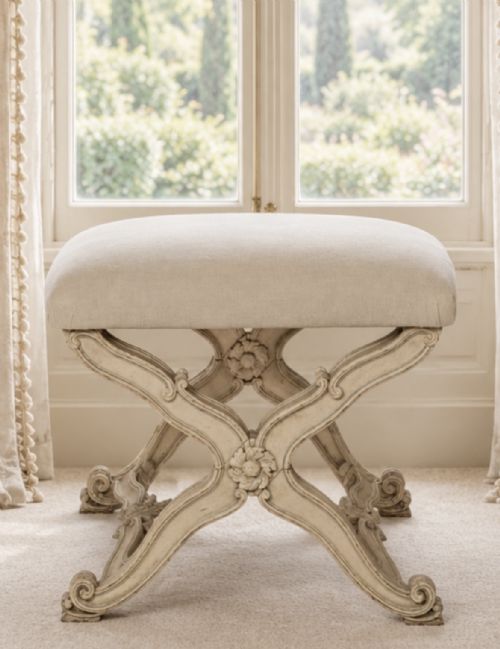
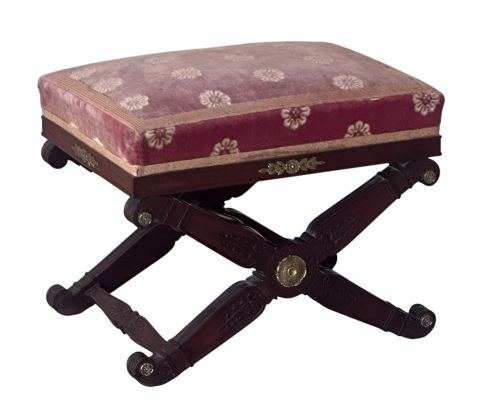
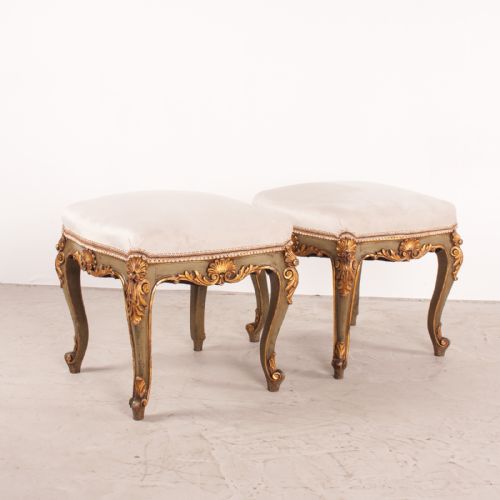
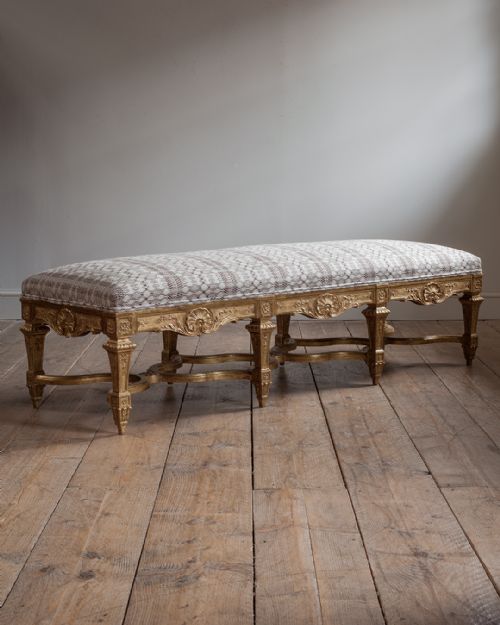
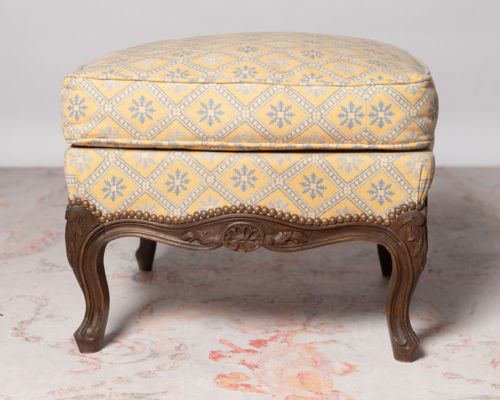
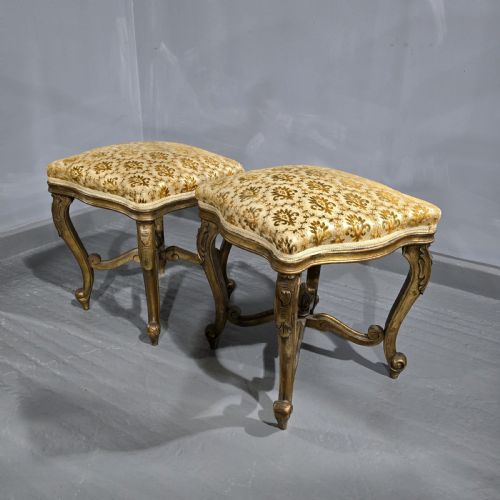
An antique french tabouret brings formal continental seating into domestic spaces, appearing primarily as footstools, centre stools, and X-frame stools. These pieces originate across the nineteenth century, encompassing years such as 1860, 1870, 1880, 1890, and 1900.
The selections available here showcase distinct periods including the Louis XIV revival, Louis XV, Louis XVI style, and French Empire. Makers and craftsmen embraced styles from French chateau aesthetics to continental rococo revival.
Buyers will encounter single stools as well as decorative pairs. Certain examples arrive ready for upholstery, while others retain their period fabric or velvet coverings.
How they were made
Carpenters and carvers utilised traditional timber and walnut foundations, shaping structural elements with carved wood and parcel gilt detailing. Giltwood surfaces provide the characteristic metallic lustre seen across numerous nineteenth-century examples.
Upholstery techniques incorporated traditional textiles such as linen and velvet to pad the seats. Makers also applied paint and gilding to wooden frames to achieve opulent finishes suited to grand salons.
Antique French Tabouret Retail Price Guide 2026
Typical asking prices for french tabouret among the pieces listed under this phrase on Sellingantiques today, from the lower quarter to the upper quarter. They describe what is for sale here now, not the wider market.
Listings feature nineteenth-century pieces spanning the decades from 1860 to 1900, alongside unspecific nineteenth-century attributions.
What varies in quality
The crispness of the wood carving dictates the visual strength of each piece, distinguishing ambitious workshops from standard production. Deep relief work and well-defined floral or architectural motifs show superior craftsmanship.
The integrity of the original giltwood or painted finish affects desirability, as does structural preservation in the timber frame. Maker stamps, such as the signature recorded for a mid-nineteenth-century Paris firm, elevate an individual piece.
LOIDRAULT FRERES PARIS
The Antique French Tabouret Glossary
- Giltwood
- Wood that has been coated with gold leaf or a gold-coloured preparation. This finish appears frequently on formal nineteenth-century seating.
- X-frame stool
- A seat supported by intersecting diagonal legs forming an X shape. This form draws on classical and Empire design traditions.
- Centre stool
- A freestanding stool designed to be viewed from all sides in the middle of a room. These pieces often feature elaborate carving all around the frame.
- Parcel gilt
- A decorative technique where only specific portions of a wooden object are gilded, leaving other areas painted or exposed. This highlights particular carved details on the frame.
- Louis XIV Revival
- A nineteenth-century design movement copying the heavy, grand ornamentation of the seventeenth-century French court. Pieces in this style use robust walnut and giltwood forms.
Antique French Tabouret: Frequently Asked Questions
Where were tabourets placed in historic homes?
In historic French interiors, tabourets functioned as movable seats in salons, bedrooms, and drawing rooms. Centre stools occupied prominent positions in the middle of rooms for guests and family.
Smaller footstools paired with armchairs or rested near seating areas to provide comfort. Their compact proportions allowed servants to reposition them easily according to the needs of the household.
How do I care for giltwood frames?
Giltwood requires gentle maintenance to protect the delicate gold leaf application from damage. Dust the carved surfaces regularly using a soft, dry brush without applying chemical cleaning products.
Keep these stools away from direct sunlight and moisture fluctuations to prevent the wood from warping and the gilding from flaking. Professional conservation is recommended for any structural repairs.
How can I tell different revival styles apart?
Louis XIV revival pieces display heavy proportions, robust walnut construction, and bold architectural carvings. Louis XV and rococo revival items feature flowing asymmetrical curves, C-scrolls, and naturalistic floral motifs.
Empire style stools emphasise classical symmetry, X-frame supports, and military or laurel leaf ornamentation. Examining the structural lines and carving vocabulary clarifies the specific design period.