



French Tapestry Stool
These French tapestry stool pieces bring tactile historic charm to a room, offering low-profile seating topped with traditional textile work.
French Tapestry Stool
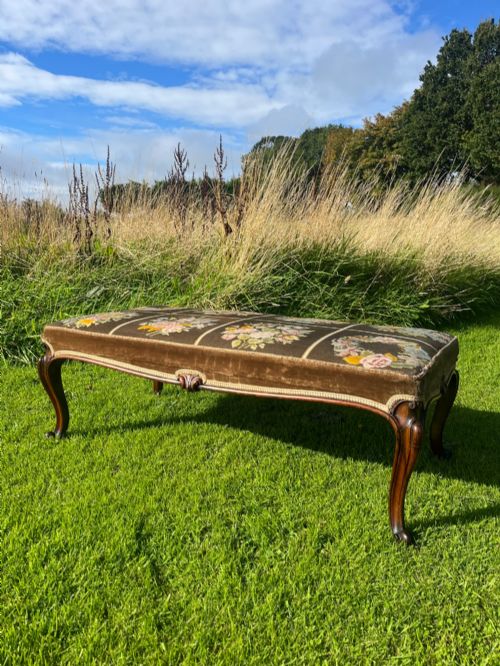
When you search for a French tapestry stool, you encounter low seating forms designed for resting the feet or peruming in a dressing room, often upholstered in wool needlepoint or textile panels. The pieces on this page span the Victorian era, the nineteenth century, and the early twentieth century, showing both native French manufacture and British interpretations of continental designs.
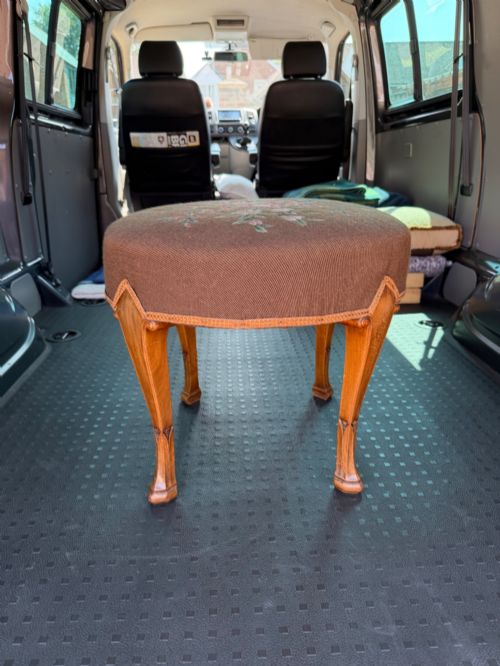
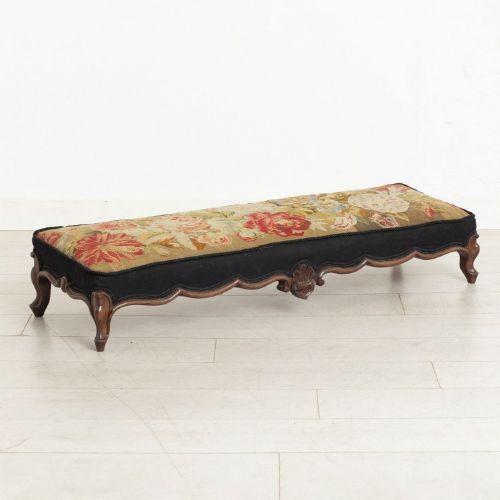
The physical shapes vary from compact low footstools and oval needlework seats to long benches, duet stools, and prie-dieu chairs. Walnut, painted wood, beech, and giltwood provide the structural support beneath the textile tops, linking these items to historical revival movements.
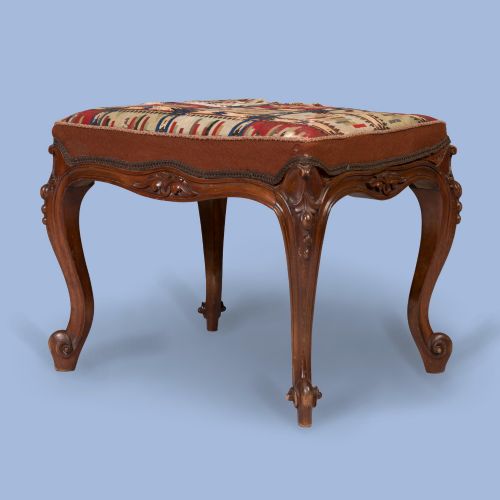
Revival styles dominate the selection, referencing Louis XIV, Louis XV, and Rococo aesthetics through curved woodwork and floral needlework. Buyers most frequently meet walnut frames carrying original or period-appropriate tapestry seats, bridging utilitarian function and decorative textile art.
Quality and craftsmanship
Quality rests primarily in the crispness of the wood carving and the tightness of the frame construction, where sturdy joinery ensures stability across decades of use. Heavier walnut and carved beech frames generally indicate higher ambition in the original workshop.
The fineness of the needlework and the integrity of the wool textile dictate the visual appeal of the upper surface. Pieces retaining their original hand-worked tapestry hold greater stylistic cohesion than those with later replacements.
French Tapestry Stool Retail Price Guide 2026
Typical asking prices for french tapestry stool among the pieces listed under this phrase on Sellingantiques today, from the lower quarter to the upper quarter. They describe what is for sale here now, not the wider market.
The documented forms range from single footstools and dressing stools to long benches, duet seats, and prie-dieu chairs.
The French Tapestry Stool Glossary
- Tapestry
- A thick textile featuring worked designs, commonly utilised on these seats in wool needlepoint to create floral or pictorial top panels.
- Cabriole leg
- A curved furniture leg featuring an outward knee and an inward ankle, typical of the revival styles seen on these stools.
- Prie-Dieu chair
- A devotional low chair or stool equipped with a padded shelf for kneeling, sometimes grouped alongside standard seating forms in the evidence.
- Giltwood
- Wood that has been coated with gold leaf or a gold-coloured finish, adding a reflective decorative layer to the frame.
French Tapestry Stool: Frequently Asked Questions
What is a French tapestry stool?
A low seat featuring a decorative woven or needlepoint textile top, produced in various revival styles during the nineteenth and early twentieth centuries.
These pieces served functional roles in drawing rooms and dressing areas, combining wooden frames of walnut or beech with tactile fabric surfaces.
How do I date a tapestry stool?
Dating relies on examining the timber species, construction joints, and stylistic revival cues such as Louis XIV or Rococo motifs.
Nineteenth-century examples often feature hand-carved walnut or beech frames, while later pieces from around nineteen-thirty show slight shifts in manufacturing methods.
Where should I place a stool?
These compact pieces fit easily in front of a fireplace, beside an armchair as an occasional footrest, or positioned in a bedroom.
Their low profile allows them to add colour and texture without overwhelming the floor space of a room.
Are the tapestry tops original?
Many listings preserve their original nineteenth-century wool needlework, while others feature later textile replacements.
Examining the wear patterns and the tension of the fabric helps determine whether the upholstery dates alongside the wooden frame.