




Vintage Floral Footstool
A vintage floral footstool brings pattern and texture to a room, offering low seating or a rest for tired feet.
Vintage Floral Footstool
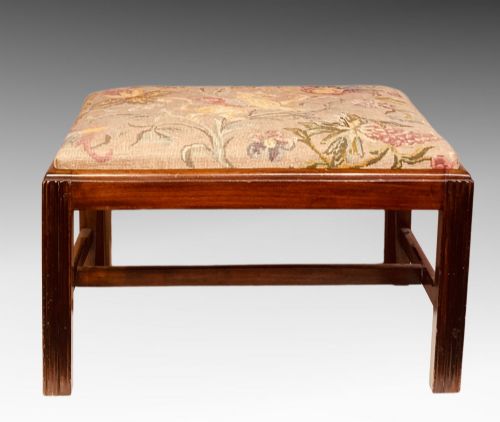
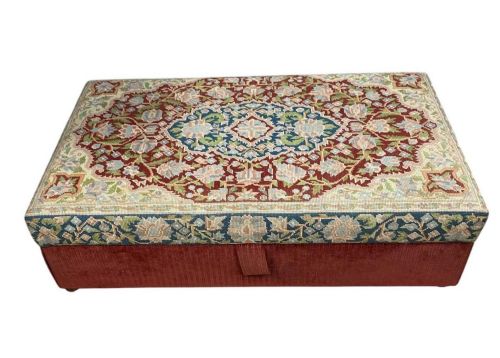
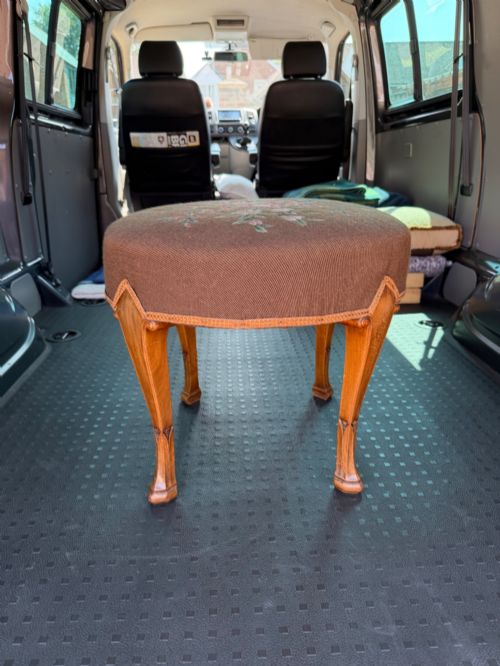
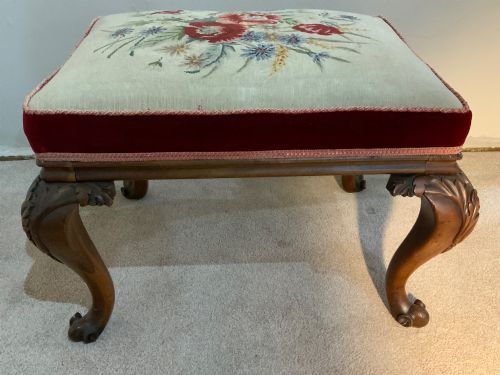
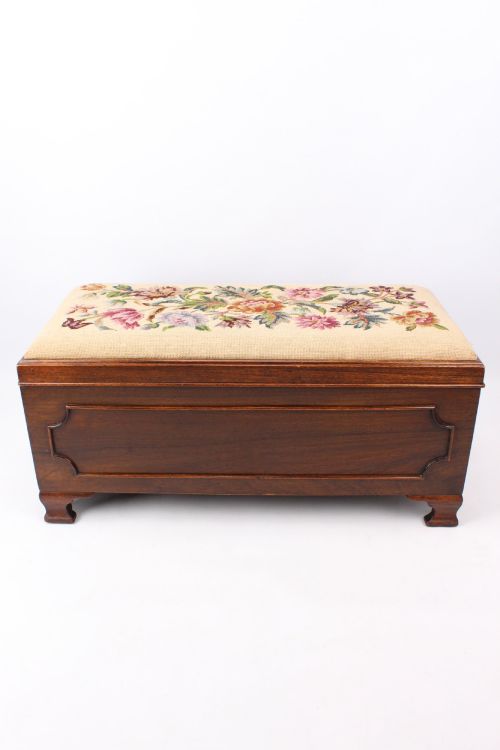
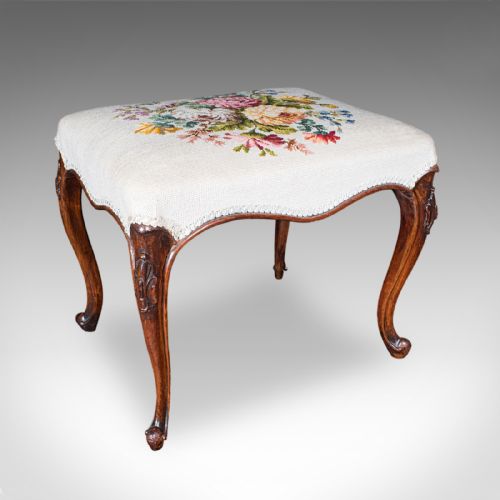
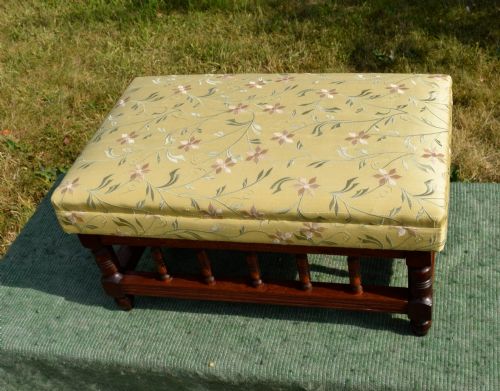
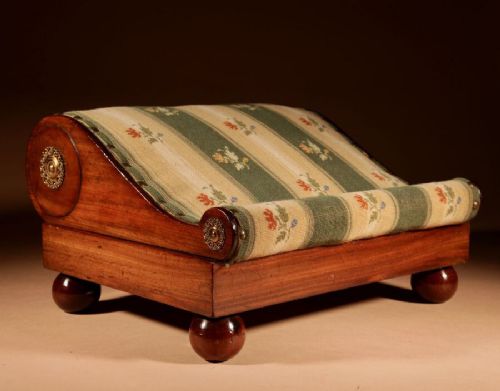
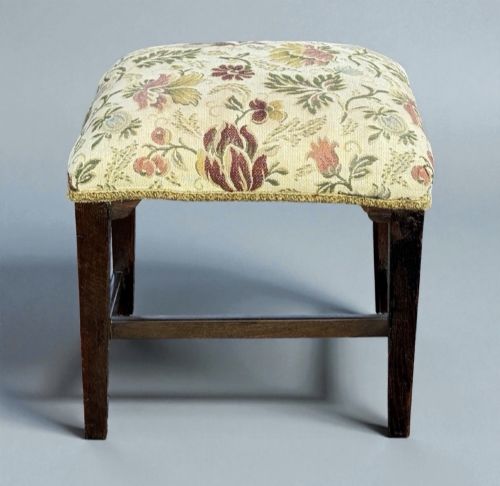
A vintage floral footstool combines period woodwork with textile upholstery, drawing on designs from the eighteenth century to the early twentieth century. Buyers seeking a vintage floral footstool will encounter forms ranging from compact dressing table seats to long ottomans and fireside stools.
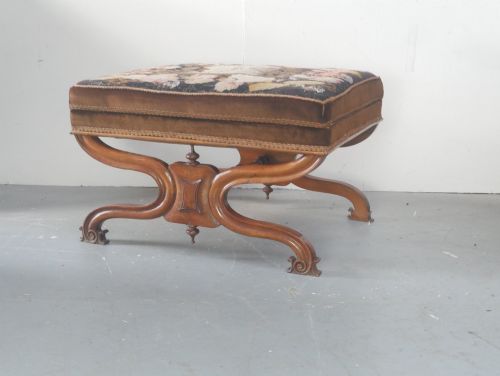
The selection includes English, French, and Continental pieces across periods such as the Victorian era, the Edwardian years, and the nineteen-twenties. Walnut and mahogany frame structures appear frequently alongside painted finishes and decorative needlework.
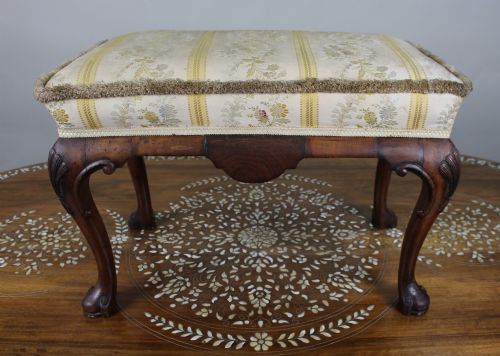
Lower stools suit placement by an armchair, while larger ottomans function as window seats or centre pieces. Many examples adopt revival aesthetics, including Queen Anne style cabriole legs and Georgian proportions.
Materials and construction
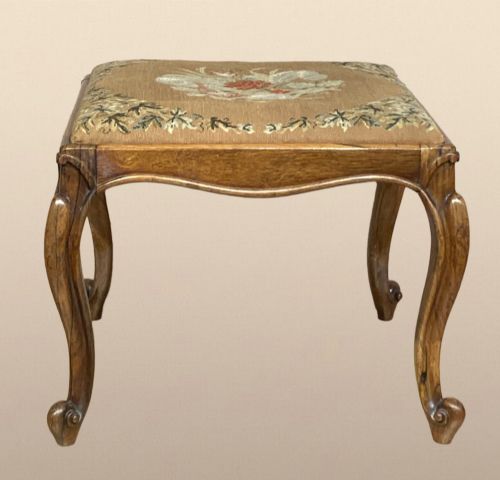
Carved timber frames provide the structural foundation, utilising dense hardwoods such as walnut and mahogany alongside painted woods. Joinery techniques vary from simple pegged joints to elaborate carved cabriole legs with twist rope details.
Upholstery relies on traditional textiles, incorporating wool, velvet, and tapestry needlepoint to create patterned floral seat pads. Brass elements sometimes accent the framework or castors on larger pieces.
Vintage Floral Footstool Retail Price Guide 2026
Typical asking prices for vintage floral footstool among the pieces listed under this phrase on Sellingantiques today, from the lower quarter to the upper quarter. They describe what is for sale here now, not the wider market.
Listings feature walnut and mahogany frames upholstered in tapestry, wool, and needlepoint across the Victorian and Edwardian periods.
Judging quality in stools
The distinction between standard domestic seating and superior examples rests in the crispness of the wood carving and the weight of the timber. Finely executed cabriole legs and substantial walnut frames signal higher workshop standards.
The execution of the needlepoint or tapestry upholstery dictates visual success, with tightly worked wool floral motifs outlasting looser textile applications. Original timber patination and retained structural integrity elevate the standing of any piece.
Howard and Sons
The Vintage Floral Footstool Glossary
- Cabriole leg
- A furniture leg that curves outward at the knee and tapers inward to an ankle, common on revival pieces. This form draws inspiration from classical Chinese designs popularised in Europe during the eighteenth century.
- Needlepoint
- A type of counted thread embroidery stitched on canvas to create dense floral patterns for seat covers. The technique allows for intricate polychrome designs on footstool tops.
- Ottoman
- A low upholstered seat or bench without a back or arms, often built with internal storage. Larger variants serve dual functions as window seats and long footrests.
- Tapestry
- A heavy hand-woven or needle-worked textile depicting pictorial or floral scenes. These fabrics supply the primary decorative surface for period footstool tops.
- Dressing stool
- A small seat designed specifically for use at a dressing table or vanity. These pieces typically feature compact dimensions and upholstered tops matching bedroom suites.
Vintage Floral Footstool: Frequently Asked Questions
How do I style a footstool?
Place smaller stools directly in front of armchairs or fireside seats to create a traditional resting place for feet. Longer ottomans sit effectively beneath windows or at the end of a bed.
Combine the textile patterns of the stool top with existing cushions or rugs in the room. Ensure the timber tone of the legs coordinates with surrounding furniture.
Are these stools comfortable?
Period footstools offer firm support through traditional stuffing and upholstery methods rather than modern deep foam cushioning. Many serve primarily as decorative accent pieces or occasional seats.
Needlepoint and wool covers provide a textured surface that withstands daily use. Taller dressing stools function well for short periods of sitting.
How do I date a footstool?
Examine the timber species, leg profiles, and structural joinery to determine the likely era of manufacture. Walnut frames often point toward Victorian or earlier revival periods, while mahogany appears frequently across the nineteenth and early twentieth centuries.
Stylistic cues such as Queen Anne style cabriole legs or Regency proportions offer further clues. Upholstery fabrics may be replacements applied during later restoration work.
What is needlework upholstery?
Needlework upholstery involves hand-stitched threads on a canvas ground, creating decorative floral and botanical patterns. This technique forms the durable patterned surface seen on many antique footstool tops.
Makers utilised wool and silk yarns to achieve varied colour palettes in floral designs. These covers often survive from the nineteenth century in remarkably vibrant condition.