



Pair French Footstools
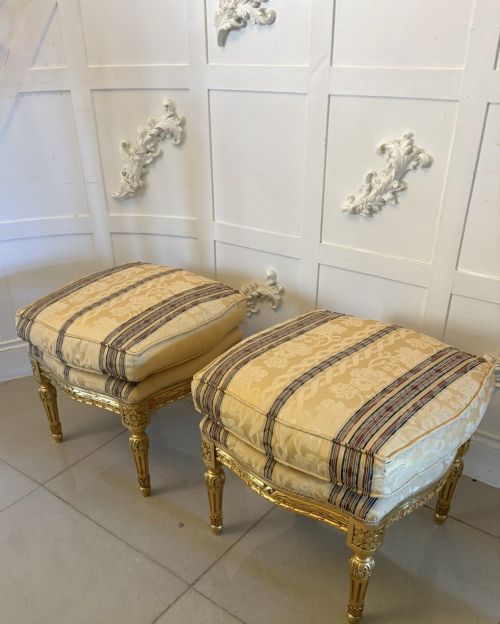
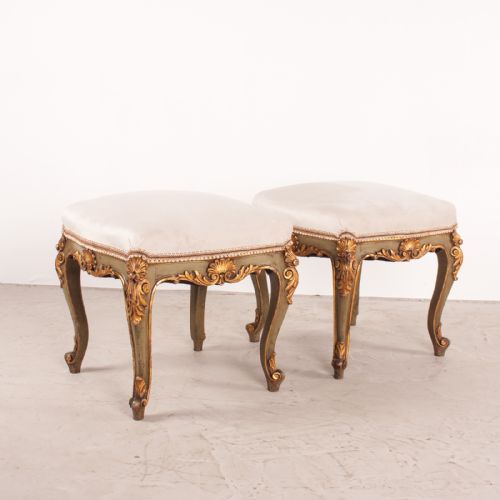
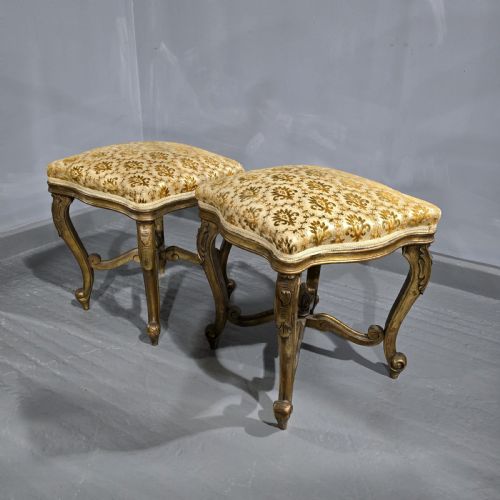
These pair french footstools bring low seating and decorative presence, formed in revival styles across the nineteenth and twentieth centuries.
Pair French Footstools
When you search for pair french footstools, you find matching sets of low seats designed for resting feet or low occasional sitting. Most examples on this page date from the nineteenth century, including pieces made around eighteen eighty and eighteen ninety, alongside later twentieth century interpretations.
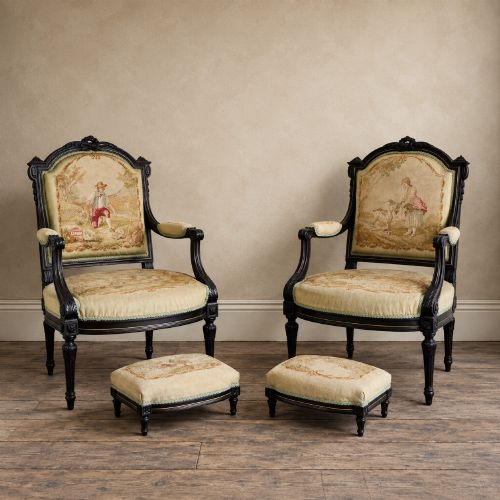
The forms encompass footstools, larger stools, and armchairs that include matching footstools within the set. Revival designs dominate the selection, showing distinct influences from Louis Quinze, Louis Seize, and Continental Rococo aesthetics.
How they were made
The framework relies on carved wood, walnut, beech, giltwood, and painted wood, shaped into cabriole legs and ornamental frames. Gold leaf and paint are applied to wooden surfaces to create gilded and decorated finishes.
Upholstery completes the construction, utilising velvet, tapestry fabric, and various other textiles. Buttoned back treatments and traditional padding methods finish the upper portions of these seats.
Pair French Footstools Retail Price Guide 2026
Typical asking prices for pair french footstools among the pieces listed under this phrase on Sellingantiques today, from the lower quarter to the upper quarter. They describe what is for sale here now, not the wider market.
Materials recorded across the inventory include velvet, giltwood, walnut, carved wood, painted wood, tapestry fabric, and gold leaf.
What varies in quality
Depth and precision of the carved wood ornamentation separate standard examples from finer pieces. Crisp detailing on giltwood and walnut frames indicates higher workmanship.
Integrity of the textile upholstery and the underlying frame construction dictate the durability and overall finish. Intricate tapestry fabric and carefully applied gold leaf elevate the visual distinction of the set.
The Pair French Footstools Glossary
- Giltwood
- Wood that has been covered with a thin layer of gold leaf. This finish appears frequently on decorative nineteenth century frames.
- Cabriole leg
- A furniture leg that curves outward and then tapers inward. This form is typical of Louis Quinze and Rococo revival pieces.
- Louis XVI Revival
- A nineteenth century style reviving eighteenth century neoclassical forms. It uses straight tapering lines and classical motifs.
- Tapestry fabric
- A heavy woven textile often used for traditional upholstery. It provides patterned surface decoration on period seating.
Pair French Footstools: Frequently Asked Questions
What periods do these footstools come from?
The selection spans from the nineteenth century through to the early twentieth century. Pieces range from Regency and eighteen hundred examples to items dated around eighteen eighty, eighteen ninety, and nineteen thirty.
Revival movements heavily influence the dates, with makers reproducing earlier monarchical styles during later decades.
How were these stools used historically?
These pieces served primarily as footrests placed before armchairs or as low occasional seating in salons and drawing rooms. Matching pairs allowed for balanced placement in formal nineteenth century interiors.
Some examples formed part of larger salon suites that included matching armchairs and footstools.
What materials are used in French style footstools?
Frames are constructed from woods such as walnut, beech, and carved wood, often finished with painted wood, giltwood, or gold leaf. Upholstery materials include velvet, tapestry fabric, and general fabric.
Buttoned back detailing frequently appears on the upholstered portions of related armchair sets.
How do I live with antique footstools?
These low seats function well in living spaces as moveable footrests or paired decorative accents. Their compact size allows placement beneath tables or beside larger armchairs.
Care should be taken to protect antique giltwood surfaces and delicate velvet or tapestry upholstery from heavy daily wear.