
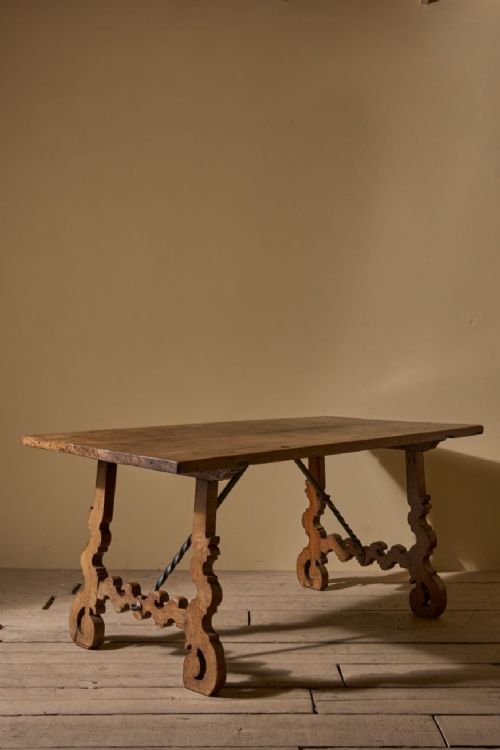
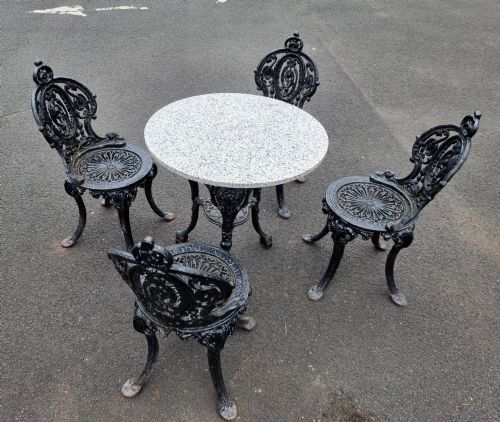
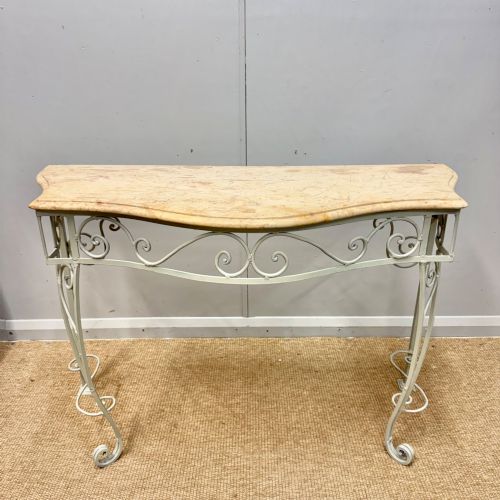
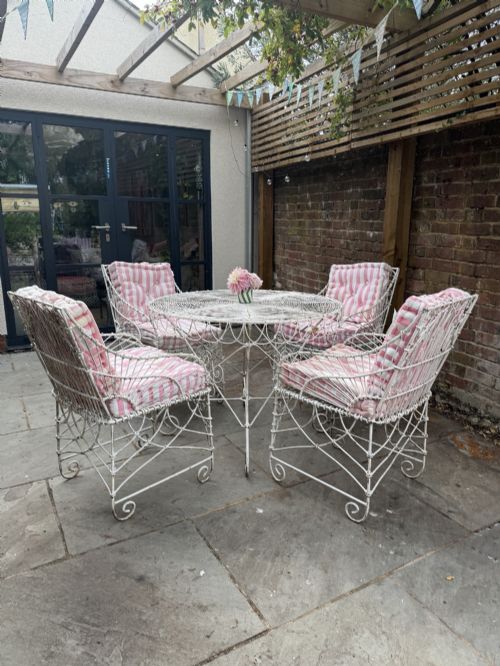
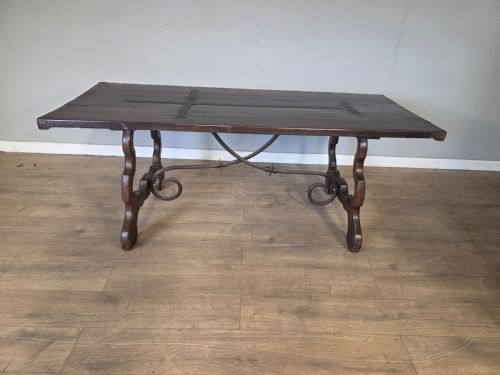
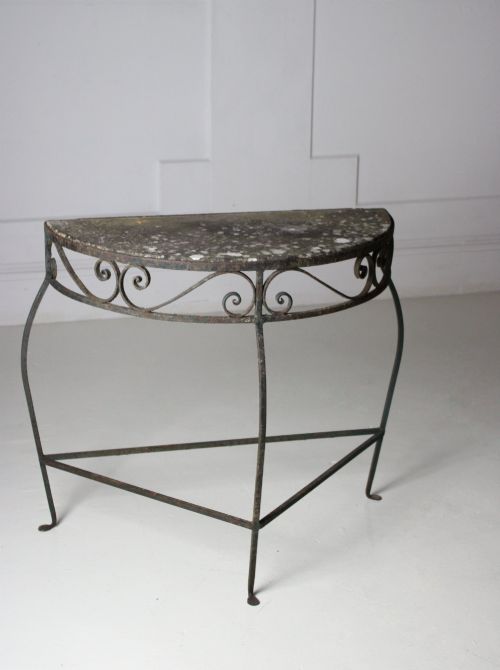
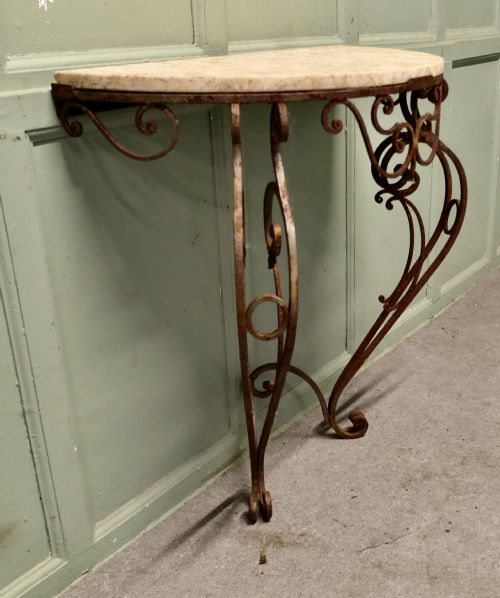
Wrought Iron Table
A wrought iron table brings a robust architectural character to a room, pairing cold forged metal with warm stone, glass or timber surfaces.
Wrought Iron Table
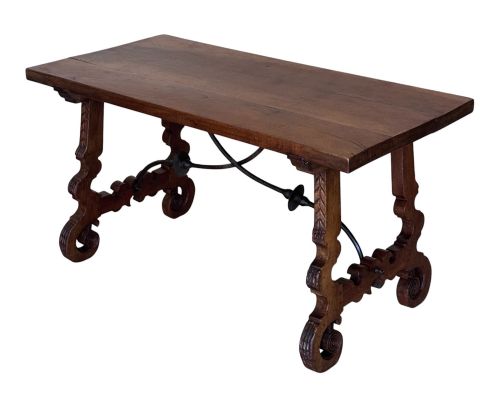
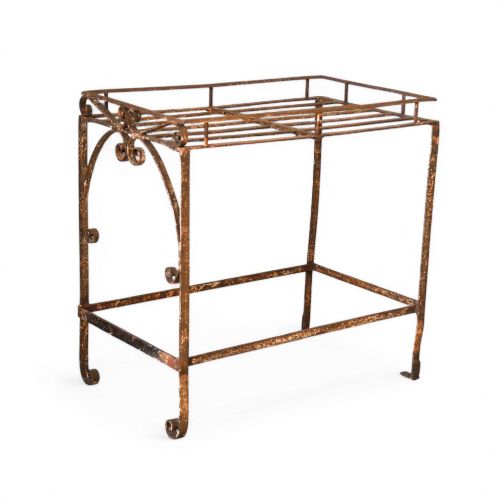
A wrought iron table typically appears in domestic spaces as a console table for hallways, a low coffee table for sitting rooms, or a sturdy garden table for outdoor use. Buyers searching for a wrought iron table will find numerous examples ranging from French and Spanish provincial pieces to sleek Art Deco designs.
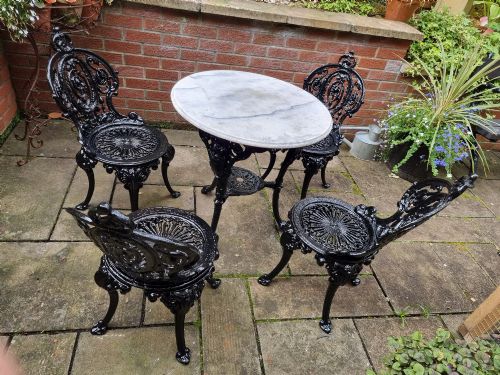
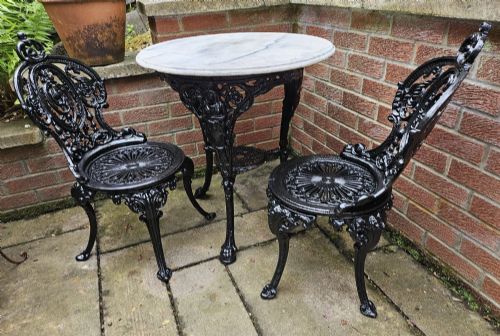
Console tables frequently feature heavy marble or stone tops paired with scrolled or geometric metal bases. Garden versions often come as sets complete with matching chairs or benches, spanning the Victorian, Edwardian, and mid-twentieth-century periods.
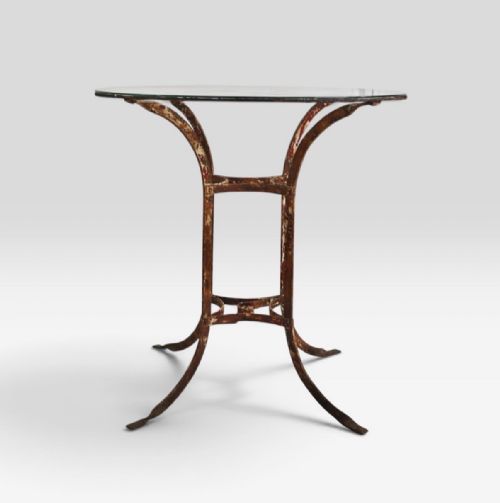
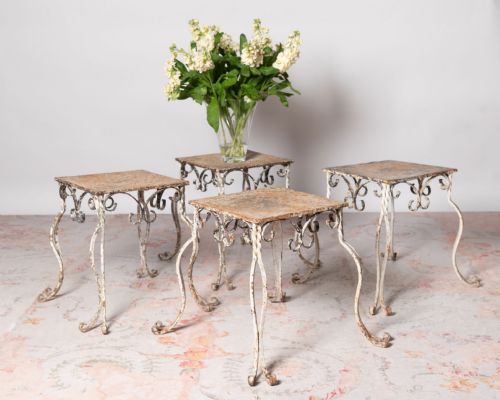
Interior variants also include occasional tables, plant stands, and occasional side pieces incorporating wood or glass surfaces. These diverse forms reflect both utilitarian workshop origins and decorative domestic commissions from the nineteenth and twentieth centuries.
Materials and Construction
Makers shaped wrought iron manually at the forge, beating hot metal over an anvil to create curves, scrolls, and structural supports. This process produces individual surface textures, such as hand-hammered facets, which distinguish forged iron from cast alternatives.
These metal bases were typically paired with contrasting slab tops of white or veined marble, slate, zinc, or native timbers like oak and walnut. Workshops often secured these stone or wooden tops directly onto the iron frames using brackets, weight, or specialised fixings.
Listings combine iron bases with walnut, oak, marble, slate, and glass across the eighteenth, nineteenth, and twentieth centuries.
Evaluating the Pieces
Quality rests in the precision of the smith's handwork and the harmony of the assembled materials. Finer examples display clean, purposeful lines in the forged scrolls and careful joinery where structural members meet.
The choice and thickness of the top surface further elevate a piece, particularly heavy serpentine marble slabs, thick bevelled glass, or aged hardwoods with original patination. Pieces retaining their early or original surface treatments hold greater integrity than those heavily stripped or repainted.
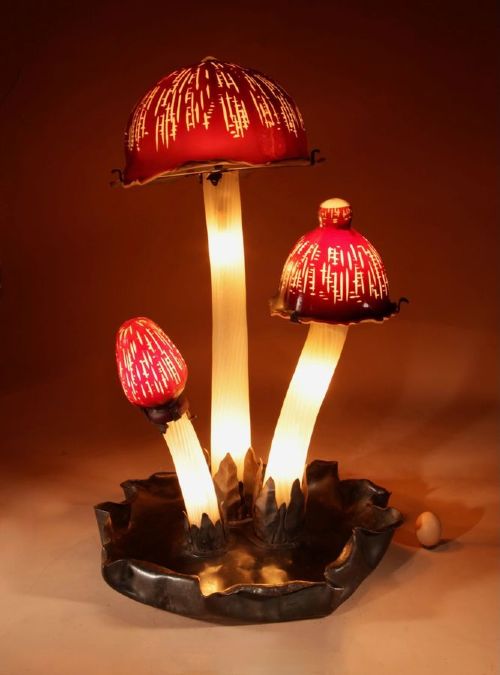
Lacroix Lalique·Muller Freres·Daum·Degue
The Wrought Iron Table Glossary
- Wrought iron
- Iron that has been heated and hammered by hand into shape, notable for its fibrous internal structure and textured exterior. This material differs from cast iron, which is poured into a mould.
- Console table
- A table designed to stand against a wall, frequently supported by decorative brackets or legs. These pieces often feature marble or stone tops.
- Patina
- The surface sheen and colour developed through age, handling, and use over decades or centuries. It indicates genuine historical surfaces.
- Refectory table
- A long, narrow dining table traditionally used in communal dining halls and constructed from solid timber. Examples often feature stretcher bases for stability.
- Trestle
- A structural support consisting of a horizontal beam fixed to two flared legs. This design provides sturdy support for large wooden table tops.
Wrought Iron Table: Frequently Asked Questions
How do I clean a marble top?
Wipe the marble surface gently using a soft cloth dampened with warm water and mild, neutral soap. Avoid acidic cleaners or harsh chemicals that can etch or dull the stone.
Dry the surface thoroughly with a clean towel to prevent water spots. Applying a specialist stone sealer periodically helps protect the natural marble from stains.
Can these tables stay outside?
Garden tables and sets constructed from iron and stone are designed to withstand outdoor conditions. Over time, exposure to weather will develop a natural weathered patina on the metal.
Protecting vulnerable pieces during harsh winter months helps prevent excessive corrosion. Interior console and coffee tables should remain indoors away from damp environments.
How do I date a metal base?
Examine the construction marks and the character of the metalwork for clues to the period. Hand-forged elements with irregular hammer marks often point to earlier craftsmanship, while geometric symmetry frequently suggests twentieth-century design.
Comparing the style of the base to documented periods like Art Deco or the Victorian era provides further context. Original fixings and surface wear also help confirm age.
Are marble tops removable?
Many marble tops rest purely on the iron base by gravity alone to allow for easier transport. Other examples use brackets, wooden battens, or discreet fixings to secure the stone.
Lifting a heavy stone top requires multiple people to avoid chipping the edges. Checking the underside reveals how the top attaches to the frame.