


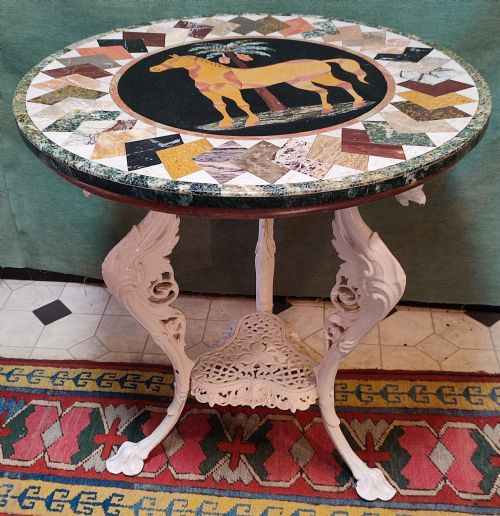


Iron Marble Side Table
An iron marble side table brings robust metalwork and cool stone together for practical surfaces found across French and English interiors.
Iron Marble Side Table
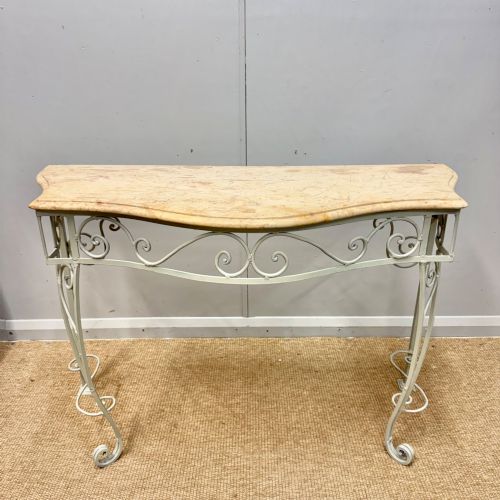
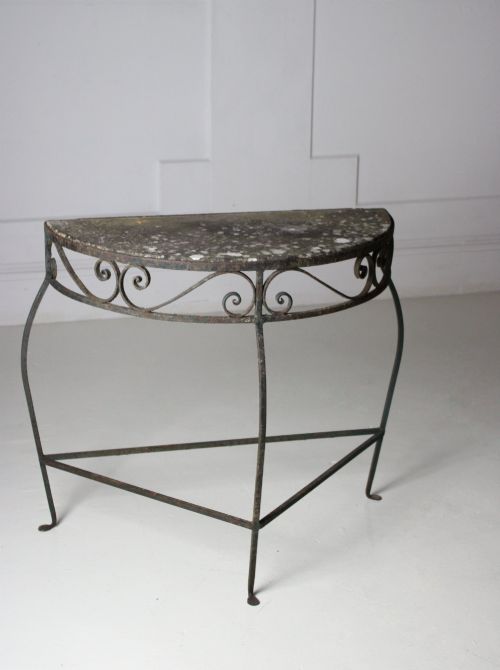
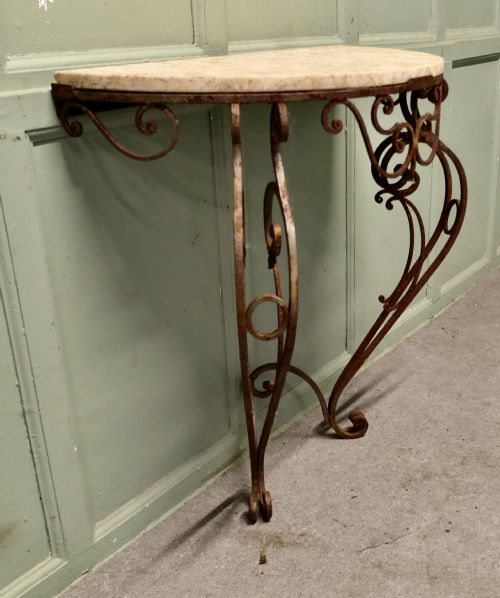
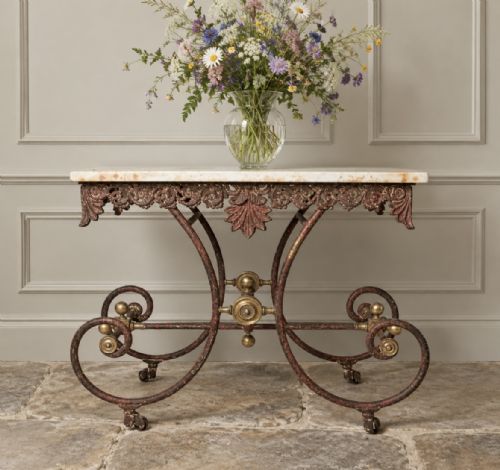
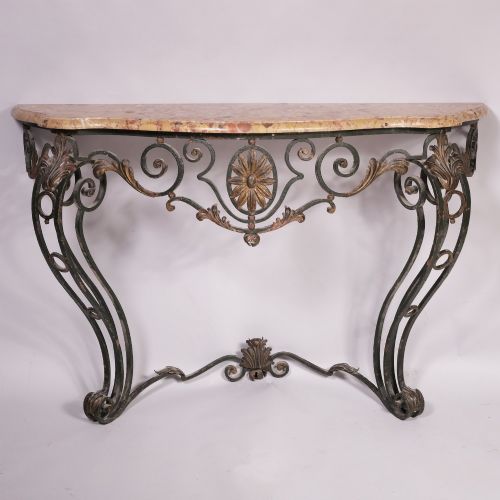
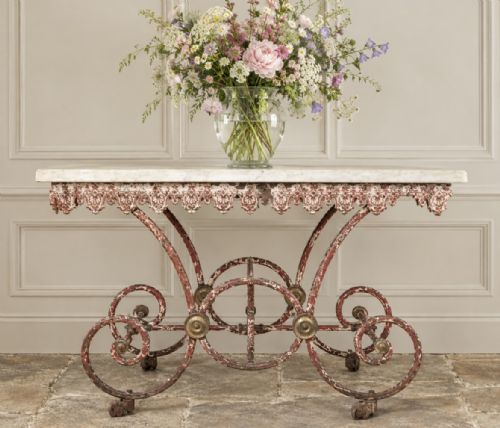
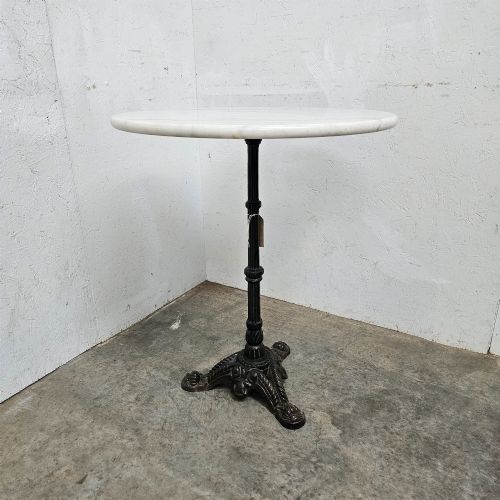
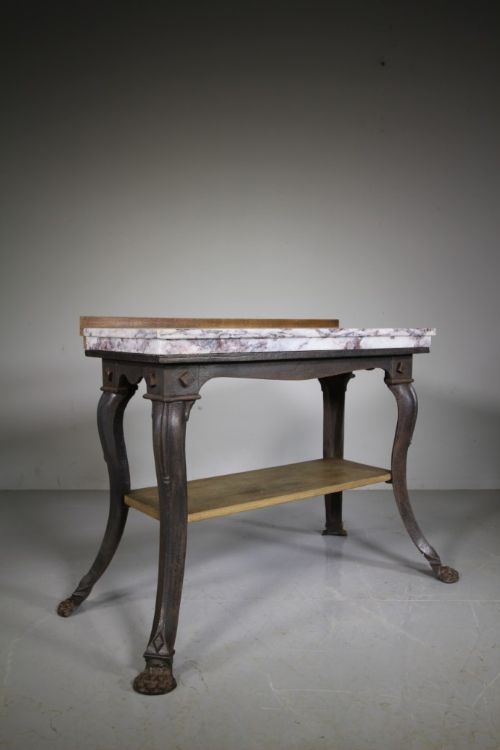
An iron marble side table combines a sturdy metal base with a smooth stone surface, appearing in forms such as console tables, bistro tables, and garden stands. When searching for an iron marble side table, buyers encounter pieces originating from the nineteenth century, the Edwardian era, and the nineteen-twenties.
The designs draw heavily on French provincial, bistro, and chateau traditions alongside Victorian and Edwardian English workshop patterns. These tables serve utility in hallways, kitchens, and conservatories where a durable yet elegant surface is required.
How they were made
Bases take shape through cast iron or forged wrought iron, sometimes accented with brass fittings or finished with gold leaf. Heavier structural components utilise cast iron for stability, whilst wrought iron offers slender, curved silhouettes.
Tops feature white marble, green marble, or multi-coloured specimen marble fitted precisely to the metal frames. Stonemasons shaped and polished the heavy slabs to sit flush upon the supportive metal underframes.
Listings feature nineteenth century, Edwardian, and nineteen-twenty periods alongside materials including cast iron, wrought iron, brass, and specimen marble.
What varies in quality
Quality rests in the harmony between the metal forging and the stone selection, where hand-wrought ironwork displays greater individual detail than mass-produced castings. The thickness and grain of the marble top dictate the visual weight and longevity of the piece.
Proportion and structural integrity define the superior examples, ensuring the heavy stone rests securely upon the balanced metal base without wobble or undue strain on the joints.
The Iron Marble Side Table Glossary
- Console table
- A long table designed to stand against a wall, frequently featuring a narrow profile suitable for hallways.
- Bistro table
- A small table traditionally used in cafes, typically featuring a single central pedestal or four slender legs.
- Specimen marble
- A decorative surface composed of various types of marble fitted together in geometric or mosaic patterns.
- Wrought iron
- Iron that has been heated and shaped with tools by a blacksmith, resulting in a fibrous texture and strong resilience.
- Cast iron
- Iron poured into a mould in a molten state, allowing for repeatable decorative patterns and sturdy structural bases.
Iron Marble Side Table: Frequently Asked Questions
Where should I place an iron marble side table?
These tables suit narrow hallways, living rooms, and conservatories where a durable surface is useful.
The cool stone top resists everyday wear, making them practical beside seating or against hallway walls.
How do I care for the marble top?
Wipe the surface regularly with a damp cloth and mild soap to remove dust and spills.
Avoid abrasive cleaners or acidic liquids that can etch the polished stone over time.
Are these tables French or English?
The selection includes both French provincial and English domestic examples from the nineteenth and early twentieth centuries.
French pieces often lean towards bistro and chateau styles, whilst English pieces frequently follow Victorian or Edwardian workshop designs.
How can I tell the period of the table?
Dating relies on the casting techniques, the style of the ironwork, and the character of the marble edge.
Nineteenth-century examples show hand-forged details or heavier Victorian casting methods, whereas nineteen-twenty pieces often reflect simpler cafe or console forms.