



Wrought Iron Side Table
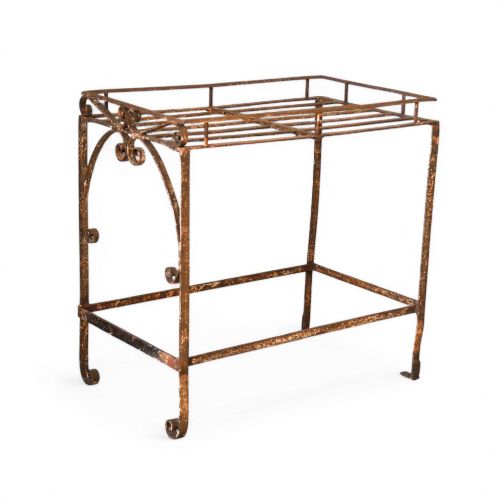
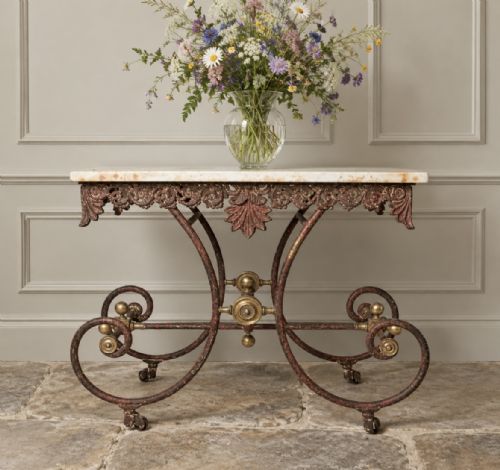
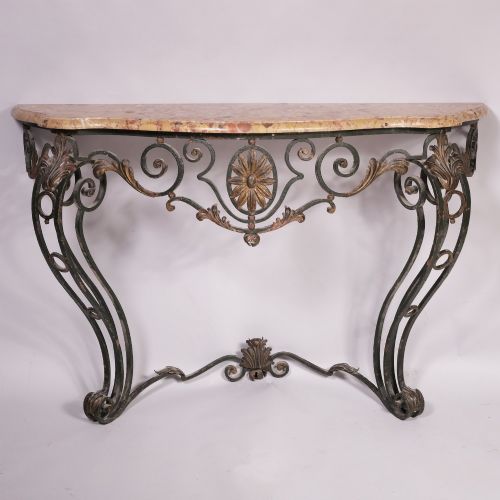
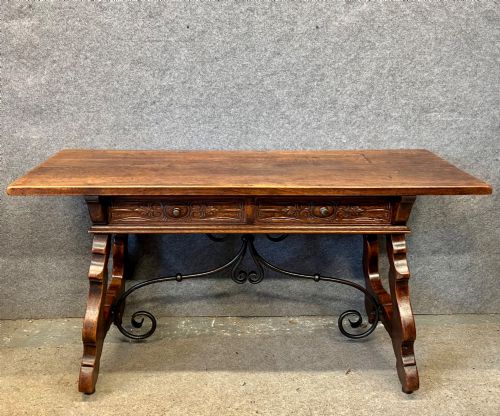
A wrought iron side table brings heavy metal structure and stone or glass surfaces together in rooms that need industrial grit or French country charm.
Wrought Iron Side Table
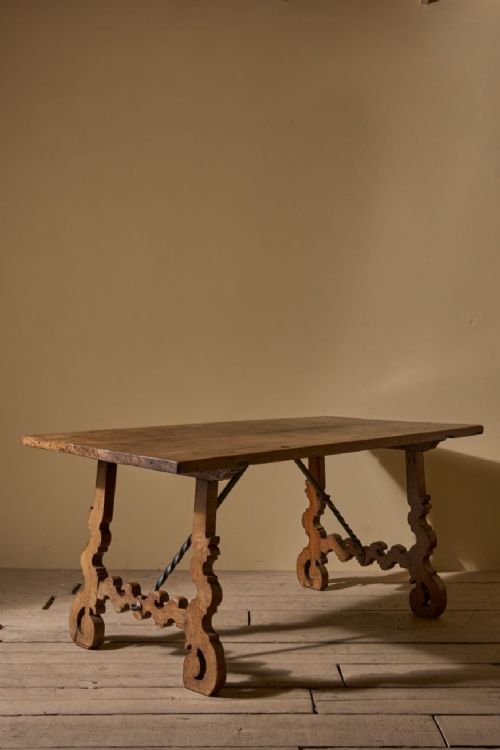
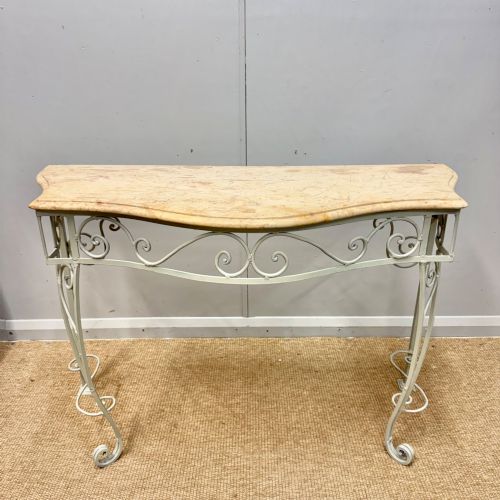
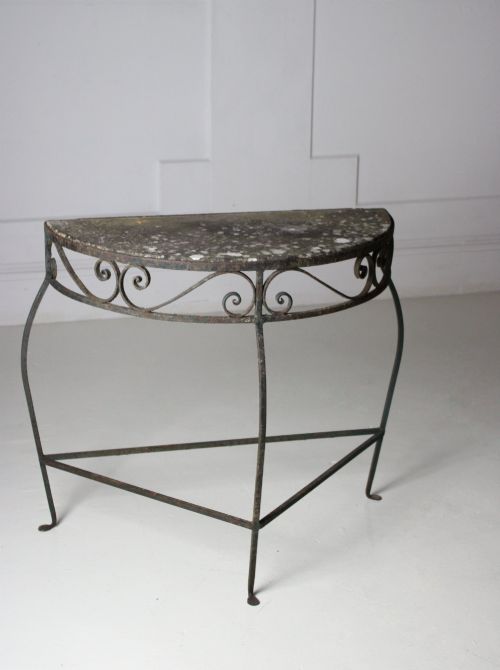
When you search for a wrought iron side table, you encounter practical domestic furniture built from robust metal frames paired with stone, wood, or glass surfaces. These pieces cross paths with console tables, bistro tables, and garden stands originating from French provincial settings and Spanish rustic traditions.
The most common versions on this page pair dark forged metal bases with cool white marble tops or patinated wood surfaces. They serve as compact occasional surfaces in hallways, living rooms, and garden rooms where sturdy utility matters as much as silhouette.
How they were made
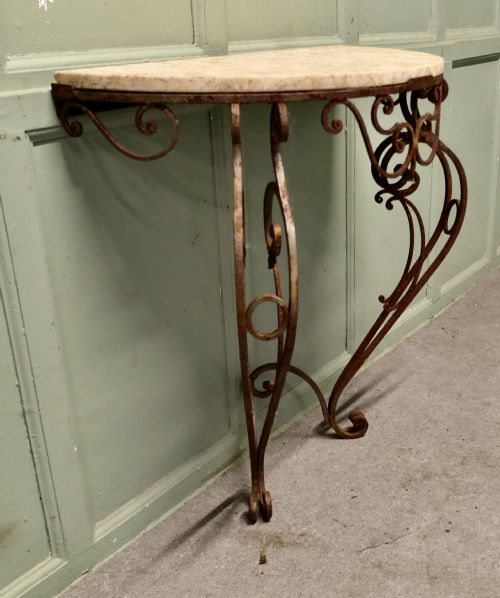
Makers shaped heated metal bars over anvils by hand, hammering and bending the iron into scrolls, strap work, and structural legs. This hot-working technique created strong frames capable of supporting heavy stone or timber tops.
Surfaces combined contrasting materials like carved walnut, oak, and fruitwood alongside polished marble slabs and enamelled glass. Joinery relied on mechanical fixings, rivets, and mortise and tenon joints to anchor the heavy metal bases securely.
Some garden tables arrive with folding frames built for quick storage after tea on the terrace.
What varies in quality
Quality rests in the fluidity of the hand-forged metalwork and the harmony between the iron base and its top. Skilled smiths created dynamic curves and balanced proportions that make heavy metal look light and purposeful.
The integrity of the materials elevates certain pieces above standard production, particularly thick original marble slabs, heavy cast elements, and dense timbers like Spanish walnut with deep patination.
The Wrought Iron Side Table Glossary
- Wrought iron
- Iron that has been heated and hammered into shape by a blacksmith. It contains fibrous slag inclusions that give the metal a textured grain.
- Console table
- A table designed to stand against a wall, frequently topped with marble or wood. These pieces often feature decorative wall-anchoring frames.
- Patina
- The surface sheen and colour developed through age, handling, and use. Good patination shows the true age of wood and metal.
- Scroll work
- Ornamental spiral or curved metal designs forged by hand. This decoration defines many traditional French and Victorian iron bases.
- Vitrolite
- An opaque pigmented glass popular during the Art Deco period. It provides a smooth, flat surface for table tops.
Wrought Iron Side Table: Frequently Asked Questions
Where should I place a wrought iron side table?
These tables suit narrow hallways, garden rooms, and living spaces where a sturdy surface is needed against a wall or beside seating. Their stone or wood tops handle daily use while the metal frames maintain an open footprint.
They also function effectively in kitchens and conservatories where moisture resistance and durability are practical priorities.
How do I clean a marble top?
Wipe the surface with a damp cloth and mild, non-acidic soap to protect the stone from etching. Avoid harsh chemical cleaners that can dull the polished finish over time.
Dry the marble thoroughly after washing to prevent water spots from forming on the surface.
Are these tables suitable for outdoor use?
Many examples originate as garden tables, cafe furniture, or plant stands designed to withstand the elements. Iron frames naturally tolerate outdoor settings if protected from standing moisture.
Wooden tops and interior console designs require sheltered spaces to prevent weathering and warping of the timber.
How do I identify French provincial styles?
French provincial ironwork relies on understated curves, painted or dark metal finishes, and natural wood or marble tops. These pieces prioritize simple domestic utility over ornate palace decoration.
They pair well with rustic oak and walnut elements common in rural French and Spanish interiors.