

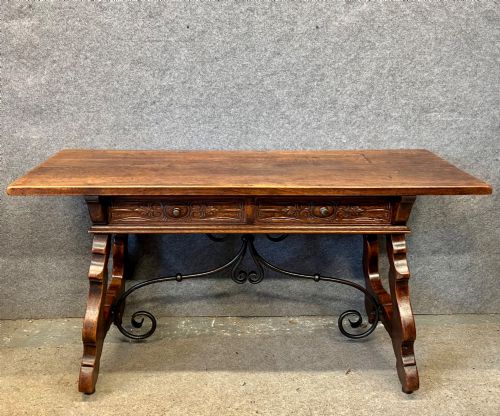


Wrought Iron Hall Table
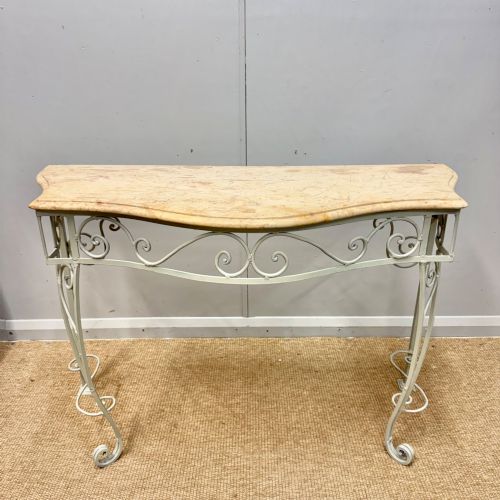
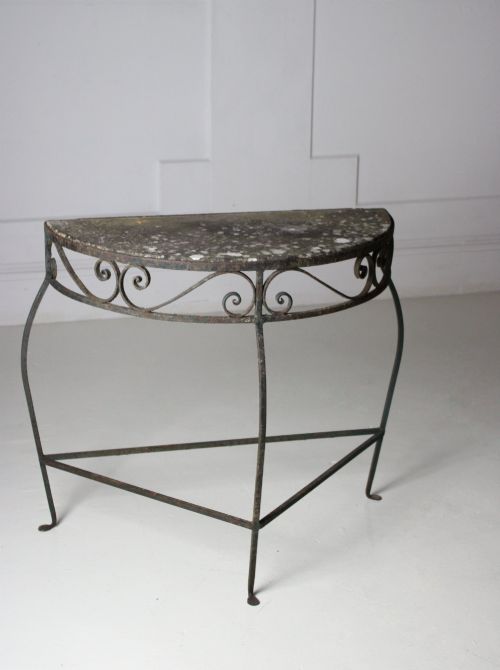
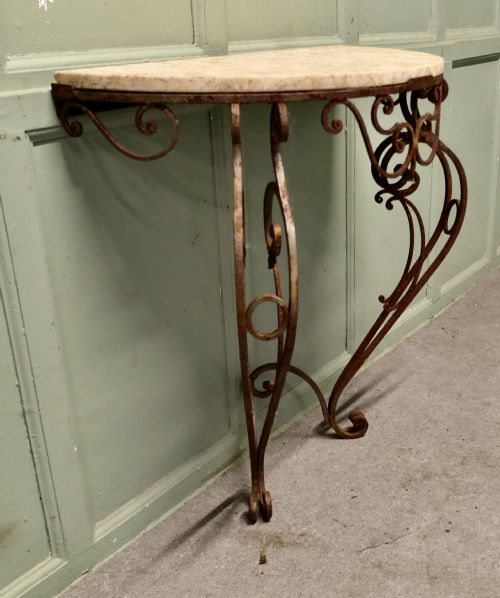
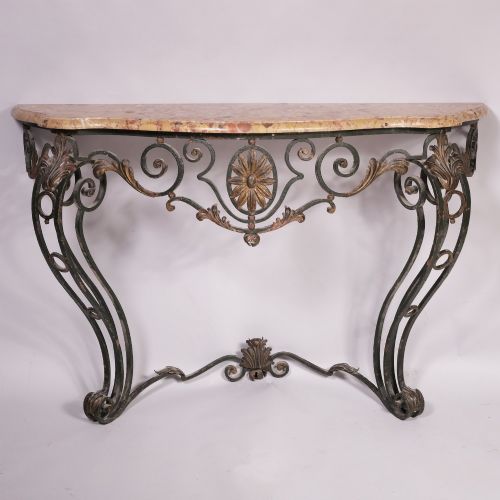
These wrought iron hall table pieces bring heavy metal scrollwork and stone surfaces together to anchor an entrance hall with genuine weight.

Wrought Iron Hall Table
When you search for a wrought iron hall table, you are looking for narrow architectural furniture designed to stand against a narrow passage or entrance wall. The pieces listed here combine sturdy metallic frames with fitted stone, marble, or timber surfaces, designed to take the daily drop of keys and post without a shudder.
You are most likely to meet French and Spanish console formats, often pairing dark metalwork with veined marble or heavy oak and walnut. These forms stretch from 17th-century rustic origins through the lighter, curvier ironwork of the Edwardian era and 1920.
Console tables dominate this category, designed specifically to sit flush against a wall rather than float in the middle of a room. Alongside these consoles, you will find occasional side and centre tables sharing the same iron and wood DNA.
How they were made
The metal framework relies on hand-forged wrought iron, shaped at the forge while hot to create scrolls, twists, and structural stretchers. Unlike cast iron, which is poured into moulds, wrought iron shows the slight irregularities and hammer marks of the smith's hand.
The top surfaces demand contrasting materials, predominantly heavy slabs of white, cream, or serpentine marble, alongside solid walnut, oak, and fruitwood. Some pieces integrate brass details or gold leaf highlights to soften the industrial severity of the iron legs.
Wrought Iron Hall Table Retail Price Guide 2026
Typical asking prices for wrought iron hall table among the pieces listed under this phrase on Sellingantiques today, from the lower quarter to the upper quarter. They describe what is for sale here now, not the wider market.
The periods represented stretch from the 17th century through the Victorian era, Edwardian period, and into the 1920s.
What varies in quality
Quality separates at the junction where the iron frame meets the heavy stone or timber top, demanding precise forging so the surface sits dead flat without rocking. Finer examples show crisp, confident hand-forging in the scrolls rather than lazy, uniform industrial bending.
The choice of top material dictates the standing of the piece, with thick slab marble and richly grained old walnut commanding greater presence than thinner timber or replacement tops. Original surface patination on both the iron and the wood elevates the piece above later refinished examples.
The Wrought Iron Hall Table Glossary
- Wrought iron
- Iron that has been heated and hammered by hand into shape, notable for its fibrous texture and resilience. It bends rather than snaps under heavy weight.
- Console table
- A table designed to be fixed against a wall, traditionally supported by two or four legs. Because the back often relied on the wall for stability, many older examples have shallow depths.
- Serpentine marble
- A marble slab cut with a distinctive undulating, wave-like front edge. This shaping requires careful stonemasonry.
- Patina
- The surface sheen and mellowing developed by wood, metal, and stone over decades of handling and exposure. Good patina shows deep integration of age.
- Stretcher
- A horizontal wooden or iron rail connecting the legs of a table to improve rigidity. On hall tables, these often feature decorative scrolling.
Wrought Iron Hall Table: Frequently Asked Questions
Are these tables deep enough for a hallway?
Console and side tables in this group are built with shallow depths specifically to fit narrow corridors without blocking foot traffic.
Their slim profiles allow them to hug the wall while still providing adequate surface space for lamps and decorative objects.
Can marble tops support heavy everyday items?
Thick marble slabs fitted to these iron frames offer immense weight-bearing capacity for daily use.
The stone is naturally cool and hard-wearing, though it requires sensible protection against acidic spills.
How do I identify a 19th-century iron frame?
Nineteenth-century ironwork typically displays subtle hand-forged inconsistencies and layered dark paint finishes built up over generations.
Close inspection often reveals individual hammer marks rather than uniform modern machine welding.
Do these tables require wall attachment?
Many taller console formats are built with wall stability in mind, sometimes utilising the wall to prevent forward tipping.
Checking the leg stance and weight distribution will tell you whether a bracket or simple floor placement is best.