


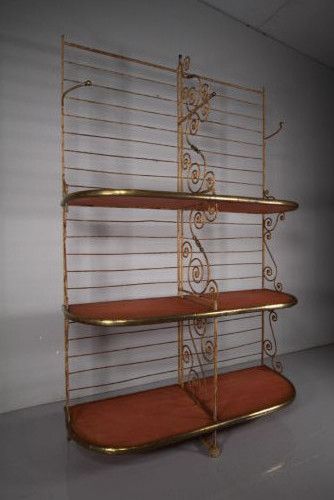


Wrought Iron Bakers Rack
A wrought iron bakers rack brings sturdy industrial utility and classic French country charm directly into a modern kitchen.

Wrought Iron Bakers Rack
When buyers search for a wrought iron bakers rack, they are looking for open-shelved metal storage units originally designed for cooling bread and pastries in European commercial kitchens. These pieces appear on this page in forms ranging from grand Parisian boulangerie racks to English scroll-work iron bakery racks and simpler painted storage shelves.
The versions most commonly met here span the nineteenth century and the early twentieth century, carrying distinct regional identities like French Country, French Provincial, Victorian, and French Industrial. Many examples hail directly from France, including pieces stamped by makers such as Dubois of Lyon or associated with Parisian boulangeries and patisseries.
Beyond standard baker racks and shelving units, the evidence shows related forms like plant stands constructed from similar metals. Buyers utilise these sturdy open frames today for displaying kitchenware, books, or botanicals in domestic settings.
Construction and materials
These items are constructed primarily from heavy wrought iron, supplemented in various examples by steel, brass, and painted metal finishes. The structural frames rely on durable blacksmithing techniques to support multiple tiers of open shelving.
Decorative elements often incorporate delicate scroll-work and stamped maker details, particularly on Parisian and English pieces from the nineteenth century. Protective or decorative coatings include historic painted surfaces that show the natural patination of age.
Wrought Iron Bakers Rack Retail Price Guide 2026
Typical asking prices for wrought iron bakers rack among the pieces listed under this phrase on Sellingantiques today, from the lower quarter to the upper quarter. They describe what is for sale here now, not the wider market.
Current listings feature pieces predominantly from the nineteenth century and early twentieth century, spanning French Country, Victorian, and industrial aesthetics.
Judging quality in metal shelving
Quality in these items rests upon the weight and integrity of the metalwork, where substantial wrought iron frames with crisp scroll-work command greater attention than lighter painted metal structures. The presence of authentic maker stamps or workshop attributions, such as those from Lyon or Paris, elevates a piece beyond standard utility shelving.
Original surface patination and historic painted finishes dictate visual appeal, with untouched period patinas offering greater character than modern refinishing. The overall scale and proportion, from standard kitchen units up to large nine-foot architectural examples, determine how successfully the frame integrates into a room.
Dubois of Lyon
The Wrought Iron Bakers Rack Glossary
- Wrought iron
- A tough, malleable form of iron that can be heated and hammered into decorative scroll-work and sturdy structural frames. This material forms the primary skeleton for traditional kitchen and bakery storage.
- Boulangerie rack
- A large commercial shelving unit traditionally utilised in French bakeries for cooling freshly baked loaves. These industrial pieces now serve as statement storage in domestic kitchens.
- Patisserie rack
- A specialised metal shelving frame originating from French pastry shops, built to display or store delicate baked goods. They share the open-air design characteristic of baker racks.
- Scroll-work
- Ornamental curved metal detailing shaped into spiral or scroll motifs. This decorative technique softens the industrial rigidity of iron frames.
- Patina
- The surface sheen and colour acquired by metal and paint through age and use. A genuine period patina demonstrates the authentic history of the piece.
Wrought Iron Bakers Rack: Frequently Asked Questions
What is a wrought iron bakers rack used for today?
These open metal units provide practical vertical storage for kitchenalia, heavy cookware, and crockery in domestic dining spaces. Their robust construction also makes them suitable for holding heavy books or indoor plants.
In living areas, homeowners utilise the open tiers to display decorative objects and collections where traditional wooden bookcases might feel too heavy.
How do I date an antique bakers rack?
Dating relies on examining the construction methods, metal types, and stylistic indicators such as nineteenth-century scroll-work or early twentieth-century industrial forms. Stamped maker marks and regional French or English characteristics also help narrow down the period of manufacture.
Comparing the paint layers and surface patination against known nineteenth and early twentieth-century examples provides further clues to a piece's age.
Are these racks suitable for small kitchens?
The open-frame design of these metal units allows light to pass through, preventing them from dominating a compact kitchen space visually. They offer generous vertical storage without taking up excessive floor area.
Buyers should carefully measure ceiling heights and wall space, as grander Parisian examples can measure up to nine feet tall.
How do I care for antique wrought iron?
Maintenance involves dusting the metal regularly with a dry cloth and avoiding harsh chemical cleaners that might strip historic painted surfaces. Keeping the pieces in stable humidity environments prevents moisture from affecting exposed iron.
Applying microcrystalline wax can help protect original metal finishes without altering their historic character.