


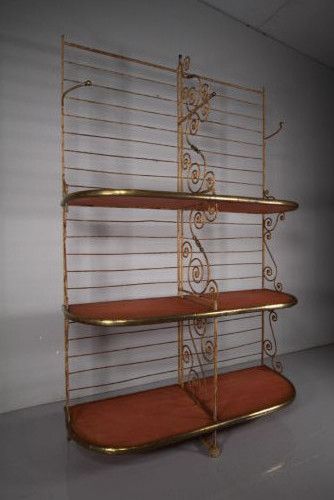


French Wrought Iron Shelving
French wrought iron shelving brings robust utility and classic styling into modern rooms, offering enduring storage through open metal framework.
French Wrought Iron Shelving
When you search for french wrought iron shelving, you encounter utilitarian storage pieces rooted in commercial baking and domestic life. The listings on this page span the nineteenth century through the early twentieth century, taking forms such as bakers racks, patisserie racks, bread racks, pot stands, and storage shelves.
The most common formats you meet here are bakers racks and boulangers bread racks, often associated with provincial or Parisian origins. These items transition easily from historic commercial use into domestic kitchens, living spaces, and conservatories for display and storage.
The periods represented stretch from eighteen-sixty through the Victorian era and up to nineteen-twenty, encompassing styles like French country, French industrial, and French provincial. Each piece reflects the robust construction standards of its original working environment.
How they were made
These items rely primarily on wrought iron and steel, shaped through traditional metalworking techniques to create sturdy open frames. Subsidiary materials like brass add structural or decorative detail, while paint and painted metal surfaces provide protective finishes.
Makers utilised manual forging and assembly methods, resulting in heavy, durable structures designed to bear the weight of heavy loaves, pots, and provisions. Surviving pieces often retain traces of historic paintwork or stamped maker marks that record their workshop origin.
French Wrought Iron Shelving Retail Price Guide 2026
Typical asking prices for french wrought iron shelving among the pieces listed under this phrase on Sellingantiques today, from the lower quarter to the upper quarter. They describe what is for sale here now, not the wider market.
Listings feature periods from eighteen-sixty through the Victorian era and nineteen-twenty, alongside materials such as wrought iron, steel, and painted metal.
What varies in quality
Quality in these pieces rests upon the finesse of the ironwork, the balance of the proportions, and the integrity of the frame construction. Pieces produced by established workshops, such as named makers from Lyon or Paris, display superior detailing in their scrollwork and joints.
The character of the surface finish also distinguishes finer examples, where original painted surfaces or patinated metal bear witness to age without compromising structural soundness. Subtleties in the wirework mesh and the weight of the iron separate standard utilitarian items from exceptional commissions.
Dubois of Lyon
The French Wrought Iron Shelving Glossary
- Wrought iron
- A tough, malleable form of iron containing slag inclusions, easily forged into structural shapes. It resists fatigue under heavy loads and forms the backbone of these racks.
- Bakers rack
- A tall, open shelving unit originally used in commercial bakeries for cooling bread and pastries. Today it serves as versatile kitchen or display shelving.
- Patisserie rack
- A specialised shelving structure designed for pastry displays in French shops. These units often feature lighter gauge metalwork and decorative scroll framing.
- Boulanger rack
- A French bread rack built for heavy commercial bakery use. These robust structures typically incorporate multiple tiers of shelving.
- Pot stand
- A smaller iron stand configured for holding heavy pots and plants. These pieces utilise sturdy metal frames to support weight in domestic settings.
French Wrought Iron Shelving: Frequently Asked Questions
How do I date these racks?
Dating relies on construction methods, material choices, and any stamped maker marks found on the metal frame. Pieces from the mid-nineteenth century often display hand-forged elements distinct from later twentieth-century production.
Examining the type of iron and the characteristics of the paint layers helps establish whether a piece originates from the Victorian era or the early nineteen-hundreds.
Can these shelves hold heavy items?
These units were originally engineered for commercial bakeries and kitchens to carry heavy loads of bread, pastry, and pots. Their solid wrought iron and steel construction provides exceptional structural strength.
In modern settings, they easily support books, heavy kitchenware, and large plants without flexing or compromising stability.
How do I care for painted iron?
Maintenance involves gentle dusting with a dry cloth to prevent dirt accumulation on the metal surfaces. Avoid harsh chemical cleaners that might strip historic paint or accelerate corrosion.
Keeping the pieces in stable indoor environments protects the iron and preserves the authentic patinated finish developed over decades of use.
Where do French bakers racks originate?
These utilitarian pieces come from commercial bakeries, patisseries, and domestic kitchens across France, including Parisian workshops and regional centres like Lyon. Their design reflects the practical needs of nineteenth-century French trade.
Makers stamped certain pieces to record their workshop origin before the racks entered the antique market.