

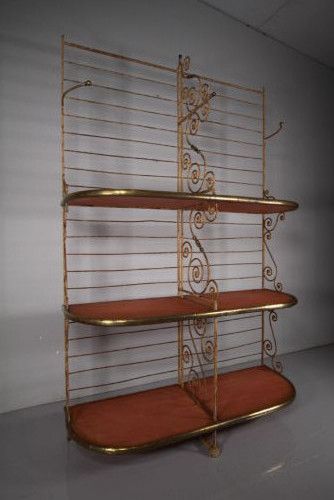


Brass and Iron Shelving
Brass and iron shelving combines industrial strength with refined metalwork, offering open storage that defines a period interior.
Brass and Iron Shelving
These pieces encompass robust utility items adapted for display and storage, centred around baker's racks, patisserie racks, bread racks, and shop display stands. When searching for brass and iron shelving, buyers encounter substantial framework designed originally for commercial or culinary environments.
Makers such as Dubois of Lyon appear among the French examples, alongside stamped Parisian pieces that indicate commercial workshop production. The fundamental structure pairs heavy wrought iron or cast iron with polished brass details.
How they were made
Construction relies on forged wrought iron and cast iron frameworks that provide structural integrity and load-bearing capacity. Workshops shaped these metals through traditional blacksmithing techniques to form open vertical frames and scrollwork.
Brass components, including finials, mounts, and trim, are integrated to soften the utilitarian iron structure. Additional materials such as pine and glass appear in shelving units and display stands, combining metal support with flat surfaces.
Listings feature pieces from the Victorian era and the year 1900, constructed from brass, wrought iron, cast iron, glass, and pine.
What varies in quality
Quality rests in the proportional balance between the heavy iron framework and the finer brass decorative elements. Pieces retaining original stamped workshop marks or identified maker attributions command greater interest from collectors.
The integrity of the structural metalwork, the weight of the cast components, and the integration of secondary materials like glass and pine dictate the distinction between standard utility items and finer display pieces.
Dubois of Lyon
The Brass and Iron Shelving Glossary
- Baker's rack
- A heavy metal shelving unit originally used in commercial bakeries for cooling bread and pastries. These towers typically feature open iron mesh or wire shelves.
- Wrought iron
- Iron that has been heated and hammered into shape by a blacksmith, known for its fibrous texture and durability. This material forms the primary load-bearing structure of nineteenth-century French racks.
- Shop display stand
- A commercial fixture designed for retail environments to showcase merchandise to customers. Examples often incorporate glass shelves and brass detailing alongside iron supports.
- Cast iron
- Iron poured into a mould to create specific shapes and decorative motifs. This method allowed makers to produce uniform structural joints and ornamental details.
Brass and Iron Shelving: Frequently Asked Questions
What are brass and iron baker's racks?
These tall open shelving units originated in French bakeries and patisseries during the nineteenth century. They were built to hold heavy trays of bread and baked goods.
Today, buyers use them in kitchens and living spaces for display and open storage. Their combination of iron frames and brass fittings suits both industrial and traditional interiors.
How do I clean nineteenth-century metal shelves?
Maintenance requires gentle dusting and occasional cleaning with a dry or slightly damp cloth. Avoid harsh chemical cleaners that can strip aged patinas from the brass and iron.
Preserving the surface metal keeps the historic character intact. Wrought iron and brass develop natural oxidation over decades of use.
How can I tell a French rack from an English one?
French examples from the nineteenth century often feature distinctive scrollwork, stamped workshop origins, and associations with boulangeries or patisseries. They lean toward industrial and chateau aesthetics.
English shop display stands from the same period tend to incorporate alternative materials like pine and glass alongside the brass and iron. Structural proportions and joinery methods also reflect regional cabinet-making and metalworking traditions.