
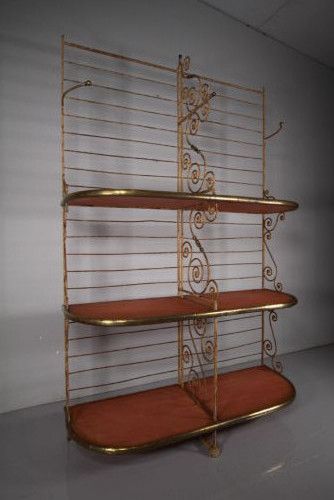


French Iron Shelving Unit
A french iron shelving unit brings industrial utility and refined patisserie style into domestic spaces.
French Iron Shelving Unit
A french iron shelving unit is essentially a sturdy framework designed for commercial or domestic storage, drawing heavily on heritage bakery and shop designs. These pieces often take the form of bakers racks, display shelving, plant stands, or kitchen dressers.
Most examples found here date from the nineteenth and early twentieth centuries, capturing the robust aesthetic of Parisian boulangeries and field kitchens. Buyers frequently encounter forms labelled as boulangers bread racks, patisserie racks, or shop display stands.
The aesthetic bridges several styles, ranging from French country and provincial to industrial and chateau influences. Their open shelving format makes them practical for modern interiors while retaining authentic period character.
How they were made
Makers utilised wrought iron, cast iron, and steel to build rigid, load-bearing frameworks that could withstand heavy daily use in commercial environments. Sheet metal and painted metal components often form the backing or shelving surfaces.
Wood elements, specifically pine, occasionally appear alongside the metal structures to create contrasting tiers or storage bases. Selected pieces incorporate brass fittings or bear stamps from the original makers and workshops.
The current selection spans from the mid-nineteenth century through the early twentieth century, highlighting wrought iron, steel, and pine.
What varies in quality
Quality rests primarily on the integrity of the original construction and the weight of the metal used. Heavy wrought iron and steel frames demonstrate superior durability compared to lighter sheet metal alternatives.
The character of the surface finish also distinguishes finer examples, where genuine age-related wear and original paint layers create a desirable patina. Pieces retaining maker stamps or bearing more intricate decorative scrollwork represent higher tiers of craftsmanship.
The French Iron Shelving Unit Glossary
- Bakers rack
- A tall, multi-tiered metal shelving unit historically used in commercial bakeries for cooling bread and pastries. They provide ample open storage for modern domestic kitchens and living areas.
- Boulangerie rack
- A heavy-duty French bread rack constructed from iron and wire mesh, designed for commercial Parisian bakeries. These pieces display distinct industrial proportions and open side panels.
- Wrought iron
- Tough, malleable iron worked by hand with a hammer and anvil, showing a fibrous grain structure when fractured. It provides the strong, slender structural lines seen in nineteenth-century frames.
- Sheet metal
- Metal formed into thin, flat pieces by industrial rolling processes, often utilised for shelves or backing panels. It offers a lighter alternative to cast components while maintaining rigidity.
- Patina
- The surface texture and coloration developed through decades of handling, wear, and oxidation. It serves as a visual indicator of genuine age and historical use.
French Iron Shelving Unit: Frequently Asked Questions
What is a french iron shelving unit?
A french iron shelving unit is a heavy-duty storage fixture originating from nineteenth and early twentieth-century commercial environments such as Parisian bakeries and shops. These items typically feature open metal tiers designed for practicality and display.
They combine structural iron or steel frames with wooden elements or mesh shelving, reflecting traditional French industrial and provincial design aesthetics.
How were bakers racks used originally?
Bakers racks were utilised in commercial boulangeries and patisseries to cool freshly baked loaves and display goods to customers. Their open wire or metal shelves allowed air circulation around hot items.
Over time, these utilitarian pieces found their way into domestic settings, adapting from commercial cooling stands to kitchen dressers and general storage units.
How do I style a metal shelving unit?
These industrial units suit kitchens, living rooms, and conservatories where their open framework can hold books, plants, or crockery. Their slim profiles allow them to fit into tight spaces without overwhelming the room.
Pairing the aged metal with natural materials like timber or stone highlights the textural contrast inherent in nineteenth-century French furniture.
How do I identify period iron furniture?
Period pieces from the nineteenth and early twentieth centuries often display hand-forged elements, heavy wrought iron or cast iron construction, and genuine painted surfaces. Maker stamps can occasionally be found on the frame.
Material choices such as early pine boards, brass details, and authentic surface patination help distinguish older French utility furniture from modern reproductions.