



Antique Iron Shelving Unit
An antique iron shelving unit brings utility and enduring industrial character into a room, combining robust metal frameworks with practical tiers.

Antique Iron Shelving Unit
When you search for an antique iron shelving unit, you are looking at functional storage pieces originating primarily from the nineteenth and early twentieth centuries. These objects span utilitarian bakers racks, shop display stands, and kitchen dressers designed for heavy everyday use in commercial and domestic spaces.
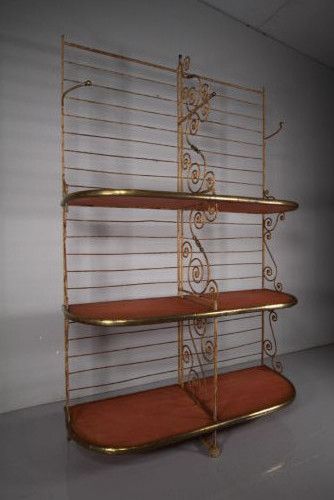
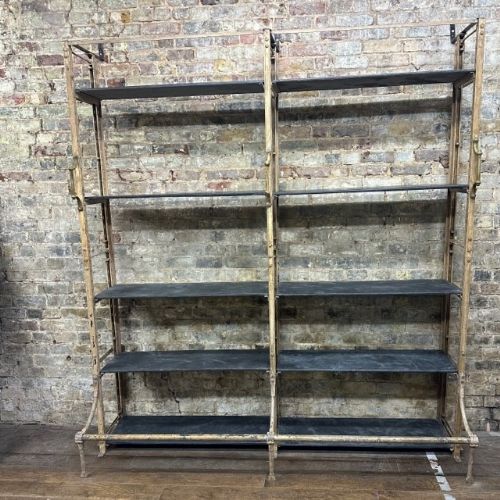
The versions you are most likely to meet on this page include French boulangerie racks and English shop display stands. These pieces frequently combine durable metal frames with supportive tiers made from glass, slate, or pine, reflecting their original purposes in bakeries, patisseries, and retail shops.
The aesthetic bridges several documented styles, ranging from Victorian industrial pieces to French provincial and chateau designs. Each unit shows the utilitarian heritage of the period through straightforward construction and robust materials suited to holding heavy items.
Materials and construction methods
These pieces are constructed primarily from wrought iron, cast iron, and steel, often joined with brass components or scroll-work detailing. The metal skeletons provide structural rigidity designed to support dense loads of bread, provisions, or shop goods.
Shelving surfaces integrate contrasting materials such as glass, slate, and pine alongside sheet metal and drainer sections. This material mix served practical needs in nineteenth-century kitchens and shops, balancing weight-bearing strength with clean surfaces for food or display.
Antique Iron Shelving Unit Retail Price Guide 2026
Typical asking prices for iron shelving unit among the pieces listed under this phrase on Sellingantiques today, from the lower quarter to the upper quarter. They describe what is for sale here now, not the wider market.
Current listings feature pieces spanning the nineteenth century through the 1920s, incorporating wrought iron, cast iron, brass, slate, and pine.
Assessing quality in metal and shelving
Quality separates utilitarian workshop items from finer retail display pieces through the presence of decorative scroll-work and stamped makers' marks. Pieces intended for Parisian patisseries or English shop displays often incorporate more refined metal manipulation and balanced proportions.
The integrity of the combination materials dictates the overall standing of a piece. Units retaining original slate or glass tiers alongside patinated iron and brass demonstrate a higher degree of historical completeness than those with later replacements.
The Antique Iron Shelving Unit Glossary
- Bakers rack
- A tall, multi-tiered shelving unit originally utilised in bakeries for cooling bread and pastries. These pieces feature open iron frameworks to allow air circulation around freshly baked goods.
- Boulangerie rack
- The French equivalent of a bakers rack, typically associated with Parisian commercial spaces from the nineteenth century. They often display distinctive scroll-work and robust metal construction.
- Shop display stand
- A commercial shelving structure designed for retail environments to exhibit merchandise to customers. These units frequently incorporate brass and iron elements with glass or wooden shelves.
- Wrought iron
- A tough, malleable form of iron that can be heated and hammered into decorative scrolls and structural shapes. It forms the backbone of many nineteenth-century industrial frames.
- Slate shelving
- Flat stone slabs utilised as horizontal tiers within storage units. Slate provided a cool, durable surface ideal for food preparation and commercial display.
Antique Iron Shelving Unit: Frequently Asked Questions
What were antique iron shelving units originally used for?
These units served commercial and domestic purposes in nineteenth-century bakeries, shops, and kitchens. They held heavy loads of bread, pastries, provisions, and retail goods for storage and display.
Open metal frameworks allowed for efficient air circulation around cooling items while keeping heavy provisions accessible during busy daily operations.
How do I clean and maintain an iron shelving unit?
Dust the metal frames regularly with a dry cloth to prevent the accumulation of dirt within scroll-work and joints. Avoid harsh chemical cleaners that might strip the historic patination from the iron or brass.
For wooden or slate shelves, use appropriate mild cleaners suited to the specific stone or timber surface, ensuring moisture is dried thoroughly.
Can I use a bakers rack in a modern kitchen?
These shelving units adapt well to contemporary kitchen spaces for storing cookware, dishes, or provisions. Their open tiers provide practical vertical storage without overwhelming smaller rooms.
Ensure the floor space can accommodate the depth of the rack and consider the weight capacity if storing heavy cast-iron pots or dense dishware.
How do I date an antique iron shelving unit?
Dating relies on observing construction techniques, material combinations, and stylistic clues typical of periods like the Victorian era or early twentieth-century French design. Stamped marks on the metal can sometimes point to specific workshops or origins.
The integration of specific materials, such as slate or pine alongside wrought iron, helps align the piece with documented eras like the 1860s or 1900s.