


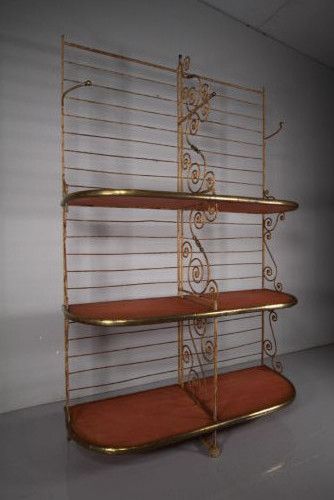


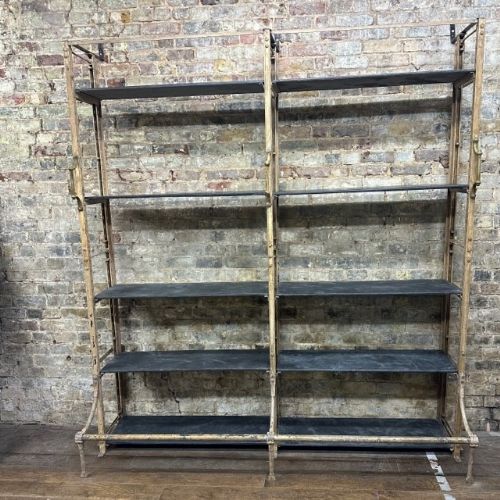
Industrial Iron Display Rack
These industrial iron display racks bring robust utility and striking linear presence into modern domestic spaces.

Industrial Iron Display Rack
An industrial iron display rack is a heavy-duty storage and presentation structure designed originally for commercial bakeries, patisseries, and Victorian shops. These pieces combine utilitarian strength with decorative scroll-work, serving practical display functions in contemporary interiors.
Buyers encounter French bakers' racks alongside English shop display stands and countertop paper dispensers. Originating mainly from the nineteenth century and the early twentieth century, these items utilise durable metals combined occasionally with pine, glass, or slate.
The dominant forms on this page include large Parisian boulangerie racks and smaller shop fittings. Such pieces bridge the gap between commercial heritage and domestic furnishing.
Construction and Materials
Makers constructed these racks using wrought iron, cast iron, and steel to ensure structural rigidity for heavy commercial use. Brass elements and slate shelving appear alongside pine additions, demonstrating a mix of robust metalwork and functional wooden or stone surfaces.
Forging techniques and riveted joints provide the structural integrity seen in nineteenth-century French and English workshop pieces. Stamped maker marks and intricate scroll-work indicate skilled artisan input during production.
Industrial Iron Display Rack Retail Price Guide 2026
Typical asking prices for industrial iron display rack among the pieces listed under this phrase on Sellingantiques today, from the lower quarter to the upper quarter. They describe what is for sale here now, not the wider market.
A nineteenth-century Parisian baker's rack once held crusty baguettes before finding a second life holding cookbooks.
Judging Quality
Quality rests upon the purity of the metalwork, the clarity of artisan stamps, and the integrity of supplementary materials like slate or glass. Pieces exhibiting refined scroll-work alongside heavy gauge iron stand apart from simpler utilitarian iterations.
Original patina and structural survival without modern reinforcement separate exceptional workshop survivals from heavily altered examples. The presence of identifiable foundry signatures or maker attribution elevates the standing of an individual rack.
Dubois of Lyon
The Industrial Iron Display Rack Glossary
- Boulangerie rack
- A specialised baker's rack originating from French commercial bread shops. These tall iron units typically hold multiple shelves for cooling or displaying loaves.
- Wrought iron
- A tough, malleable form of iron worked by hand with a hammer and anvil. This material bends into decorative scrolls rather than snapping under stress.
- Cast iron
- Iron poured into a mould to create rigid structural components or decorative brackets. It offers high compressive strength but lacks the fibrous flexibility of wrought iron.
- Shop fitting
- Fixtures and furniture built specifically for commercial retail environments. These pieces are engineered for heavy daily customer interaction and high durability.
- Patisserie rack
- A display stand designed for French pastry shops. These structures often incorporate delicate ironwork suited to front-of-house presentation.
Industrial Iron Display Rack: Frequently Asked Questions
What are industrial iron display racks?
These pieces are robust storage and presentation units originally built for nineteenth-century bakeries, patisseries, and shops. They combine heavy metal frames with practical shelving.
Today, buyers use them in kitchens, living spaces, and retail environments to display books, plants, and tableware.
How were baker racks used?
Bakers utilised these tall iron structures to cool, store, and display freshly baked bread and pastries in commercial shops. The open metal framework allowed air circulation around the goods.
Modern owners repurpose them as versatile shelving units to organise household items while adding historical character.
How do I style an iron rack?
Position these substantial metal units against solid walls in kitchens or dining rooms to anchor the room's design. Balance heavy cast iron frames by placing ceramics, glassware, or books on the shelves.
Allow the natural patina and scroll-work of the iron to remain visible rather than crowding every tier.
How do I date an antique rack?
Examine the metal type, construction joints, and any maker stamps present on the iron frame. Nineteenth-century examples often feature hand-forged wrought iron and traditional riveting techniques.
Twentieth-century pieces tend to incorporate standardised steel components and simpler industrial forms.