



French Country Display Rack
A french country display rack brings rustic utility and open storage into a room, shaped by provincial life and practical display needs.
French Country Display Rack
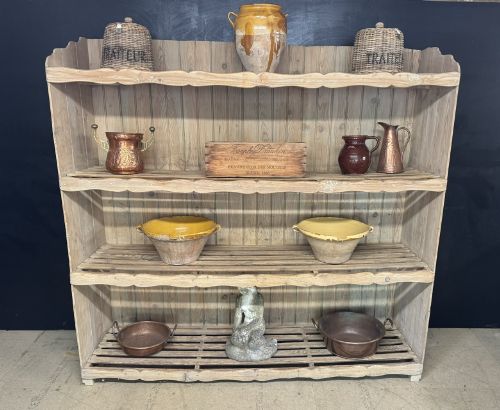
A french country display rack encompasses open shelving, wall shelves, bakers racks, and dressers originating from French provincial and chateau settings. These items serve as functional storage for kitchenware, books, and decorative objects, balancing utility with rustic charm.
The pieces available here span from the eighteenth century through the nineteenth century and into nineteen hundred. Forms range from wall-mounted waterfall shelves and bobbin shelves to large freestanding bakers racks and traditional vaisselier dressers.
Makers and workshops across France produced these utilitarian furnishings to meet domestic and commercial demands. Buyers encounter both residential pieces and professional patisserie or boulangers bread racks adapted for modern interiors.
How they were made
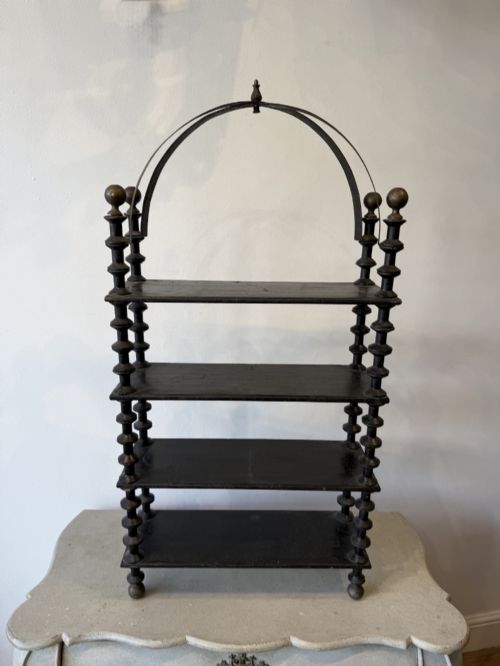
Construction relies heavily on native timbers such as pine, cherry wood, chestnut, and mahogany, alongside ebonised wood for darker finishes. Painted wood surfaces appear frequently, offering the characteristic distressed look associated with provincial furniture.
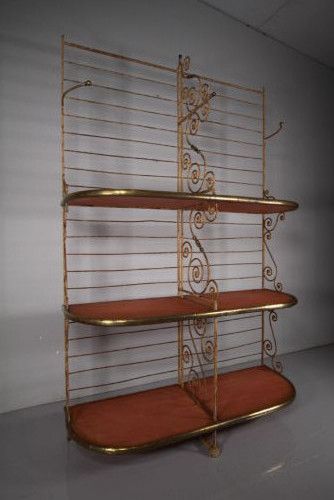
Metal components introduce structural strength through wrought iron, brass, steel, and general metalwork. These durable materials support heavy items, particularly in bakers racks and industrial shelving units designed for rigorous daily use.
The listings here feature pieces spanning the 18th century, 19th century, and 1900, constructed from pine, cherry wood, wrought iron, and brass.
What varies in quality
Quality differentiates through the integrity of the timber and the refinement of the joinery. Solid woods like chestnut and cherry demonstrate superior durability compared to simpler pine constructions, while stamped metalwork or patinated brass indicates careful workshop execution.
The distinction also rests on proportion and authenticity of period surface treatments. Original painted or ebonised finishes hold greater aesthetic weight than later interventions, shaping how light interacts with the grain and structure.
The French Country Display Rack Glossary
- Vaisselier
- A traditional French dresser or cupboard designed for storing and displaying tableware. These pieces often feature open upper shelving paired with enclosed lower cabinets.
- Bakers rack
- A sturdy utilitarian shelving unit originally used by bakers for cooling loaves, typically constructed from wrought iron or steel combined with wooden shelves.
- Bobbin shelves
- Shelving characterised by turned wood details resembling a string of bobbins or spools. This decorative turning technique appears on nineteenth-century wall fixtures.
- Waterfall shelves
- A tiered shelving format where each shelf steps back progressively from the one below. This layout creates a cascading profile suited for display.
- Ebonised wood
- Timber treated with a chemical stain or finish to imitate ebony. This dark, formal treatment contrasts with the lighter pine and fruitwoods of the countryside.
French Country Display Rack: Frequently Asked Questions
What is a French bakers rack?
A French bakers rack is an open storage unit originally built for commercial bakeries using durable iron and timber. They combine industrial strength with domestic display capacity.
Today, these racks find placement in kitchens and living spaces to hold heavy items, plants, or books while adding historical character.
How do I style a wall shelf?
Wall shelves accommodate everyday objects, ceramics, and small collections within easy reach. They draw the eye upward and utilise vertical wall space effectively.
Balancing heavier items on lower ledges creates visual stability for lighter decorative pieces placed above.
How do I date a piece?
Dating relies on examining the timber species, construction joinery, and surface wear patterns. Eighteenth-century examples often show hand-cut elements and aged patina.
Nineteenth-century pieces introduce varied industrial metals alongside traditional hardwoods like mahogany and chestnut.
Where were these racks used?
These furnishings served both domestic kitchens and commercial spaces such as patisseries and boulangeries. Bakers relied on them for bread storage and cooling.
Country houses and chateaus utilised similar shelving for dishware, preserves, and household provisions.