




Industrial Iron Shelving
Industrial iron shelving brings utilitarian metalwork and baker's racks into domestic spaces for robust storage and display.
Industrial Iron Shelving
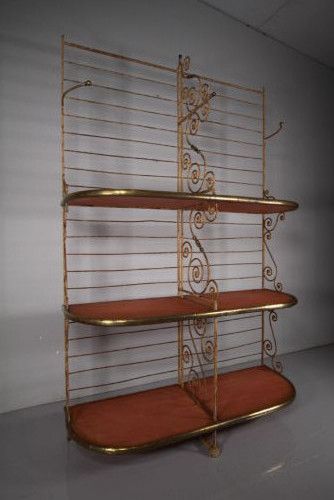
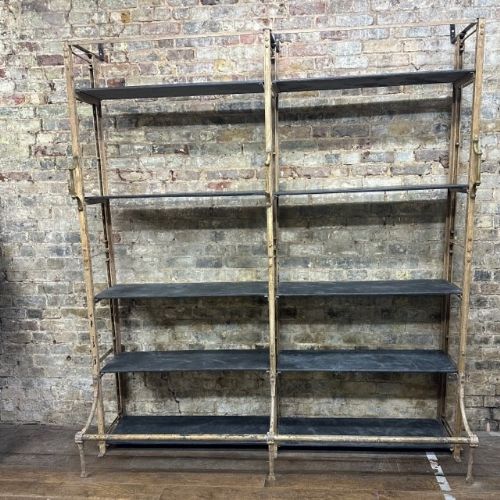
Industrial iron shelving encompasses bakers racks, shop display stands, and kitchen dressers originating from the nineteenth and early twentieth centuries. These sturdy pieces serve utilitarian functions with open metal frameworks designed for commercial baking, shopkeeping, and food preparation.
Buyers will most frequently encounter French and English pieces, particularly large Parisian boulangerie racks and Victorian shop display stands. These units combine iron or steel frames with wooden, slate, or glass surfaces.
The forms range from grand nine-foot baker's racks by makers such as Dubois of Lyon down to compact display shelving and field kitchen dressers. Each piece reflects its commercial origins through riveted joints, scroll-work, and heavy-duty metal construction.
Materials and construction
The primary structural elements combine wrought iron, cast iron, and steel to create rigid, load-bearing frameworks capable of supporting heavy bread trays and shop merchandise. Makers employed techniques such as forged scroll-work and riveted sheet metal to assemble durable uprights and brackets.
Shelving surfaces integrate contrasting materials including pine boards, slate, glass, and perforated sheet metal. This material mix served practical needs in bakeries and shops, balancing weight distribution with ease of cleaning.
Current listings feature pieces spanning the nineteenth century up to the 1920s, incorporating wrought iron, cast iron, steel, brass, glass, pine, and slate.
Assessing quality
Quality rests upon the integrity of the original metalwork, distinguished by hand-forged scroll-work and stamped maker marks rather than plain commercial fabrication. Superior examples exhibit balanced proportions and robust joinery that survive decades of heavy commercial use.
Dubois of Lyon
The Industrial Iron Shelving Glossary
- Boulangerie rack
- A specialised bakery shelving unit designed for cooling and storing bread loaves. These French racks typically feature deep iron frames and multiple open tiers.
- Shop display stand
- A commercial furnishing built for retail environments to exhibit goods to customers. They utilise iron, brass, and glass to maximise visibility.
- Field kitchen dresser
- A portable or camp-style utilitarian storage unit used for food preparation and draining. These pieces often combine sheet metal with simple wooden elements.
- Scroll-work
- Ornamental curved metal detailing shaped by blacksmiths. It provides structural bracing while adding decorative flourish to the iron framework.
Industrial Iron Shelving: Frequently Asked Questions
What is industrial iron shelving used for?
These pieces function as sturdy storage units and display surfaces in contemporary kitchens, living spaces, and retail interiors. Their open metal frames provide practical shelving for books, kitchenware, and decorative objects.
Originally built for bakeries, shops, and field kitchens, they bring robust industrial utility into domestic settings. The deep tiers and durable materials handle heavy loads with ease.
How do I identify a French baker's rack?
French baker's racks typically feature distinctive wrought iron scroll-work, tall proportions, and sometimes maker stamps from Parisian workshops. They were designed specifically for commercial boulangeries to hold bread.
Many examples date from the nineteenth century and incorporate wire-mesh or sheet metal shelves. Their continental origin is often reflected in the lighter decorative ironwork compared to heavier English shop stands.
What materials are used in these pieces?
The frames combine wrought iron, cast iron, and steel for maximum structural strength. Brass elements occasionally appear on higher-end display stands.
Shelving surfaces vary widely across the inventory, utilising pine, slate, glass, and sheet metal. This combination of metals and secondary materials reflects the practical demands of nineteenth-century trade.
How do I date an antique iron shelving unit?
Dating relies on stylistic markers, construction methods, and period indicators such as Victorian design elements or early twentieth-century French shop styles. Stamped maker marks provide precise attribution where present.
Listings span the nineteenth century through to the 1920s, capturing the transition from hand-forged blacksmith work to early industrial manufacturing. Comparing the joinery and material combinations helps place each piece in its era.