

Writing Desk with Gallery
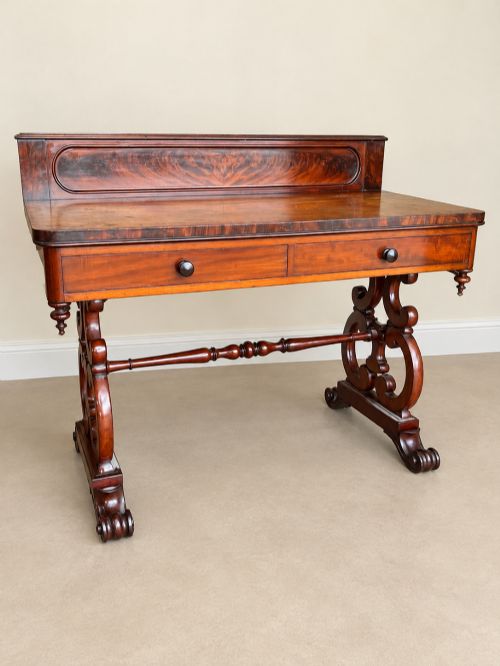
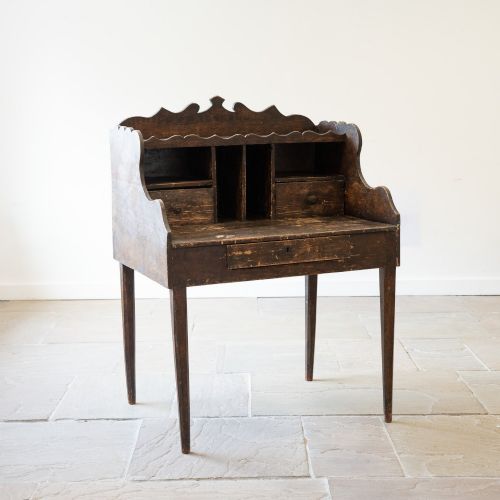
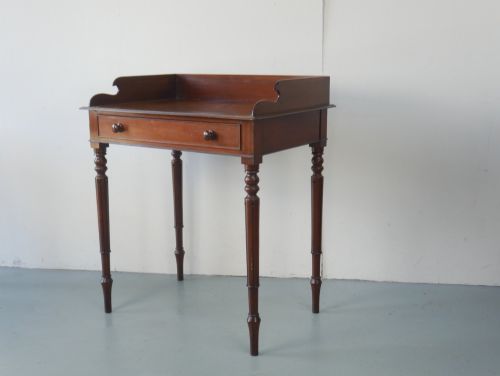
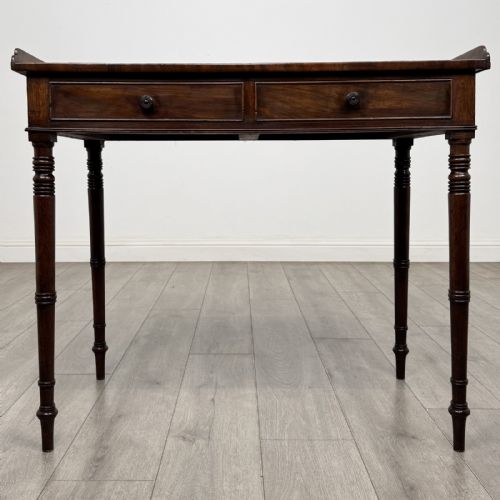
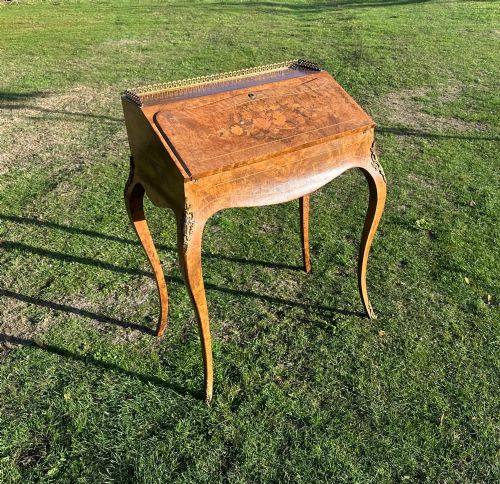
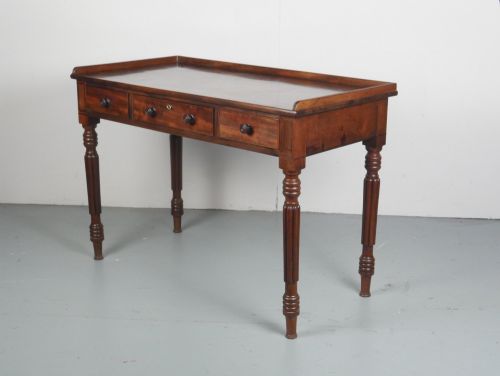
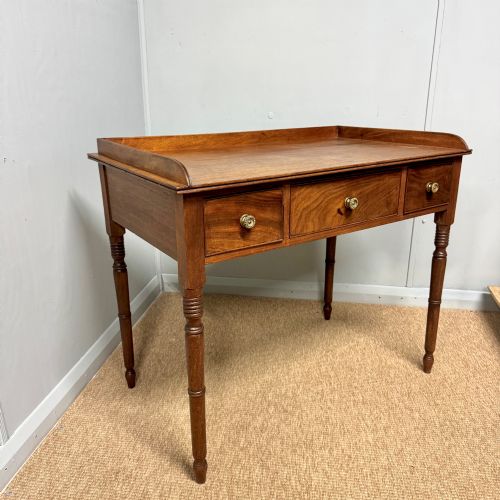
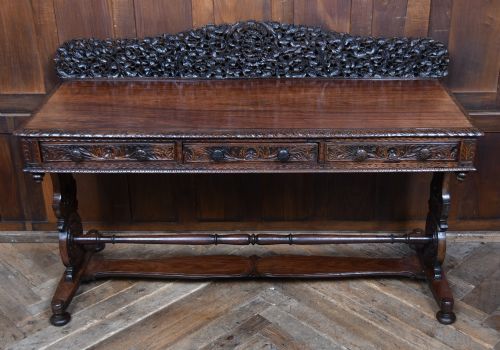
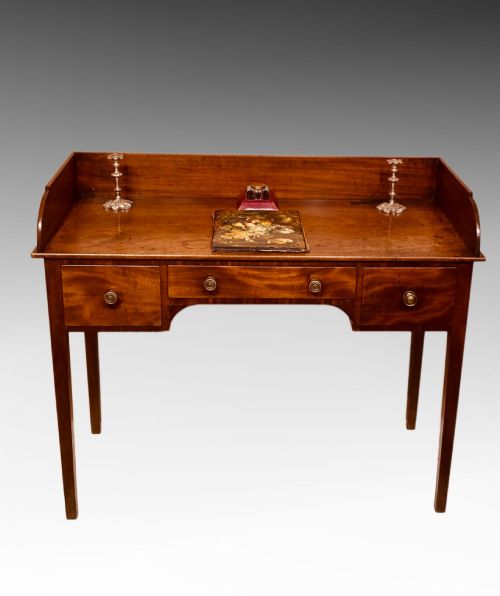
A writing desk with gallery provides a raised upper tier for letters and ink, bringing order to correspondence in handsome nineteenth-century and Edwardian timbers.
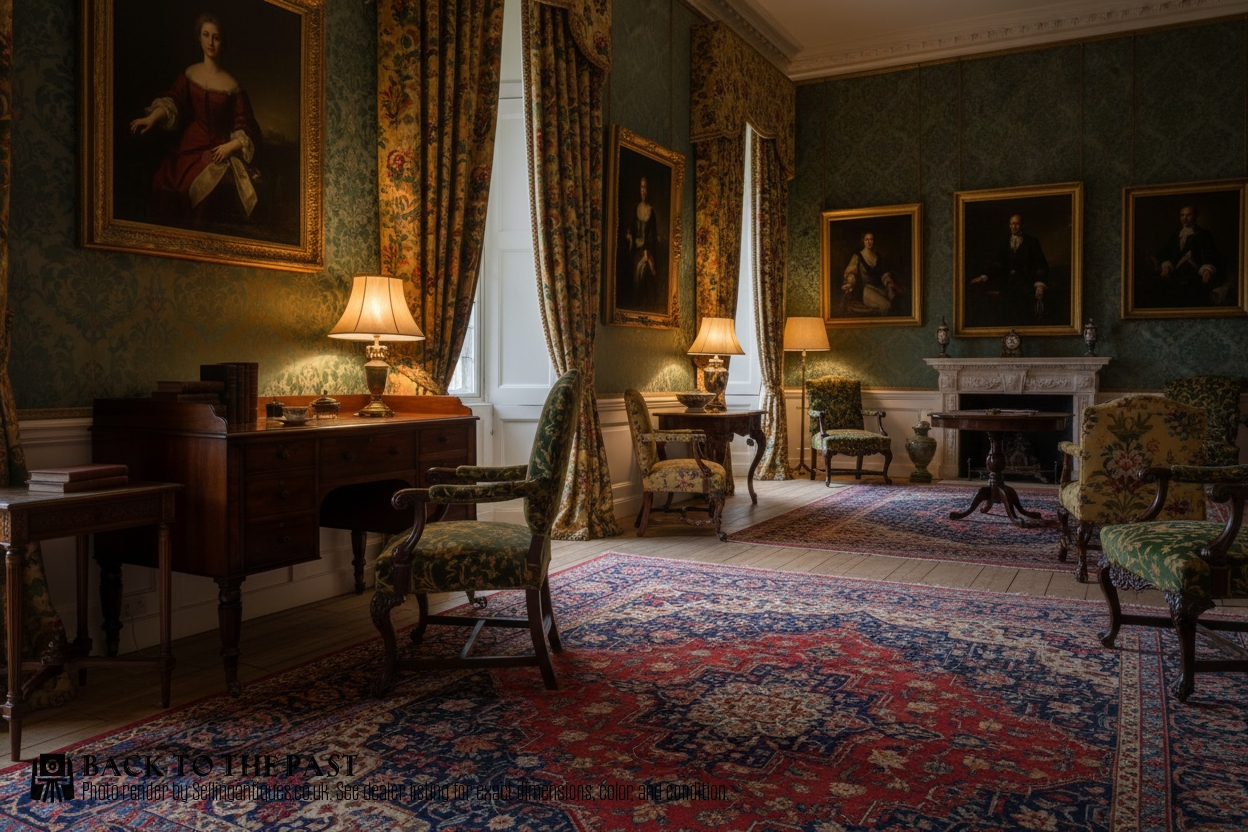
Writing Desk with Gallery
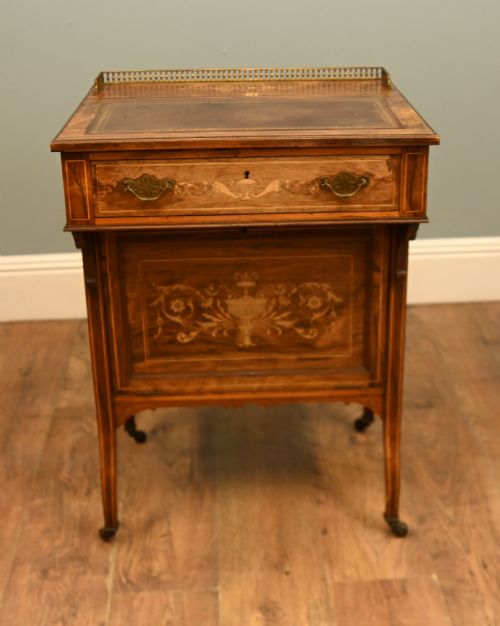
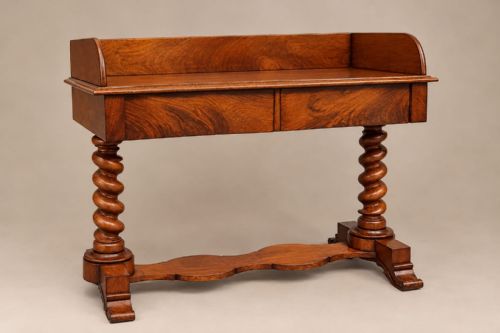
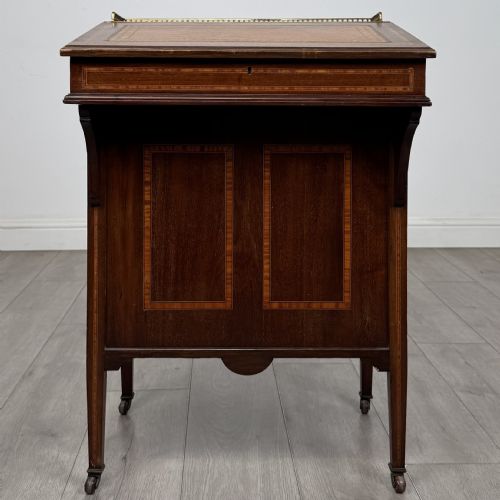
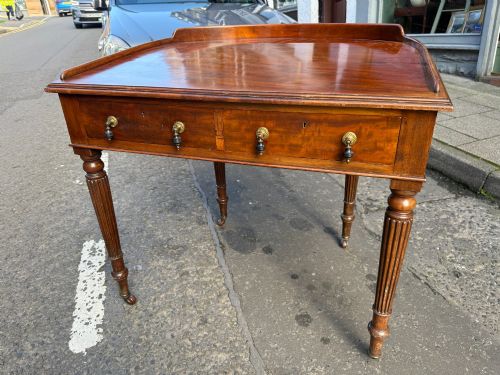
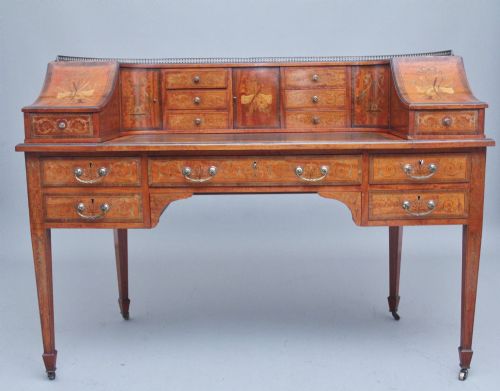
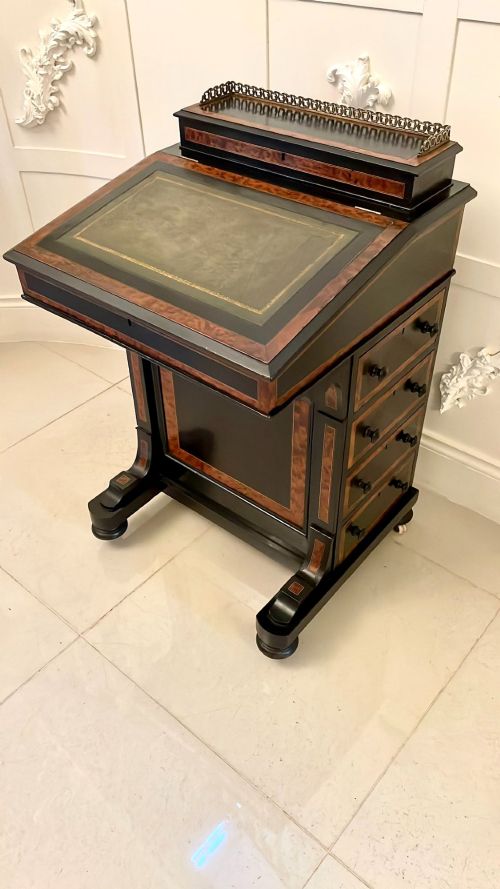
The buyer meets variations spanning simple mahogany side tables with three-quarter upstands to elaborate Davenport desks and satinwood Carlton House pieces with fitted interiors. Walnut, rosewood, and inlaid mahogany dominate the selection, often complemented by leather inset writing surfaces.
How they were made
Cabinet makers constructed these desks using solid and veneered timbers such as mahogany, rosewood, satinwood, and burr walnut, frequently applying decorative inlay and crossbanding to enhance the visual depth. Drawers feature traditional craftsmanship including oak linings and hand-cut dovetails.
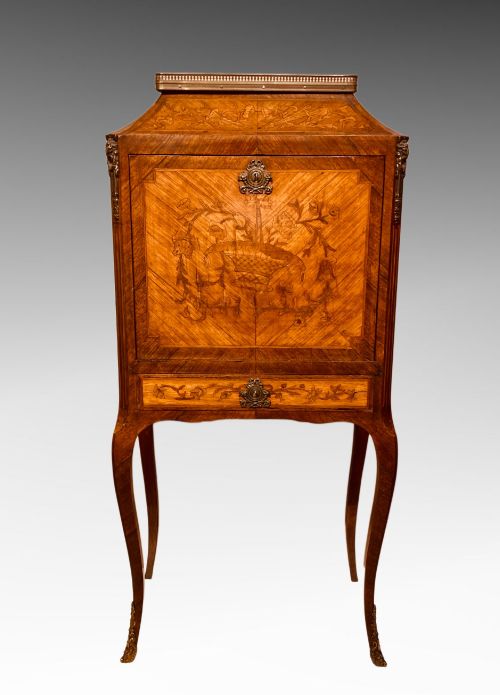
Brass handles, casters, and ormolu mounts complete the hardware, while galleries are formed from shaped timber upstands or pierced brass rails fixed securely to the desktop. Writing surfaces are often inset with tooled leather to provide a durable and tactile workspace.
Writing Desk with Gallery Retail Price Guide 2026
Typical asking prices for writing desk with gallery among the pieces listed under this phrase on Sellingantiques today, from the lower quarter to the upper quarter. They describe what is for sale here now, not the wider market.
Some Davenport desks hide inkwells in secret compartments that slide out sideways when a tiny brass latch is released.
What varies in quality
Quality reveals itself in the selection of timber figures, such as flame mahogany or burr walnut, and the precision of the satinwood or light-wood inlay across the facade and gallery. Finer examples display meticulous attention to interior drawer construction and original brass hardware.
The integration of the gallery superstructure separates standard utility pieces from masterwork forms like Carlton House desks or fitted Davenports, where every compartment aligns harmoniously with the primary structure.
Gillows·James Mein of Kelso·Maples
The Writing Desk with Gallery Glossary
- Gallery
- A raised wooden or brass rail surrounding the top of a desk to prevent items from rolling off. This feature often incorporates small compartments for stationery.
- Davenport
- A compact pedestal writing desk featuring a sloping, leather-lined lid and drawers opening to the side. Originating in the nineteenth century, it is frequently fitted with a stationery gallery.
- Carlton House desk
- A horseshoe-shaped writing desk with a fitted superstructure of small drawers and pigeonholes curving around the back and sides. They often display fine satinwood and crossbanding.
- Crossbanding
- A decorative border of veneer laid perpendicular to the grain of the main surface. It frames panels on desk lids and drawer fronts.
- Ormolu
- Gilded bronze mounts applied to furniture for decorative effect. This technique appears on French and grand English pieces.
Writing Desk with Gallery: Frequently Asked Questions
What is a gallery on a desk?
A gallery is a raised railing or tiered compartment structure fixed to the rear surface of the desk top. It keeps letters, pens, and inkwells organised and secure.
Historically, this feature protected small writing accessories from falling and added an ornamental silhouette to the furniture piece.
How do I date a gallery desk?
Dating relies on timber choices, construction methods, and stylistic cues associated with periods like the Regency, Victorian, and Edwardian eras. Mahogany and rosewood frequently indicate earlier nineteenth-century pieces, whilst satin walnut and lighter satinwood finishes often point toward Edwardian production.
Secondary woods inside drawers and the presence of original brass handles or castors offer further clues for chronological placement.
Were these desks used for writing?
These desks served primarily for correspondence, diary keeping, and managing household accounts. The inclusion of fitted interiors and galleries provided immediate access to paper and envelopes.
They functioned as private writing stations in drawing rooms, studies, and bedrooms before the ubiquity of modern office furniture.
How do I care for leather desk inserts?
Leather writing surfaces require gentle cleaning with a slightly damp cloth followed by a neutral leather conditioner to maintain suppleness. Avoid harsh chemical cleaners and excessive moisture.
Keeping the surface out of direct sunlight prevents the leather from drying out and preserves the gold tooling often found on antique examples.