


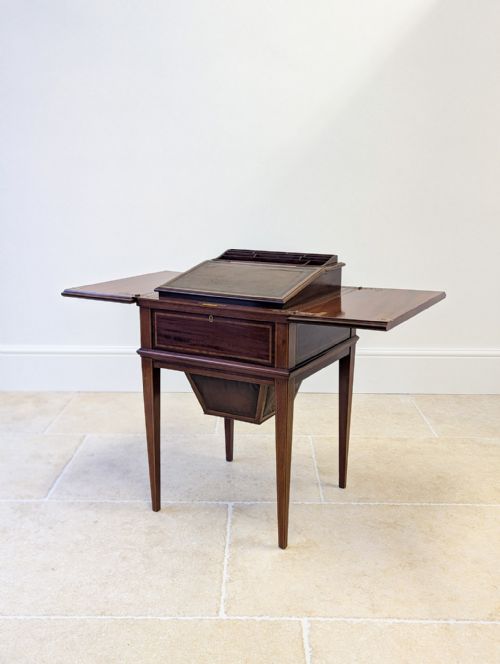
Writing Bureau with Drawers
A writing bureau with drawers gives you a private drop-down desk space alongside proper storage, uniting timber character with daily utility.
Writing Bureau with Drawers
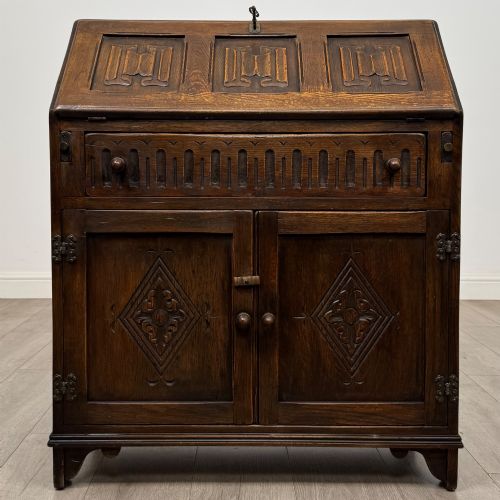
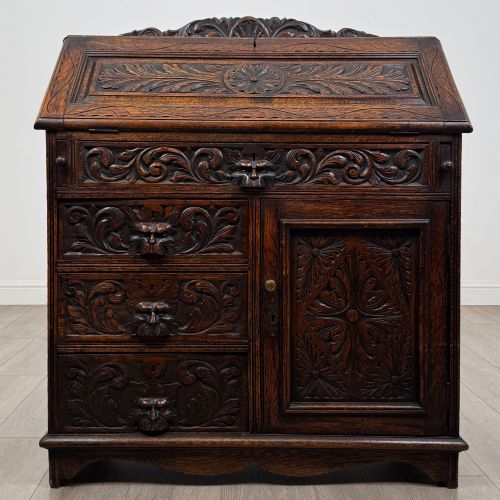
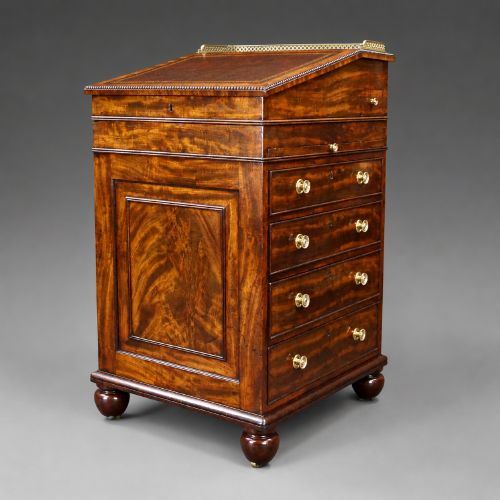
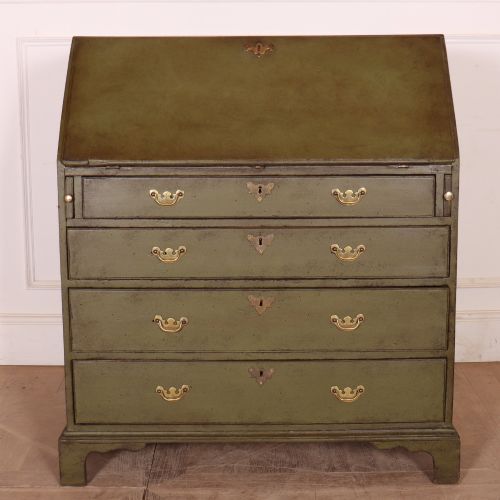
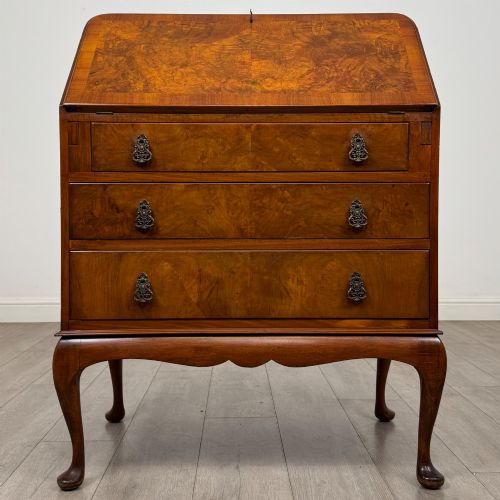
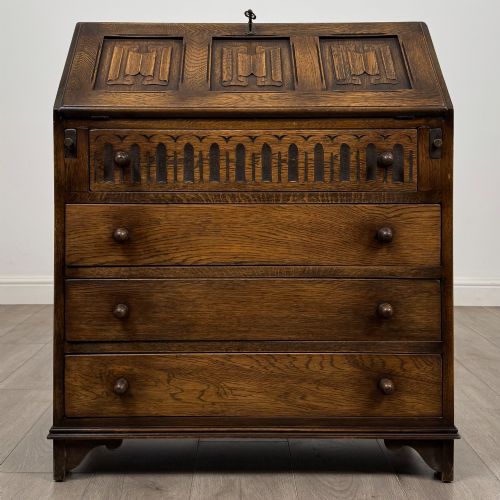
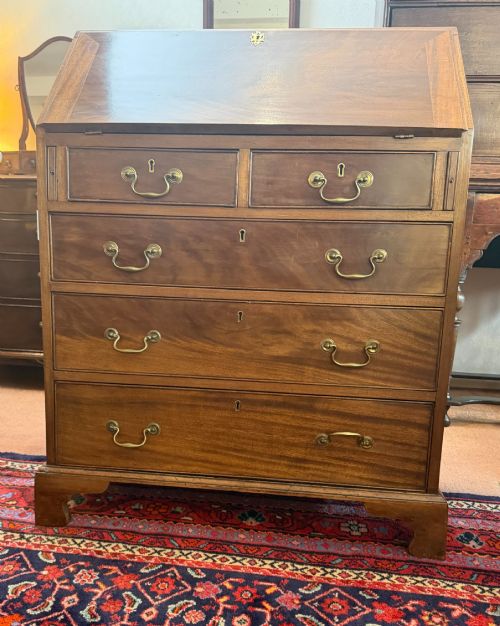
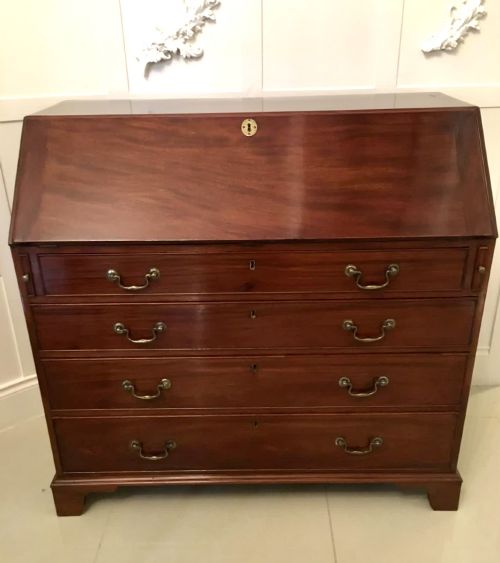
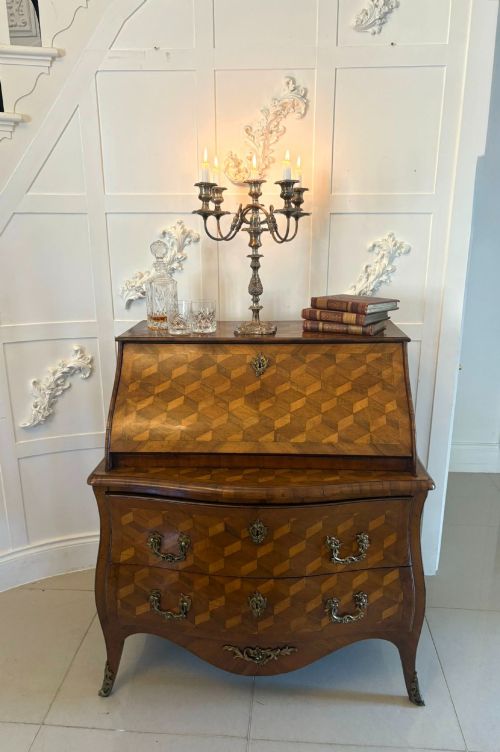
A writing bureau with drawers combines a sloping fall-front writing flap with functional chest storage underneath, creating a dedicated workspace that closes away cleanly when not in use. You will encounter these primarily in Georgian mahogany and walnut, alongside later Edwardian and 1920s oak and burr walnut iterations.
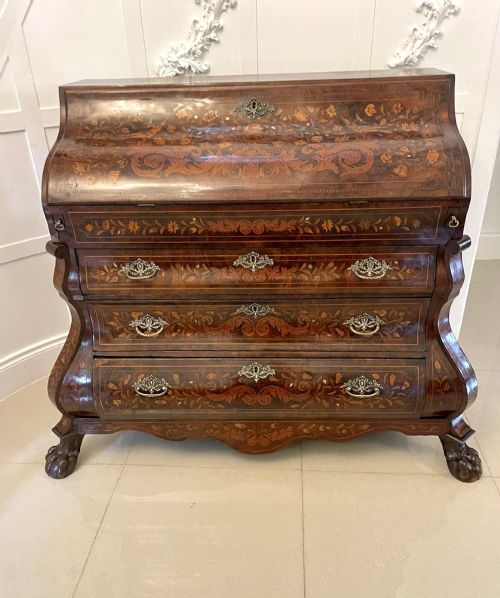
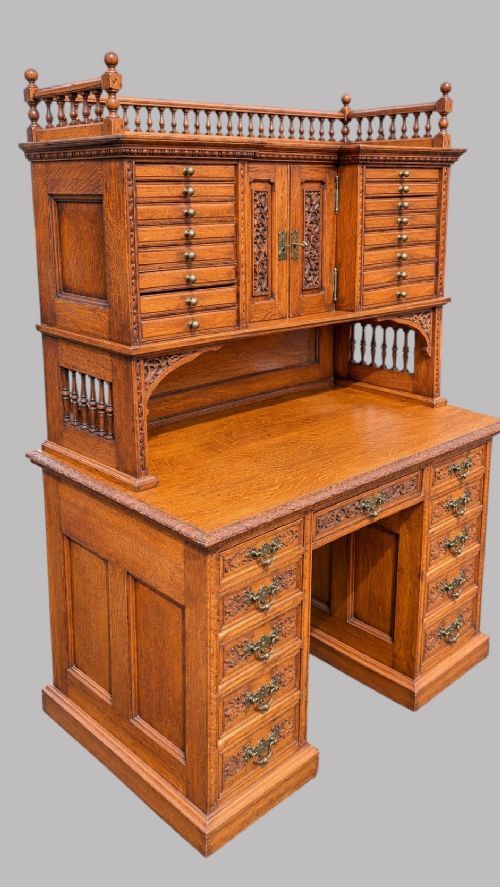
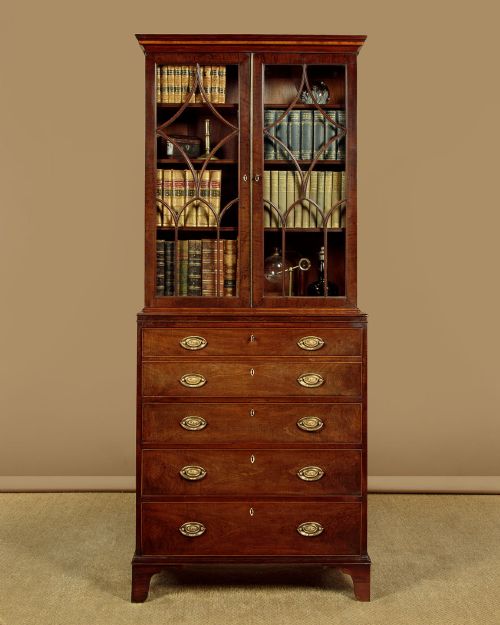
The form ranges from compact table-height writing desks with integrated drawers to towering bureau bookcases topped with glazed shelving. Early 18th-century examples display warm walnut and oak timbers, while later Victorian and Edwardian pieces often incorporate satinwood, inlay work, and leather writing surfaces.
How they were made
Cabinetmakers constructed these pieces using dense hardwoods like mahogany, oak, and walnut, frequently applying figured veneers or burr walnut on primary surfaces to catch the light. Dovetail joinery secures the drawer boxes, while brass handles, escutcheons, and occasional glass doors complete the hardware.
Internal compartments often feature intricate small drawers and pigeonholes hidden behind the fall-front flap. Some later Edwardian and Victorian versions incorporate leather inserts or tooled writing surfaces directly into the fold-down or pull-out platforms.
The listings on this page span from 1700 walnut escutcoirs and Georgian mahogany pieces through to Edwardian satinwood and 1920s oak bureau bookcases.
What varies in quality
Quality rests in the selection of timber figures, such as flame mahogany or burr walnut, and the crispness of internal stationery fittings. Superior examples maintain matching grain patterns across the fall-front and drawer facades, showing restraint in any inlay or crossbanding.
Structural integrity of the fall-front hinges and the smooth sliding action of the drawers dictate daily usability. Well-made pieces retain original brass hardware, stable secondary timbers, and uncompromised joinery at the carcase corners.
Gillows·Heals of London
The Writing Bureau with Drawers Glossary
- Fall front
- The hinged writing flap that pulls down to create a desk surface and conceals the interior pigeonholes.
- Escutcheon
- A decorative brass plate surrounding a keyhole that protects the surrounding wood from wear.
- Bureau bookcase
- A tall cabinet combining a desk bureau base with upper shelving enclosed by wooden or glass doors.
- Kneehole desk
- A compact desk featuring a central recess for the user's legs flanked by pedestals of drawers.
- Crossbanding
- A narrow strip of veneer laid perpendicularly to the surrounding grain to frame a panel or drawer front.
Writing Bureau with Drawers: Frequently Asked Questions
How do I use a bureau as a desk?
Lower the fall-front flap to reveal the internal pigeonholes and small drawers, which provide a stable flat surface for writing or placing a laptop.
When you finish working, simply gather your papers, fold the writing flap back up, and secure it with the key to hide the workspace entirely.
What is the difference between a bureau and a secretaire?
A traditional bureau relies on a sloping fall-front flap that opens downward to form a writing surface above lower drawers.
A secretaire generally conceals its writing drawer behind a faux drawer front that pulls forward and drops down, maintaining the appearance of a standard chest of drawers.
How can I tell an 18th-century bureau from an Edwardian copy?
Look closely at the construction details, drawer linings, and timber characteristics, as 18th-century pieces utilise hand-cut dovetails and native woods like solid oak or walnut.
Edwardian reproductions often feature machine-sawn elements, lighter secondary timbers, and standardised hardware that reflect early twentieth-century manufacturing methods.
How should I care for the leather writing surface?
Dust the leather regularly with a soft dry cloth and avoid placing damp items directly onto the surface to prevent staining the hide.
Apply a specialist leather balm occasionally if the material appears dry, keeping the desk away from direct sunlight and heat sources.