
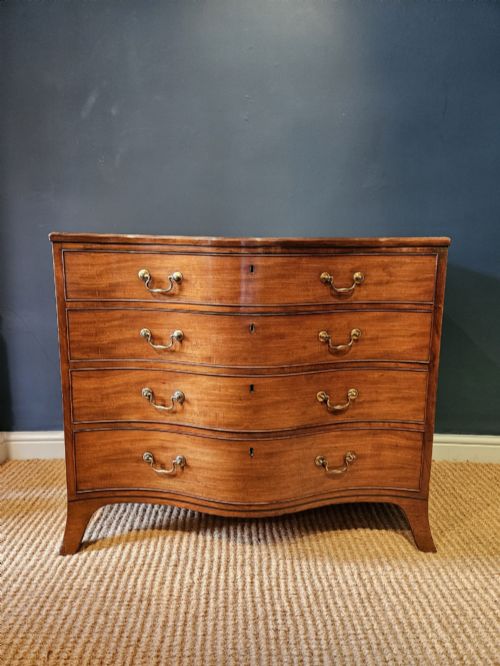
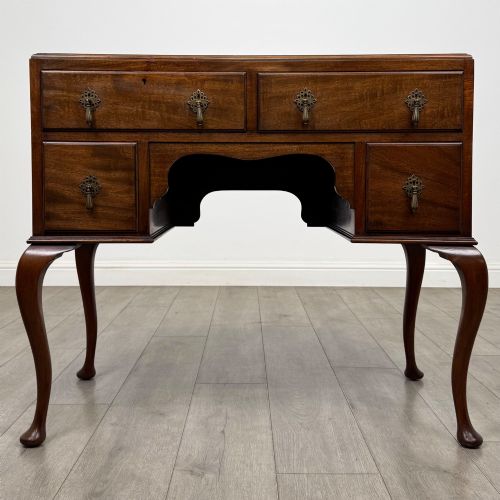
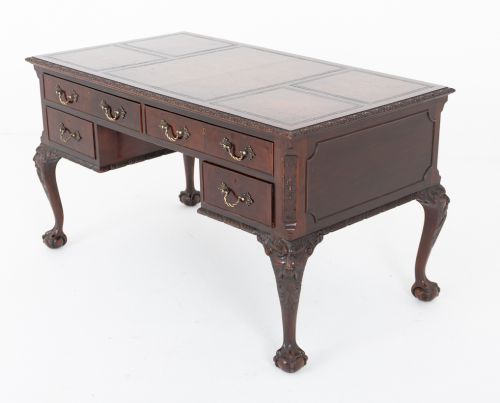
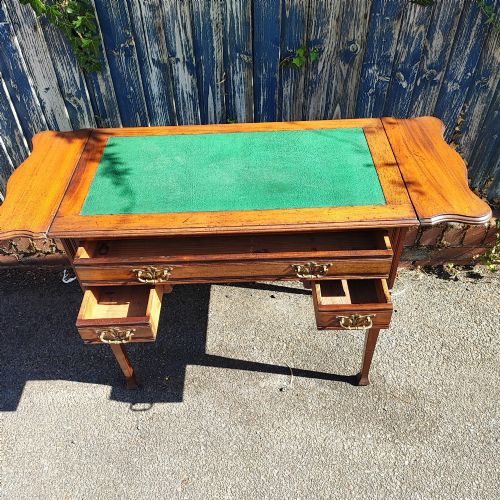


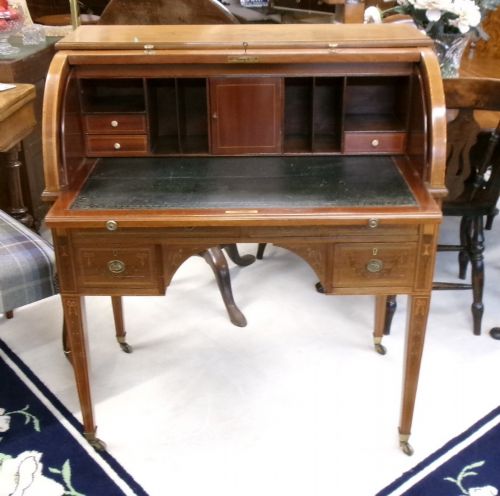


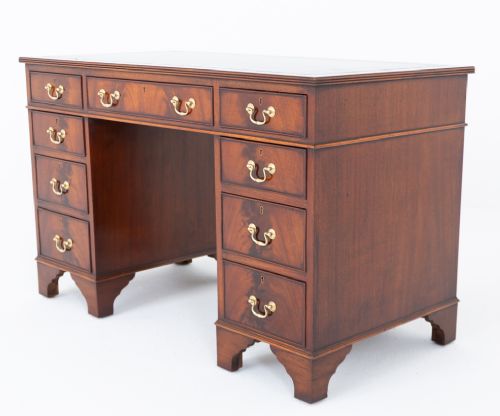


Edwardian Style Mahogany Bureau
Edwardian style mahogany bureau designs combine practical writing surfaces with refined cabinetry, offering period character and useful storage for modern rooms.
Edwardian Style Mahogany Bureau
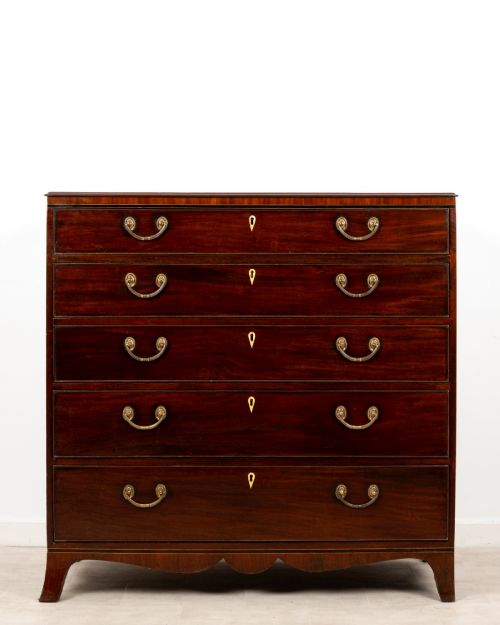
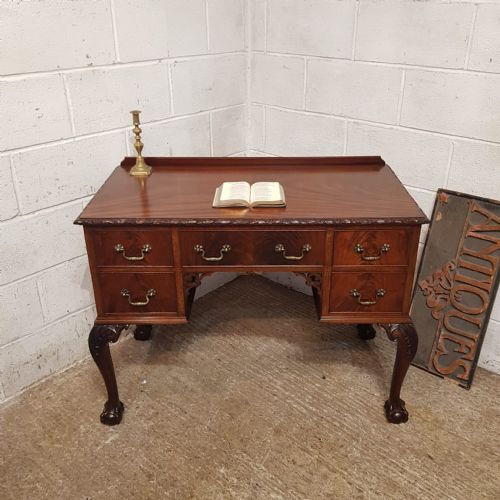
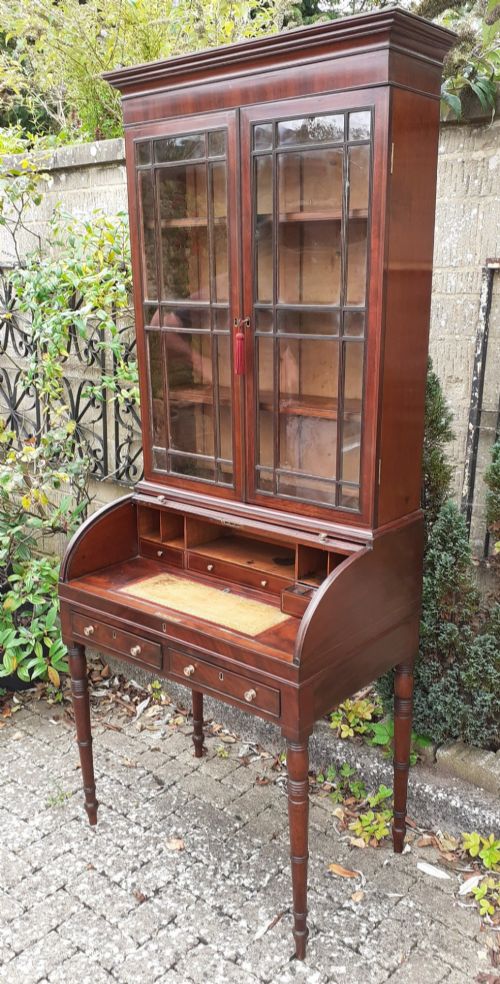
When searching for an Edwardian style mahogany bureau, buyers encounter various forms including writing desks, escritoires, and bureau bookcases that reflect early twentieth century tastes. The pieces span periods such as the Edwardian era alongside Georgian Revival and Sheraton Revival interpretations, often utilising mahogany timber.
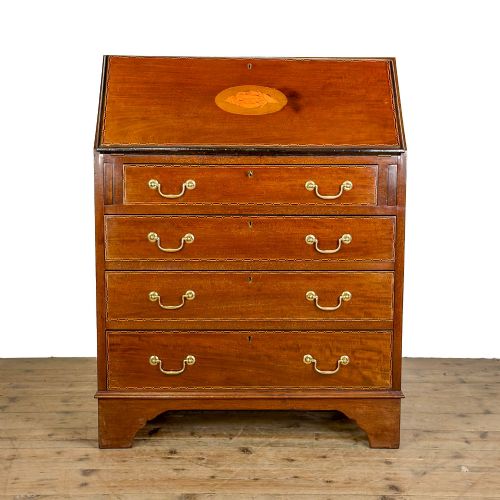
Desks and writing tables dominate the selection, alongside bureau bookcases and chests of drawers that incorporate drop-down writing flaps or cylinder tops. These pieces originate from workshops spanning the late nineteenth century through to the nineteen twenties, showing sustained demand for revival styles.
Materials and construction
Cabinet makers utilised solid and veneered mahogany as the primary timber, often selecting it for its rich grain and capacity to hold fine details. Workshops incorporated satinwood inlay, boxwood inlay, and marquetry to decorate drawer fronts and writing surfaces.
Brass handles, escutcheons, and glass panels appeared on bureau bookcases and desks, while fitted leather writing inserts provided a durable surface for correspondence. Secondary timbers such as oak supplemented the internal structure of drawers and carcases.
Object types span writing tables, chests of drawers, cylinder top desks, and bureau bookcases reflecting Georgian and Sheraton design influences.
Evaluating the pieces
Quality in these desks rests on the precision of the cabinet work, particularly how neatly satinwood and boxwood stringing is embedded into the mahogany surfaces. The crispness of carved details on Chippendale Revival or Georgian Revival models distinguishes standard output from finer workshop production.
The choice of timber grain and the integrity of internal stationery fittings, such as small drawers and pigeonholes behind a bureau flap, indicate the original maker's investment of time and skill. Pieces bearing workshop stamps or attributed to notable firms often display superior joinery in drawer linings and backboards.
Tudor and Burrey·Gillows·Edwards and Roberts·Maple and Co·Maple of London
The Edwardian Style Mahogany Bureau Glossary
- Bureau
- A desk featuring a sloping flap that opens to reveal a fitted interior of pigeonholes and small drawers. This form provides a concealed writing surface when closed.
- Escritoire
- A writing cabinet or desk, often fitted with drawers and a drop-front writing surface. The term derives from the French word for writing.
- Sheraton Revival
- A late nineteenth and early twentieth century design movement that reinterpreted the elegant, classical furniture forms of George Sheraton. These pieces frequently feature delicate inlay and tapering legs.
- Marquetry
- Decorative veneer work forming pictorial or geometric patterns using various coloured woods. Craftsmen applied these patterns to desk lids and cabinet doors.
- Carlton House desk
- A horseshoe-shaped writing desk with a raised superstructure of small drawers and compartments around the back and sides. This form originated in the late eighteenth century and was frequently revived during the Edwardian period.
Edwardian Style Mahogany Bureau: Frequently Asked Questions
How do I identify an Edwardian bureau?
Edwardian bureaus usually date from around nineteen hundred to nineteen ten, displaying lighter proportions and refined revival styling compared to heavier Victorian predecessors. They frequently incorporate satinwood or boxwood inlay upon mahogany surfaces.
Examining the interior drawer construction and secondary timbers helps confirm the period of manufacture. Makers often combined traditional forms with contemporary domestic requirements of the early twentieth century.
How do I care for mahogany veneer?
Mahogany furniture requires protection from direct sunlight and extreme temperature changes to prevent timber warping and veneer lifting. Regular dusting with a soft, dry cloth preserves the finish.
Applying a traditional beeswax polish occasionally helps nourish the wood and maintain its lustre. Avoid placing damp items or hot cups directly onto the polished surface.
What is the difference between Sheraton Revival and Chippendale Revival?
Sheraton Revival furniture draws inspiration from the classical elegance of the late eighteenth century, featuring delicate inlay, satinwood details, and tapering legs. The overall aesthetic is light and symmetrical.
Chippendale Revival pieces lean towards sturdier proportions, often showcasing carved mahogany details, block feet, and occasional fretwork. These styles reflect different eighteenth century influences reinterpreted by Edwardian cabinet makers.