
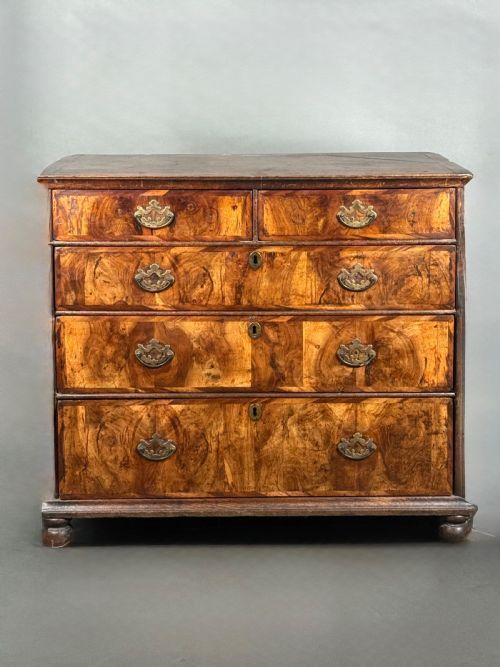
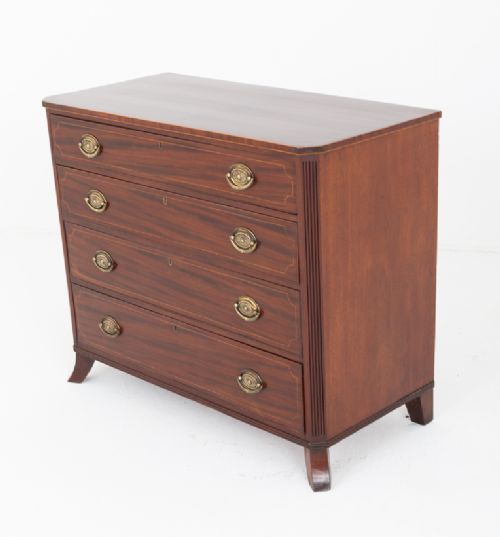
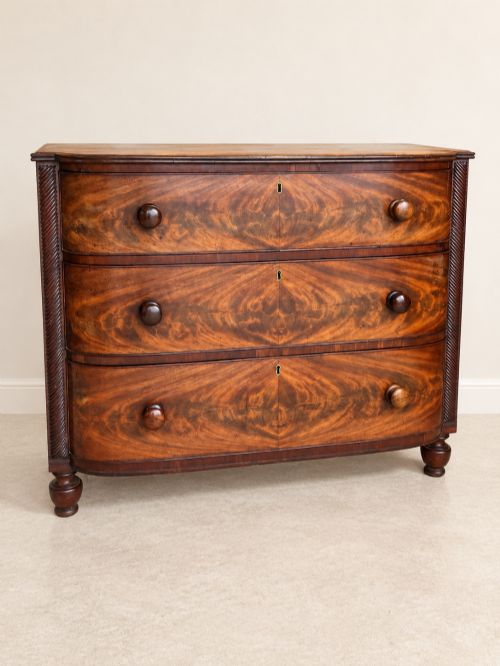


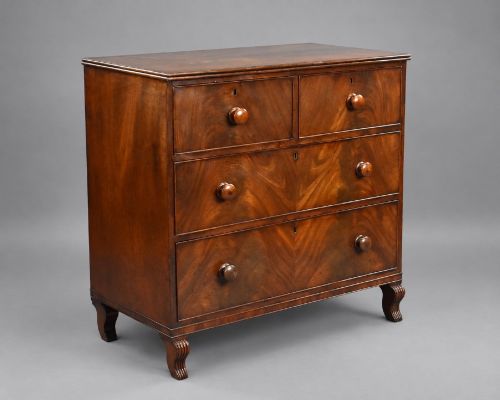
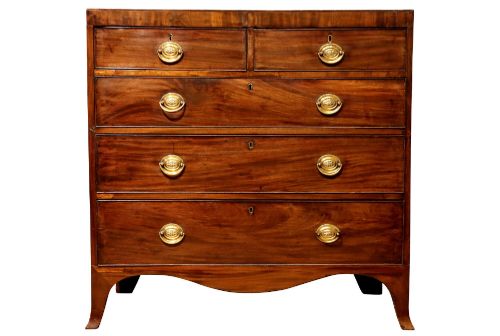
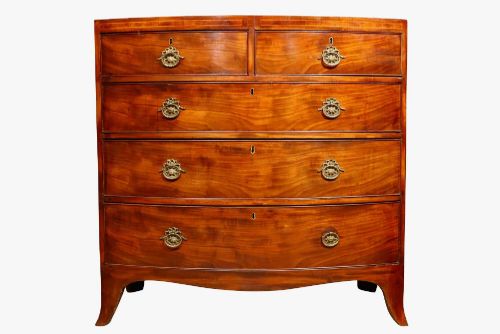
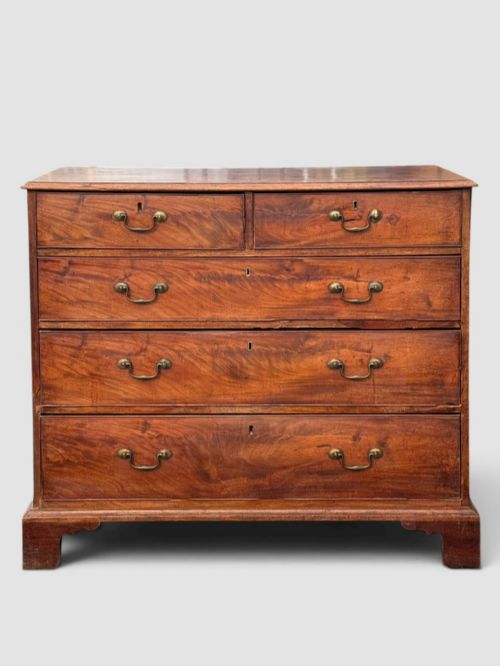
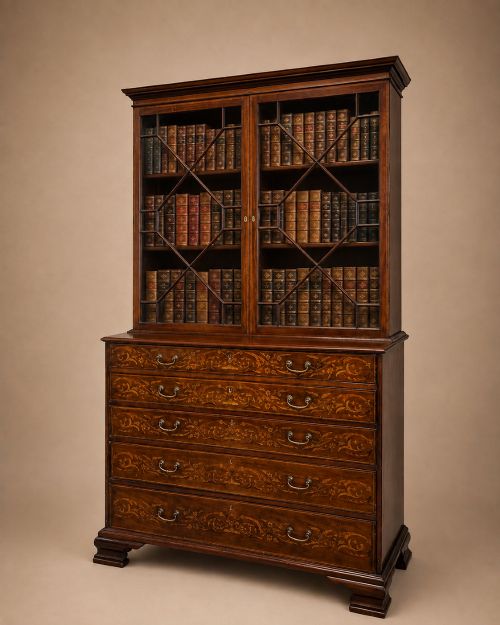
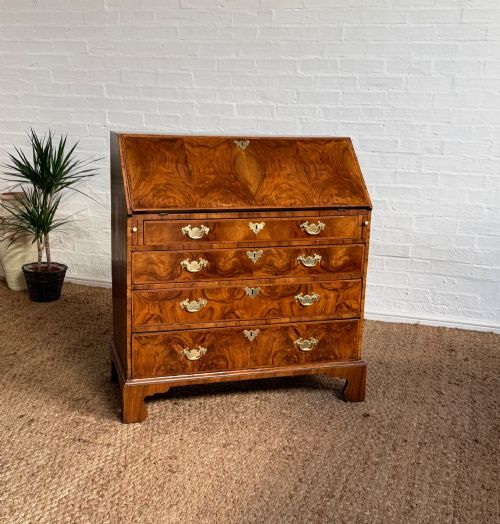
Georgian Chest of Drawers Bureau
A georgian chest of drawers bureau brings together storage and a writing surface, offering timeless utility in rich timber.
Georgian Chest of Drawers Bureau
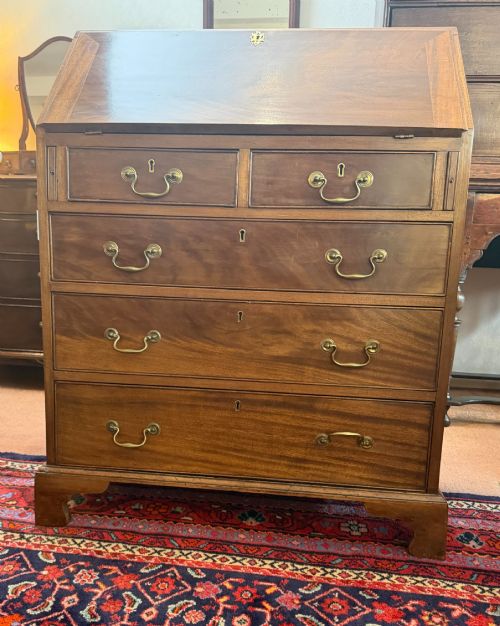
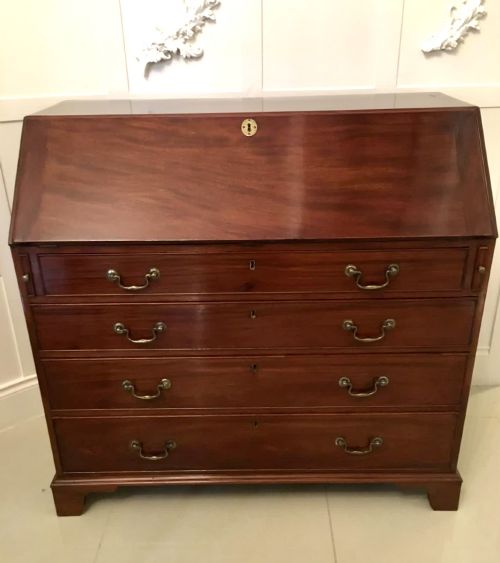
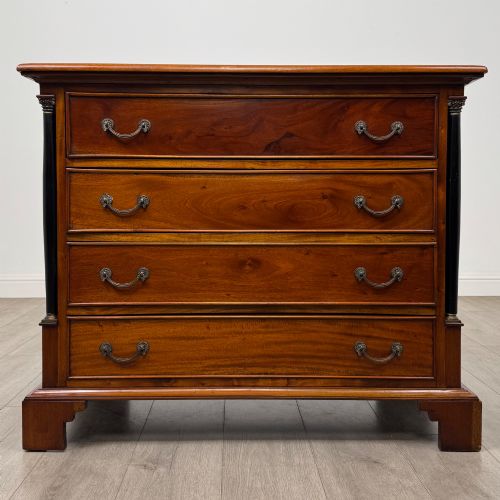
A georgian chest of drawers bureau combines deep drawer storage with a fitted writing compartment, serving as a dual-purpose piece for home administration and linen storage. Pieces span multiple eras from the eighteenth century into later Regency and Edwardian revivals.
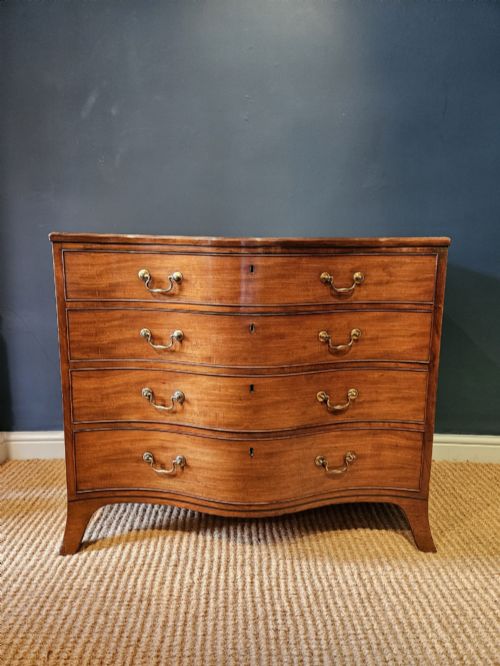
Buyers encounter mahogany, oak, and walnut forms ranging from compact fall-front desks to grand serpentine chests fitted with brushing slides and internal pigeonholes. The selection includes tall formats and low kneehole desks alongside secretaire bookcases.
Origins stretch across English provincial workshops and metropolitan cabinet makers, utilising native and imported timbers shaped by changing stylistic reigns from Queen Anne to George IV.
What varies in quality
Timber selection dictates visual appeal, with figured flame mahogany, burr walnut, and matched grain patterns marking out superior examples from plainer stock.
Internal execution, such as secondary wood choices, secondary oak linings, and the complexity of fitted interior pigeonholes, separates standard workshop production from finer cabinet work.
Listings feature periods spanning from the early eighteenth century through the Regency era and into twentieth-century revivals.
The Georgian Chest of Drawers Bureau Glossary
- Brushing slide
- A pull-out wooden shelf positioned above the top drawers, historically used for dusting clothes or as a temporary writing surface before full desks were opened.
- Fall front
- A hinged writing flap that drops down to a horizontal position, revealing an interior arrangement of small drawers and pigeonholes for correspondence.
- Serpentine front
- A chest front curved with a convex centre flanked by concave ends, requiring skilled joinery to shape the timber and drawers accurately.
- Secretaire
- A cabinet or chest incorporating a fitted writing drawer with a drop-down front, often positioned above standard lower drawers.
- Escutcheon
- A protective brass plate fitted around a keyhole to prevent the surrounding wood from splintering or wearing down through repeated use.
Georgian Chest of Drawers Bureau: Frequently Asked Questions
What is a georgian chest of drawers bureau?
It is a hybrid furniture form combining drawer storage with a dedicated writing surface, often featuring a fall-front flap or a pull-out slide.
Such pieces date primarily from the eighteenth and nineteenth centuries, reflecting the changing domestic requirements of the period.
How were bureaus used historically?
They served as private spaces for correspondence, bookkeeping, and household management, while the lower drawers held clothing or linens.
The upper writing section typically enclosed small compartments for letters, inkwells, and documents.
Which woods are most common?
Mahogany is the predominant timber found across these listings, alongside various grades of oak and walnut.
Finer examples frequently utilise figured veneers such as flame mahogany or burr walnut to create decorative facades.
How do you spot later revival pieces?
Revival items often date from the Edwardian era or the early twentieth century, showing machine-cut elements and different internal construction methods.
Timber finishes, secondary woods, and hardware styles help distinguish these later interpretations from genuine eighteenth-century originals.