

Woven Wool Tapestry
Woven wool tapestry pieces bring historic narrative and rich texture directly to interior walls through centuries of textile artistry.
Woven Wool Tapestry
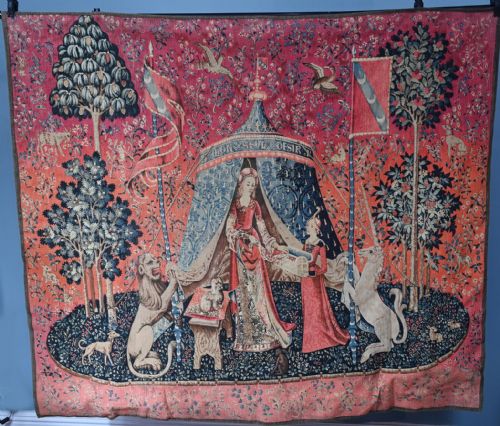
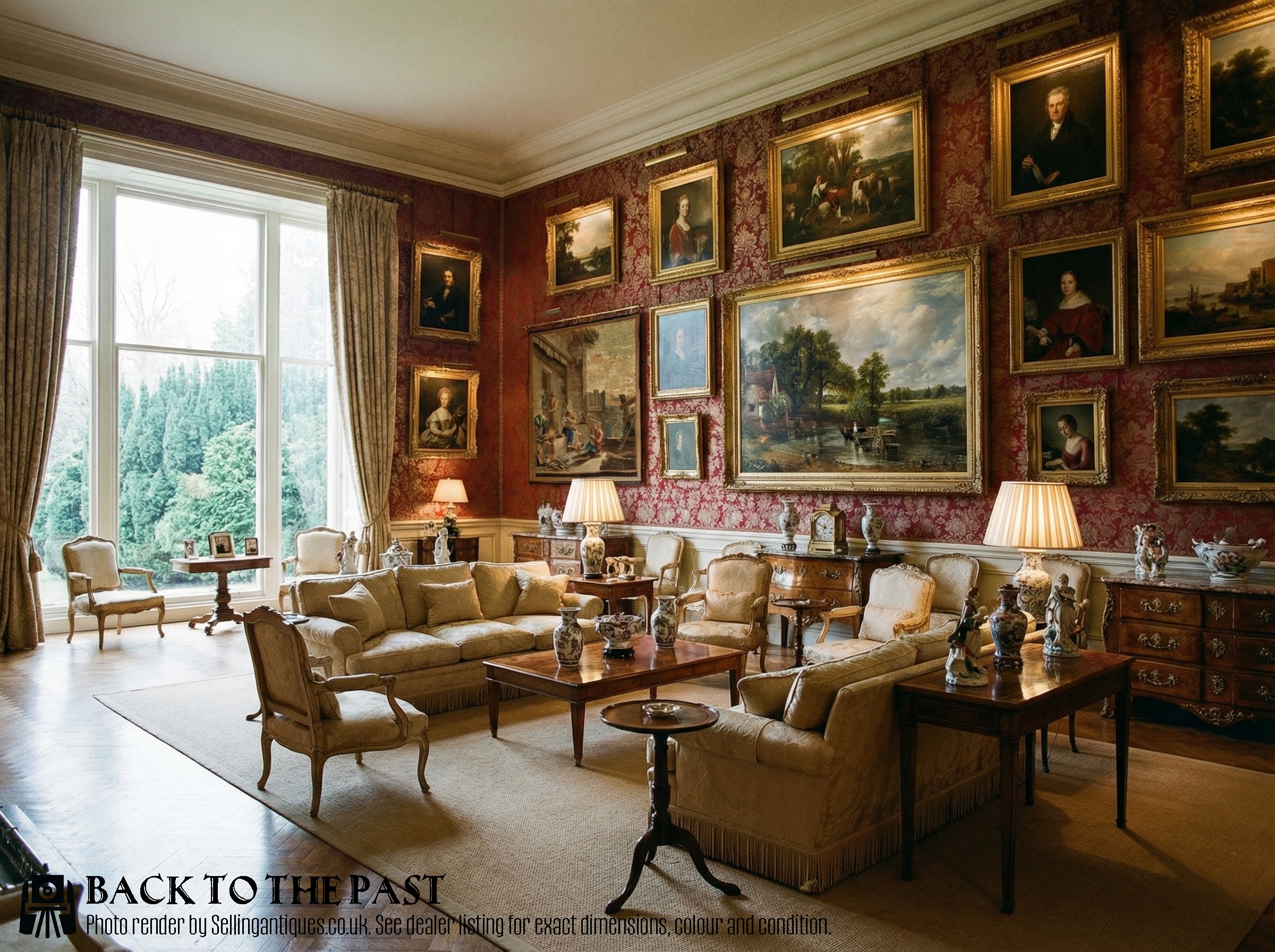
A woven wool tapestry serves primarily as a decorative wall hanging or floor covering, bringing warmth and intricate imagery to domestic interiors. When exploring this category, buyers frequently encounter large wall panels, verdure scenes, and various regional carpets originating from European and tribal workshops.
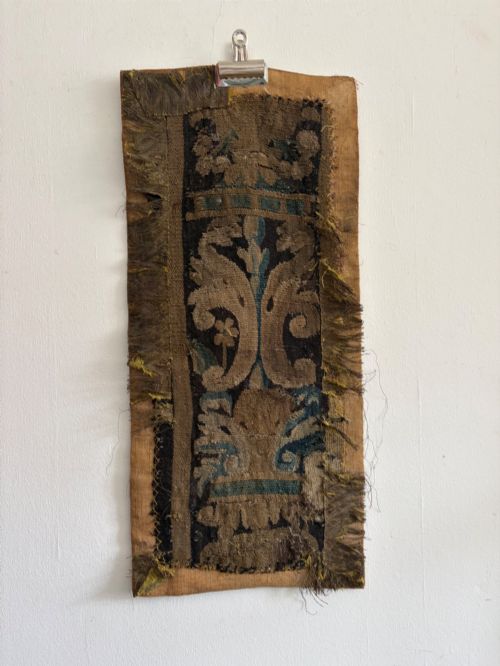
The selections span significant chronological ranges, stretching from sixteenth-century Flemish works through seventeenth-century French productions and into nineteenth-century revivals. Pieces take diverse forms, including complete architectural panels, framed fragments mounted to linen, and nomadic flatweaves.
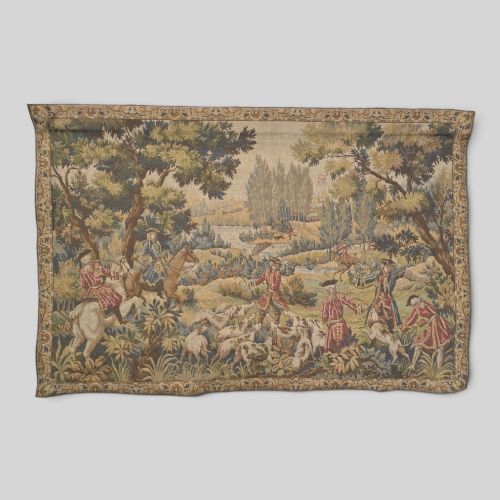
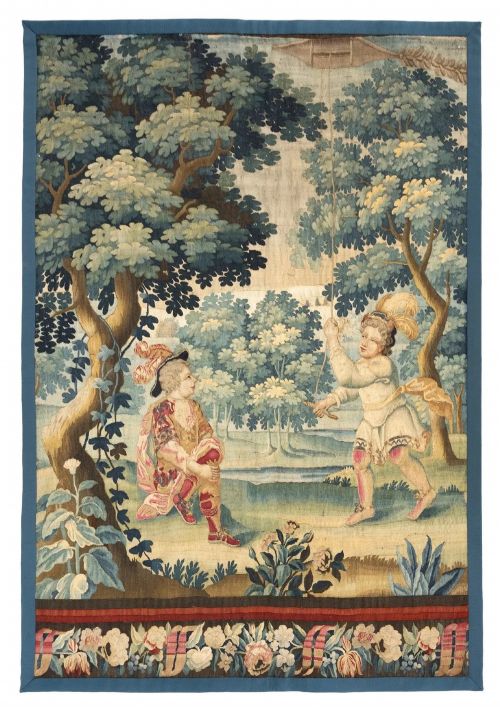
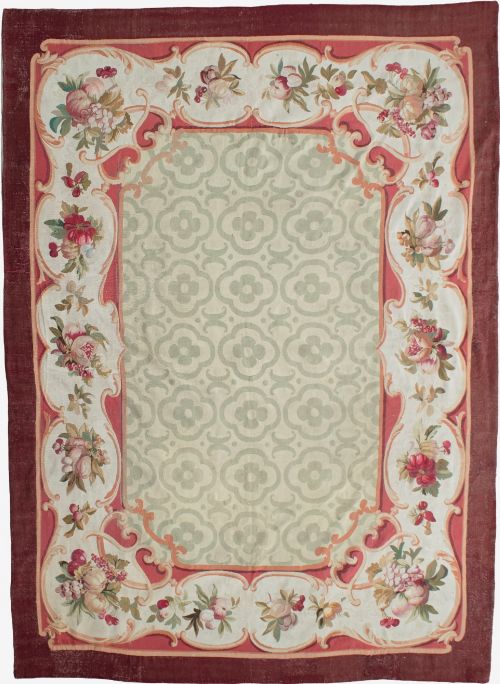
Geographic origins heavily influence the appearance of these textiles, ranging from European weaving centres like Aubusson and Audenaarde to the tribal regions of Persia and Central Asia. European items often depict pastoral landscapes, mythological events, or floral motifs, whereas tribal examples display geometric patterns and ceremonial designs.
Assessing Quality and Execution
Quality in these textiles rests upon the density of the weave and the complexity of the pictorial composition. Finer threads and tighter knotting or weaving allow for sharper detail in facial expressions, foliage, and architectural elements.
The sophistication of the palette and the preservation of the original dyes distinguish superior examples from standard productions. Age-related conservation work, such as mounting fragments to linen, also influences how a panel maintains its structural integrity over centuries.
Listings feature wool, silk, and natural dyes across periods spanning from the sixteenth century to the mid-twentieth century.
The Woven Wool Tapestry Glossary
- Verdure
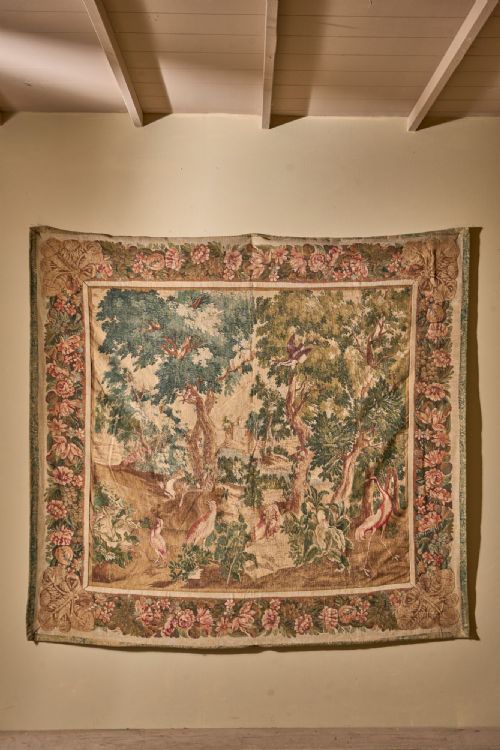
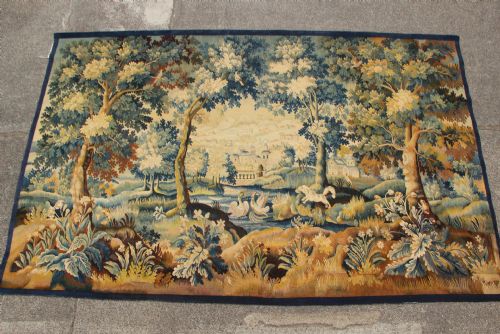
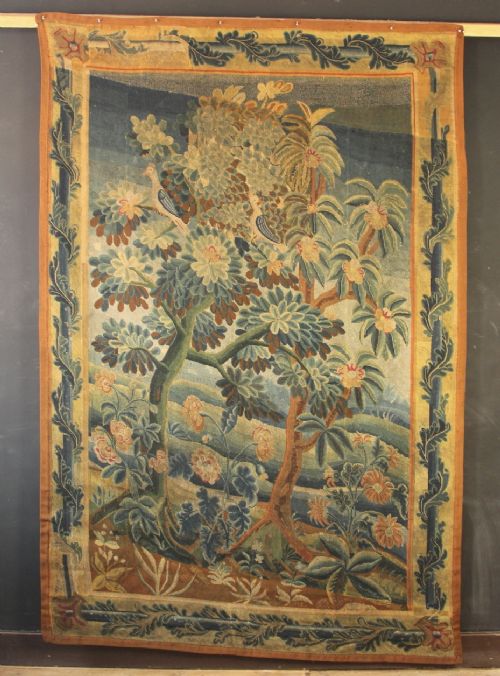
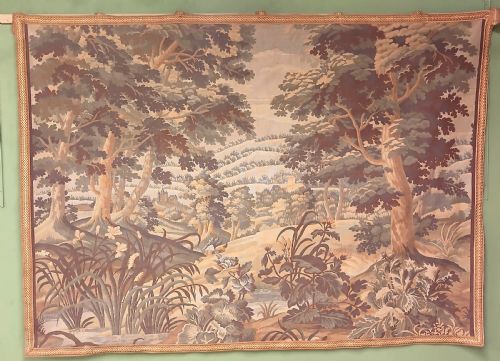
- A tapestry style dominated by lush foliage, trees, and gardens, frequently featuring birds or distant chateaux. These landscape scenes were especially popular in seventeenth-century Flemish and French weaving centres.
- Warp
- The vertical threads held in tension on a loom that receive the horizontal weft. Together they form the structural grid of the textile.
- Weft
- The horizontal threads passed through the warp to create the visible design and colour fields. In tapestries, discontinuous wefts build up the pictorial imagery.
- Kilim
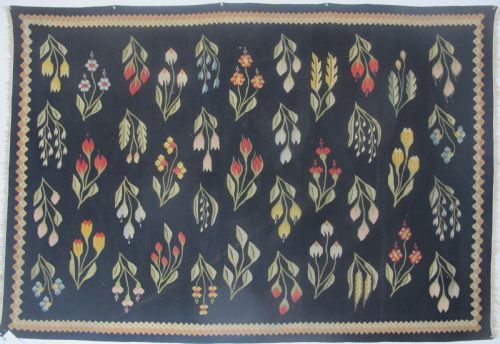
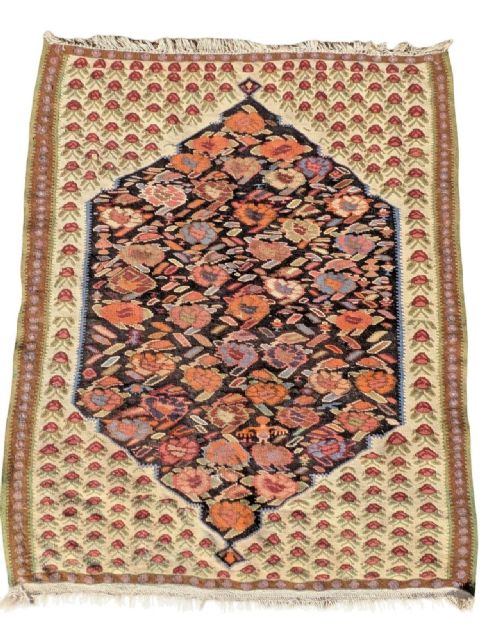
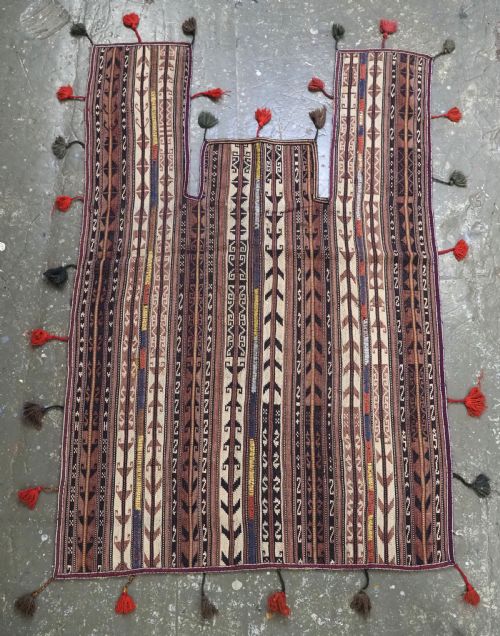
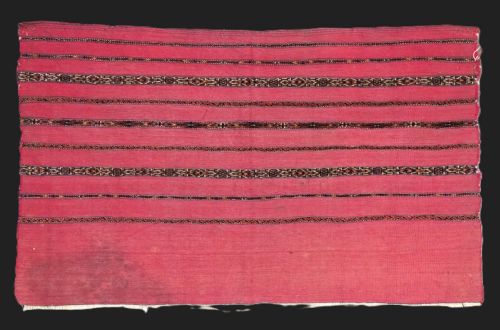
- A flatwoven carpet or rug produced without a pile, common in Central Asian and Persian tribal weaving traditions. These pieces utilise geometric motifs and banded flatweave designs.
- Asmalyk
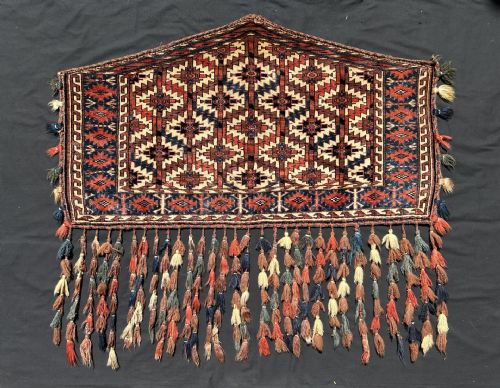
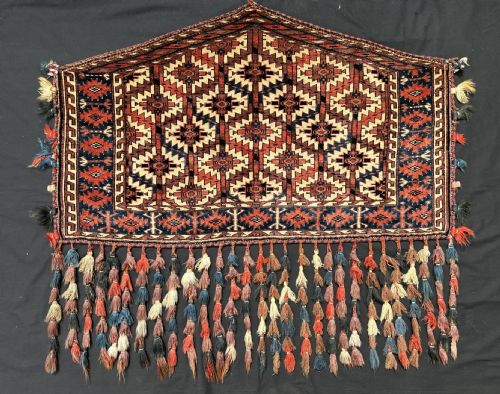
- A pentagonal trapping used by Turkmen tribes during wedding ceremonies to decorate camel flanks. They exhibit intricate tribal gul patterns and fine wool construction.
Woven Wool Tapestry: Frequently Asked Questions
How do I hang a heavy tapestry?
Large wall hangings require even distribution of weight across the upper edge to prevent distortion of the wool fibres. Conservation methods often involve sewing a sturdy canvas casing or Velcro strip along the back top edge to attach to a wall-mounted wooden batten.
Avoid using direct nails or clips that pinch the textile fabric, as concentrated pressure weakens historical threads over time. Professional framing or mounting to linen offers additional support for fragile panel fragments.
What is a verdure tapestry?
Verdure tapestries depict dense forest landscapes, woodlands, and foliage, often populated by small animals or birds. These pieces served as portable forests that brought nature into grand stone-walled European rooms.
Originating largely from Flemish and French workshops during the sixteenth and seventeenth centuries, they remain among the most recognizable categories of antique wall textiles.
How are different periods identified?
Dating relies upon stylistic markers, weaving techniques, and the specific depiction of costumes, architecture, or flora within the design. Sixteenth-century Flemish panels differ distinctly in border ornamentation and perspective from seventeenth-century Baroque compositions.
Tribal flatweaves and nomadic rugs are categorized by the specific regional motifs, guls, and natural colour palettes associated with particular nineteenth-century groups such as the Yomut or Qashqai.