




Woven Wicker Basket
A woven wicker basket is a practical container built from pliable plant fibres, prized for storing logs, laundry or provisions with rustic charm.
Woven Wicker Basket
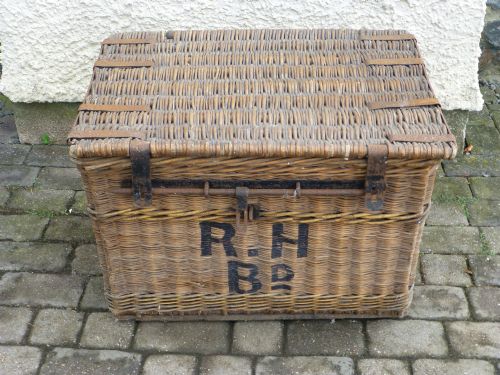
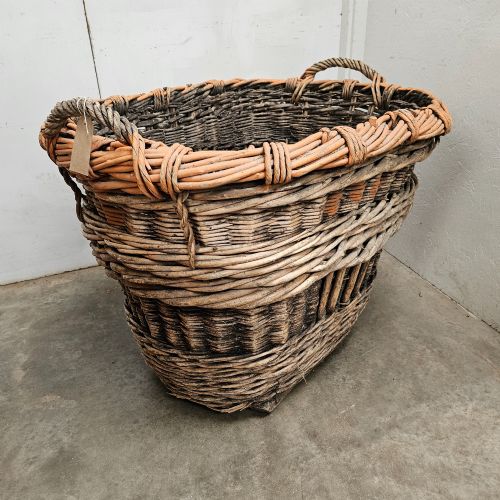
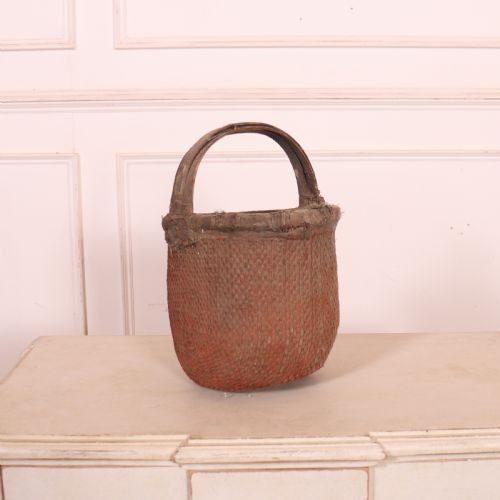
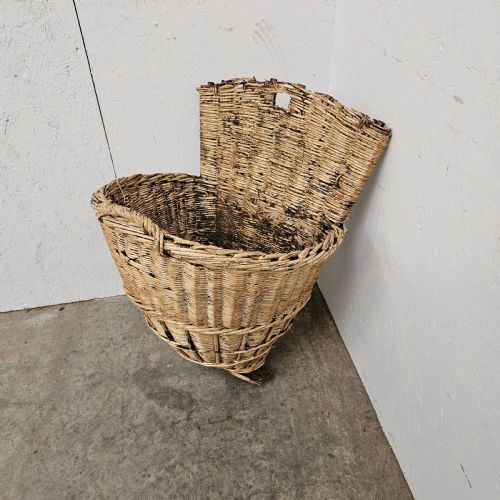
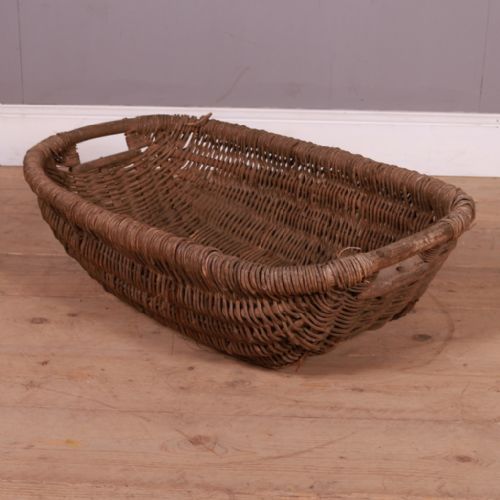
When you search for a woven wicker basket, you encounter sturdy containers spanning the eighteenth, nineteenth and twentieth centuries. These range from utilitarian French grape hods and harvest hampers to large English log storage trunks and Swedish linen bins.
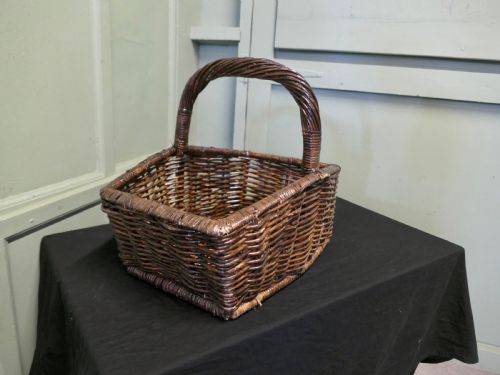
The pieces on this page appear in various regional styles, including French Country, Rustic Country, English Country, and Edwardian Industrial forms. You will find storage baskets, trunks, and picnic sets designed for heavy agricultural labour or domestic organisation.
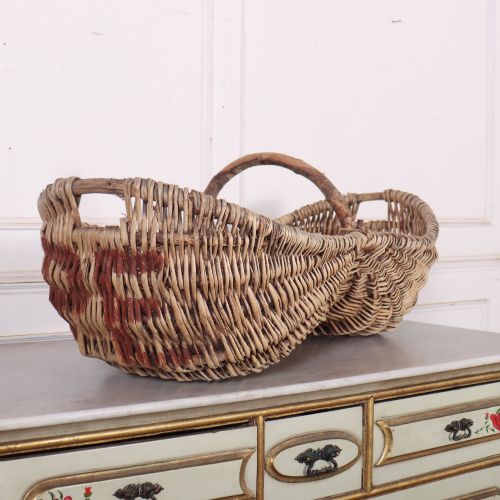
Many items show specialist uses, such as champagne harvest baskets, market seller flower carriers, and travelling tea sets housed in fitted cases. Their forms dictate their presence, shifting from deep agricultural hods to broad storage chests.
Construction and materials
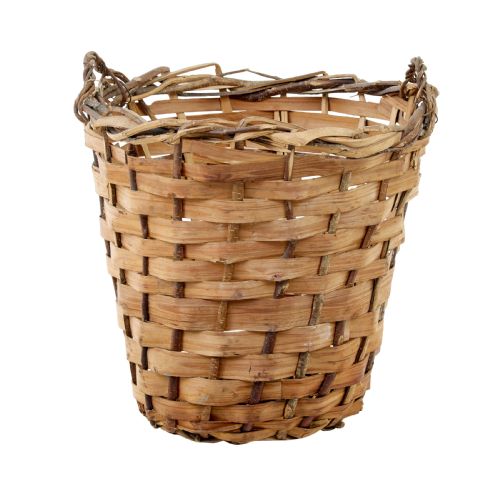
These pieces rely on natural plant materials including wicker, willow, cane, and bentwood, manipulated while damp to form flexible yet resilient structures. Makers selected pliable shoots to interlace tightly around heavier structural ribs, creating walls that could withstand heavy loads of grapes, logs, or laundry.
Additional reinforcement often comes from iron or metal fittings, adding structural integrity to large storage trunks and industrial mill baskets. Some examples incorporate wood components or painted finishes, combining woven plant bodies with rigid timber frames.
Materials across these listings include wicker, willow, wood, cane, porcelain, metal, iron, and bentwood.
Assessing quality and construction
Quality in a woven wicker basket rests upon the tightness of the weave, the uniformity of the plant material, and the survival of the original structural integrity. Pieces built for demanding agricultural tasks, such as grape harvesting or mill work, often display heavier cane construction and reinforced bases designed for endurance.
The distinction between ordinary domestic wares and superior examples lies in the balance between capacity and refined hand manipulation. Better pieces maintain their rigidity and structural shape across large spans without excessive distortion or fibre breakage.
The Woven Wicker Basket Glossary
- Wicker
- A technique of weaving pliable plant materials like willow, reed, or cane into rigid objects. It produces textured surfaces suited to both domestic storage and agricultural transport.
- Cane
- The peeled, slender stems of rattan palms, valued for flexibility and tensile strength. It is frequently employed in large trunks and heavy-duty storage baskets.
- Bentwood
- Wood that has been heated and forced into curved shapes before drying. It provides sturdy internal framing and handles for woven containers.
- Hotte
- A traditional deep backpack basket used in French vineyards for gathering grapes. These narrow containers taper toward the bottom to rest comfortably against the back.
- Trug
- A traditional shallow garden basket traditionally made from split wood strips or woven plant fibres. It serves as a light receptacle for gathering produce and flowers.
Woven Wicker Basket: Frequently Asked Questions
How are antique baskets cleaned?
Dust accumulates easily between woven plant fibres over decades of use. Gentle brushing with a soft-bristled brush removes surface debris without damaging the material.
Excessive moisture causes natural fibres like willow and cane to swell or rot. Wipe surfaces with a barely damp cloth and dry thoroughly afterwards.
Can these baskets hold heavy logs?
Many nineteenth-century examples functioned specifically as industrial or domestic log storage trunks. Their thick cane construction and reinforced bases tolerate the weight of firewood.
Examine the base and lower ribs of the piece for wear before loading heavy items. Strong structural integrity ensures the bottom will not sag or split.
What is a French grape hod?
A grape hod, or hotte, is a deep harvesting vessel carried by vineyard workers during the autumn vintage. Their flared mouths and narrow bases allowed pickers to deposit fruit quickly.
These agricultural vessels bring substantial scale and rustic texture to modern interiors. They work well as tall floor-standing display pieces or umbrella stands.
How do I date an old basket?
Dating relies on material characteristics, wear patterns, and regional construction methods. Nineteenth-century pieces often feature thick industrial cane and heavy iron reinforcements suited to manual trades.
Twentieth-century examples transition toward lighter domestic storage forms like laundry bins and picnic sets. Comparing the weave density and hardware styles helps narrow down the production era.