




Natural Wicker Basket
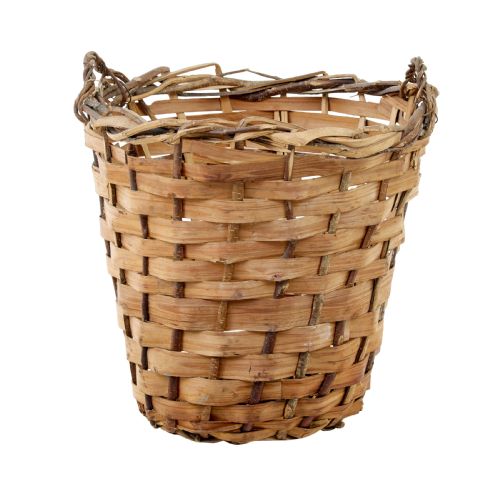
These natural wicker basket examples bring practical, honest texture to a room, offering robust storage shaped by utilitarian history.
Natural Wicker Basket
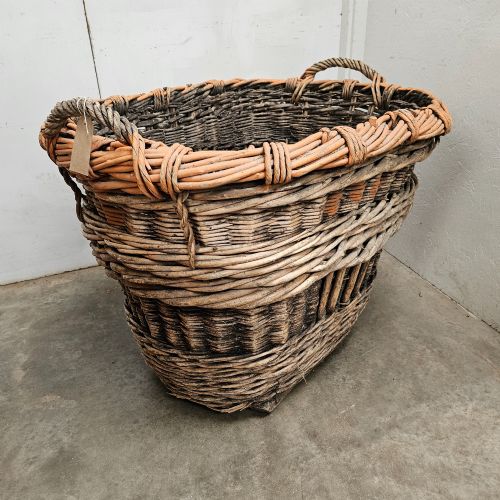
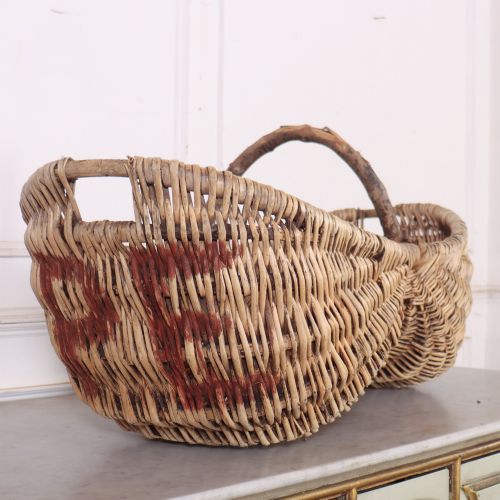
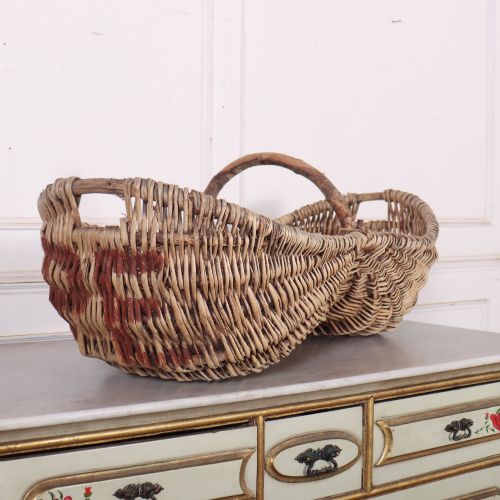
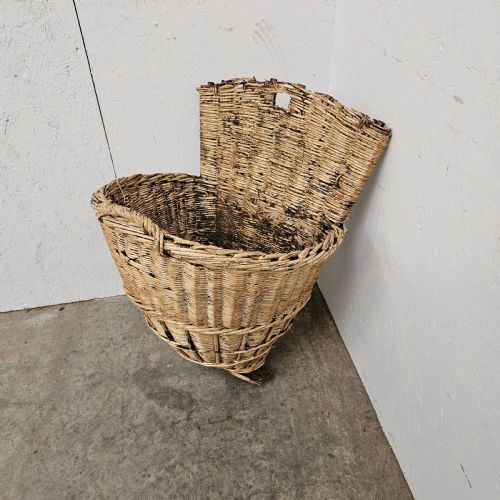
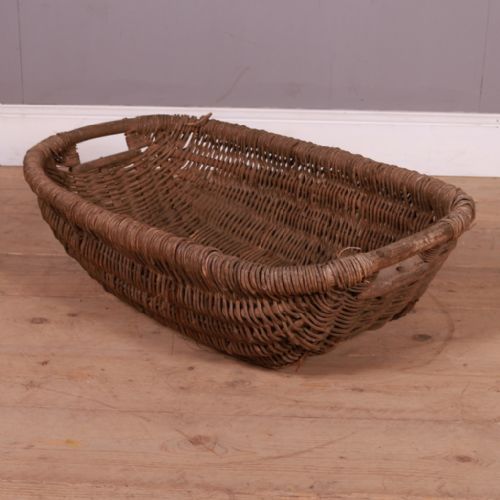
When you search for a natural wicker basket, you encounter hardworking vessels designed originally for agricultural labour rather than static display. These pieces range from substantial French grape picking hods and harvest baskets to Swedish linen carriers and large mill receptacles.
The selection here leans heavily towards European country traditions, notably French provincial work from the eighteenth, nineteenth, and early twentieth centuries. You will regularly find sturdy utilitarian forms intended for demanding seasonal tasks like harvesting grapes or hauling logs.
Object types on this page focus squarely on storage, appearing as logs baskets, troughs, and deep storage containers. They bridge the gap between antique craft and everyday utility, suiting modern interiors that value tactile, earthy materials.
How they were made
Construction relies primarily on natural plant materials such as willow, hazel, and cane, interwoven by hand to create resilient structures. Craftsmen utilised these flexible branches to build robust vessels capable of withstanding heavy agricultural use.
Many examples incorporate supportive wooden frameworks, bentwood elements, and occasional leather or rope reinforcements to handle heavy loads. These combined materials ensure the structural integrity of large forms like mill baskets and harvest hods.
Some French grape pickers hods still carry faint whispers of Chablis harvests tucked between their willow ribs.
What varies in quality
Quality in a natural wicker basket rests upon the tightness of the weave and the preservation of the structural ribs. Pieces that retain their original geometric integrity despite heavy historical use demonstrate superior initial construction.
The presence of secondary materials like authentic leather straps, sturdy wooden bases, or original rope handles elevates an example. Age also plays a role, with eighteenth and nineteenth-century specimens displaying distinct hand-worked characteristics absent in later output.
The Natural Wicker Basket Glossary
- Wicker
- A technique of weaving pliable materials into items such as baskets and furniture. It describes the method of construction rather than a specific plant.
- Willow
- A common deciduous tree whose flexible branches provide the primary material for traditional basketry. Its natural pliability allows for tight, durable weaving.
- Hotte
- A traditional deep carrying basket or backpack, often used in French vineyards for gathering grapes. These pieces typically feature specialised shapes to rest comfortably against the back.
- Bentwood
- Wood that has been heated and mechanically forced into curved shapes. It frequently forms the rigid structural rim or base of large storage baskets.
Natural Wicker Basket: Frequently Asked Questions
What were these baskets used for?
These vessels served demanding agricultural and industrial roles, primarily gathering crops like grapes during harvest or hauling heavy materials like linen and logs. Their robust construction allowed workers to transport dense loads across uneven terrain.
Over time, many transitioned from working farms and mills into domestic settings. Today, their utilitarian origins make them enduringly practical for home organisation.
How do I clean a wicker basket?
Dusting with a soft brush or a vacuum attachment on a low setting removes surface particles trapped within the weave. Avoid soaking the natural plant fibres in water, which can cause warping or weaken the structure.
For stubborn grime, a slightly damp cloth with mild soap can be applied gently, followed by immediate drying. Keeping the piece in a stable environment prevents the willow or cane from becoming brittle.
How old are these baskets?
The pieces available span from the eighteenth century through to the early twentieth century. Earlier examples often show the deep patina of prolonged agricultural labour.
Dating relies heavily on construction techniques, materials, and stylistic markers consistent with periods like the Edwardian era or nineteenth-century French provincial workshops.
How do I style a basket at home?
Large storage baskets work exceptionally well placed beside a fireplace to hold firewood and logs. Their generous proportions also suit the storage of spare blankets and linens in living areas or bedrooms.
Allowing the natural texture of the willow or cane to stand on its own highlights the history of the object. They integrate smoothly into rustic country, French provincial, and Scandinavian interiors.