
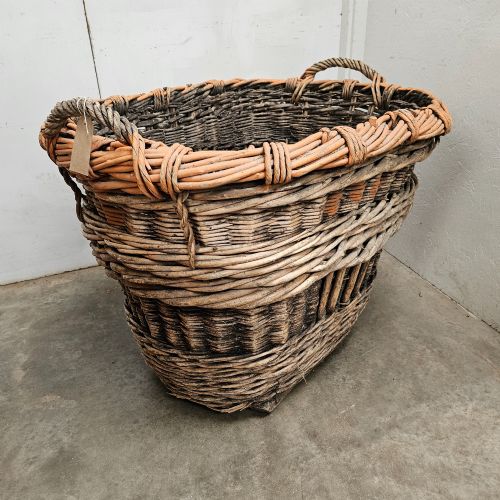
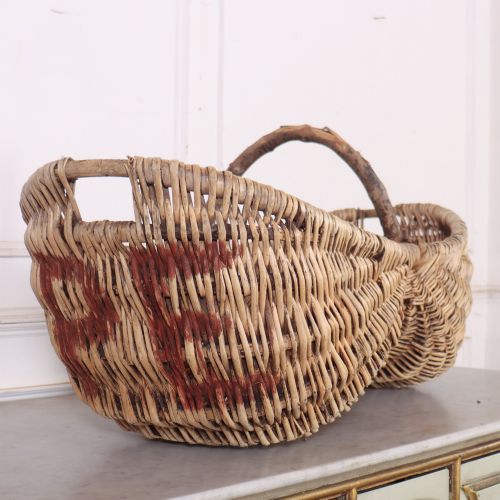
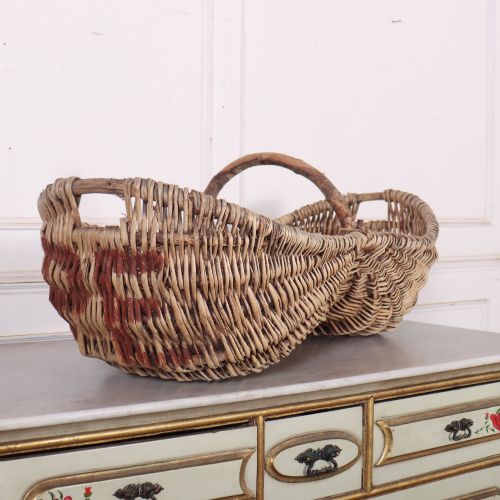


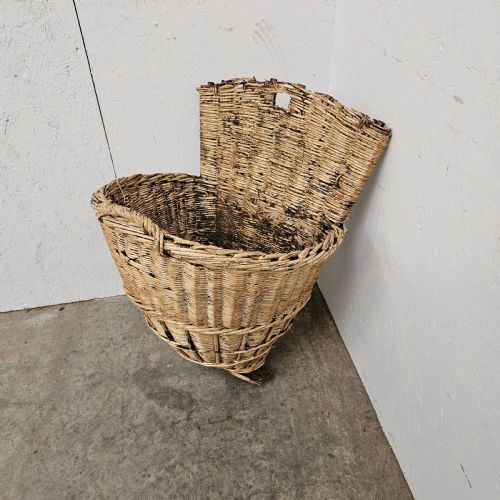


French Grape Basket
These French grape basket pieces are working agricultural vessels that bring robust rustic character and practical storage to modern interiors.
French Grape Basket
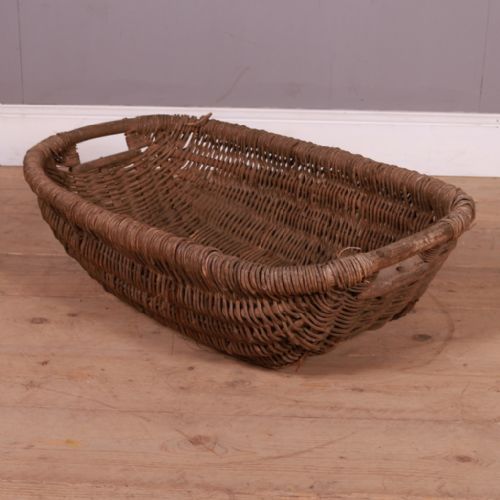
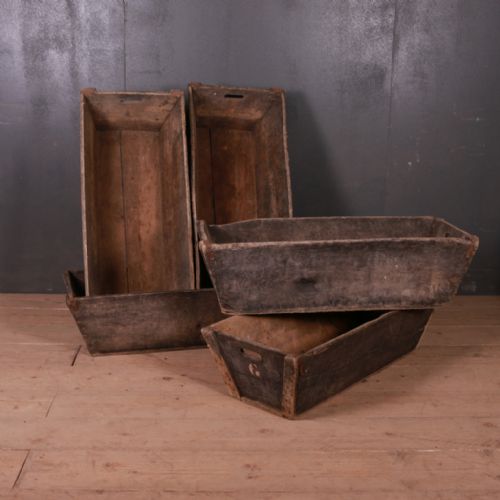
A french grape basket encompasses utilitarian agricultural carriers designed for harvesting fruit in the vineyards of regions such as Chablis and Burgundy. These functional objects range from traditional upright pickers' hottes to broader harvest baskets, troughs, and wooden bins.
Buyers on this page most commonly encounter nineteenth-century examples alongside pieces from the early twentieth century, spanning periods like eighteen ninety, nineteen hundred, and nineteen twenty. The forms reflect French country and French provincial traditions rooted in practical vineyard labour.
The inventory includes specialised carriers such as grape hods and harvest troughs alongside standard storage baskets. Each piece bears the distinct structural footprint of its original agricultural purpose in the French countryside.
Materials and construction
Makers utilised natural plant fibres including willow, wicker, and bentwood to weave lightweight yet durable bodies capable of withstanding heavy crop loads. These woven elements were frequently paired with rigid wood and sturdy metal or zinc components to reinforce high-stress areas.
The combination of woven wicker and wooden framing provided the necessary flexibility and strength for workers traversing steep vineyard slopes. Surviving pieces often display traces of original paint alongside the weathered patination of aged wood and oxidized metal.
Listings on this site span the eighteenth, nineteenth, and early twentieth centuries, featuring materials such as willow, wicker, wood, iron, and zinc.
Assessing quality and authenticity
Quality in a french grape basket depends upon the integrity of the weaving and the retention of original structural materials like timber frames and metal supports. Pieces that maintain their authentic agricultural character without excessive modern intervention command greater interest from collectors.
The distinction between ordinary utility items and superior examples lies in the survival of regional markers, such as specific regional forms from Chablis or Burgundy. The natural ageing of the willow, wicker, and paint surface directly influences the visual depth of each piece.
The French Grape Basket Glossary
- Hotte
- A tall backpack-style harvesting basket designed to be carried by workers during the grape harvest. This regional form rests securely on the back to transport heavy loads from the vines.
- Harvest trough
- A shallow, elongated wooden container utilised for gathering and sorting fruit in the vineyard. These open receptacles complement traditional woven baskets within storage settings.
- Bentwood
- Timber steamed and manipulated into curved structural shapes to form the rigid frames of agricultural carriers. This technique provides essential support for flexible wicker bodies.
- Wicker
- A pliable plant material woven to create the breathable, resilient walls of traditional gathering baskets. Willow is the most common medium employed in this technique.
French Grape Basket: Frequently Asked Questions
How were these baskets originally used?
Agricultural workers carried these vessels through vineyards during the grape harvest to collect fruit from the vines. The ergonomic hottes and deep bins allowed labourers to transport heavy yields efficiently to processing areas.
Over decades of agricultural service, these carriers became essential tools within French wine-producing regions like Burgundy and Chablis. Their robust construction was engineered specifically to endure daily physical demands outdoors.
How can I style a french grape basket at home?
These versatile pieces function naturally as floor-standing storage for blankets, firewood, or large botanical displays. Their distinct agricultural heritage adds textural contrast to both contemporary and traditional interior spaces.
Positioning a large hotte or storage bin in a hallway or living room brings immediate rustic warmth. The natural tones of aged willow, wood, and wicker anchor room schemes with historical character.
How do I date an older piece?
Dating relies heavily on observing construction techniques, material wear, and structural typology recorded across the eighteenth and nineteenth centuries. Earlier examples frequently display hand-split wood and traditional basketry methods distinct from later production.
Examining the integration of metal, zinc, and paint elements provides further chronological context. Traces of regional French provincial craftsmanship help narrow the period of origin.
Are these items waterproof?
As agricultural carriers woven from willow, wicker, and wood, these objects feature porous construction unsuited for holding standing liquids. Their original design prioritized ventilation and lightweight strength rather than sealed containment.
Utilising appropriate liners allows owners to incorporate live plants or dried arrangements safely inside the baskets. This protects the historic organic materials from moisture damage.