



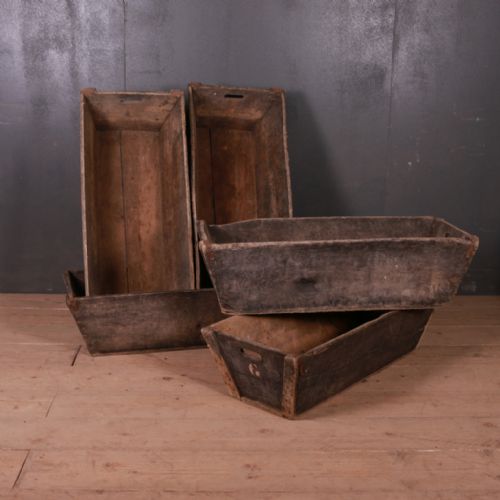
French Country Basket
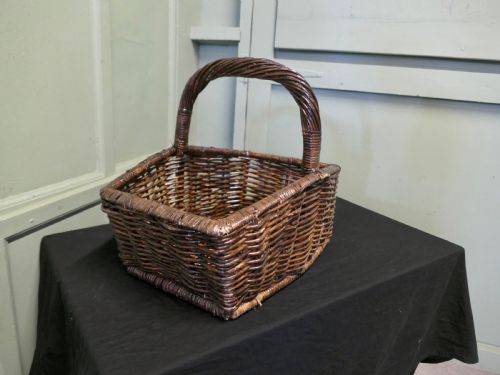
These French country baskets bring the honest utility of rural 19th-century markets and vineyards straight into a modern home.
French Country Basket
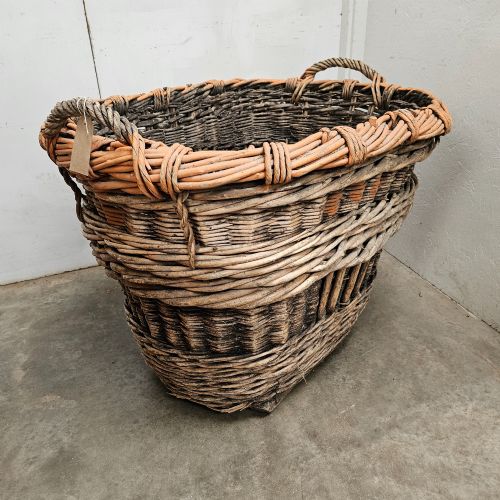
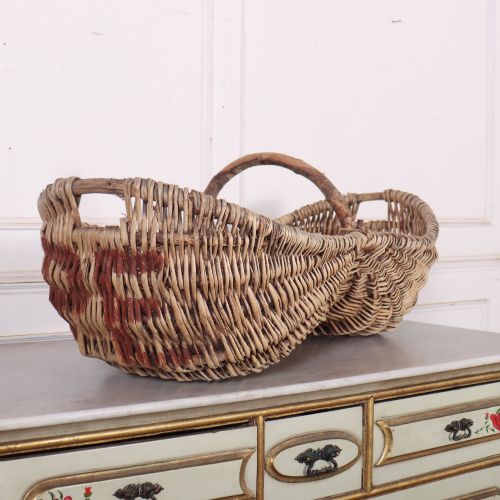
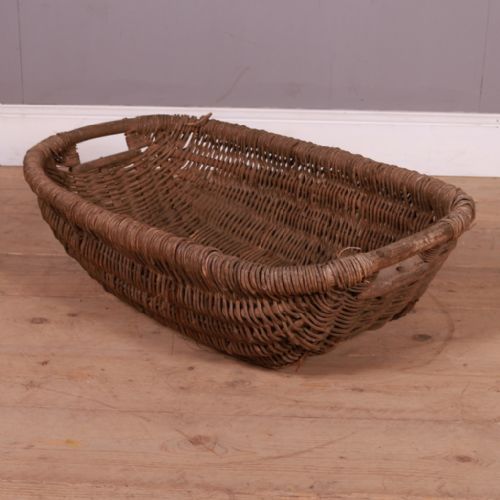
When you search for a french country basket, you encounter practical vessels forged from rural labour, spanning the 19th century and the early decades of the 1900s. These pieces range from market flower carriers to grape harvesting hods and log bins, all designed for heavy agricultural work.
The version you are most likely to meet on this page is the wicker or willow grape picking hotte, alongside sturdy wooden bins and iron-framed glass demijohns. Their forms directly reflect their origins in French agriculture, offering deep storage capacity and rugged structural integrity.
How they were made
Maker construction relies heavily on natural materials like wicker, willow, and bentwood, woven or joined to withstand heavy fruit and wood loads. Artisans shaped these organic materials with iron reinforcements and wooden frames to ensure lasting durability during daily farm labour.
Some specialised items incorporate metal, zinc, and painted surfaces, while copper appears in rarer vessels like the ferrat. Every surface shows the honest marks of hand-shaping and the rich patination of decades of agricultural use.
Grape pickers carried deep wicker hottes strapped to their backs all day long, turning every harvest into a heavy-duty mountaineering expedition.
What varies in quality
The distinction between standard utility items and finer survivors lies in the integrity of the weave and the preservation of original metalwork. Pieces retain higher appeal when their iron frames, wooden slats, and painted surfaces survive with minimal structural compromise.
Originality of purpose and material purity dictate the standing of each piece, distinguishing utilitarian wear from genuine antique character. A well-preserved willow weave or an intact copper body carries far more presence than a heavily restored equivalent.
The French Country Basket Glossary
- Hotte
- A traditional deep carrying basket or hod, often mounted on the back during grape harvests. This form defines many of the tall agricultural wicker vessels seen in French country collections.
- Demijohn
- A large glass bottle or carboy enclosed in a protective basket made of iron or wicker. These vessels were utilised for storing and transporting wine or spirits.
- Ferrat
- A traditional metal vessel or bucket, typically fashioned from copper. These heavy-duty containers served various agricultural and domestic functions in rural France.
- Bentwood
- Wood that has been heated and bent into curved structural shapes. This technique provided lightweight yet resilient frames for agricultural carriers and storage bins.
- Wicker
- A pliable twig material, such as willow or rattan, woven into sturdy basketry. It forms the primary structural body for the majority of historical harvest baskets.
French Country Basket: Frequently Asked Questions
What were french country baskets used for?
These agricultural vessels served specific daily tasks across rural France, from gathering grapes during the autumn harvest to carrying flowers and fruit at bustling village markets.
Larger variants functioned as wood carriers for hearths or protective frames for glass demijohns, meaning their original forms were entirely dictated by heavy manual labour.
How do I date an antique basket?
Dating relies on examining the specific type of weave, the tooling marks on the wood, and the composition of any associated iron or copper hardware. Earlier 19th-century examples often display denser willow work and hand-forged metal components compared to later iterations.
Material patination also offers vital clues, as decades of agricultural use leave distinct traces that modern reproductions simply cannot replicate.
How do I style a harvest basket at home?
These deep vessels excel as practical storage solutions in living spaces, holding everything from rolled wool blankets to large armfuls of firewood beside an open hearth.
Smaller market and grape baskets sit comfortably on tables or open shelving, adding texture and historical weight to contemporary interior schemes.
Are these baskets sturdy enough for daily use?
Constructed from tough willow, bentwood, and iron framing, these pieces were originally engineered to endure the rigorous demands of 19th-century farming.
While antique wicker requires a gentle touch to prevent snapping, robust wooden bins and iron-bound carriers remain fully capable of everyday household storage.