




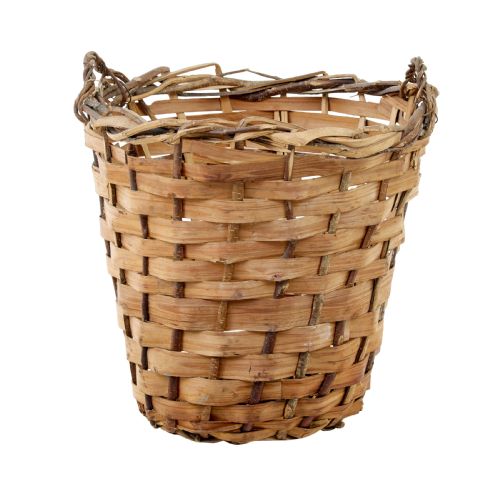
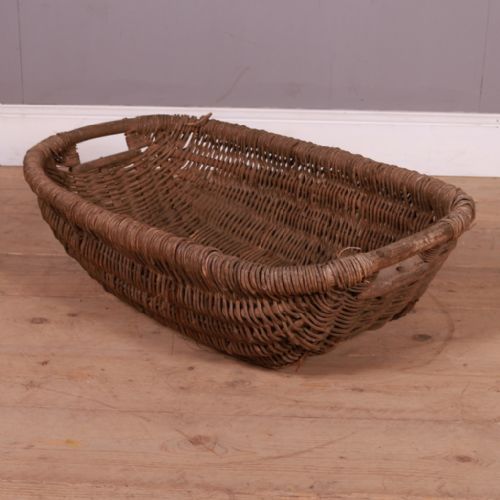
Woven Willow Basket
These woven willow baskets bring tactile warmth and honest utility into a room, shaped by centuries of agricultural and domestic service.
Woven Willow Basket
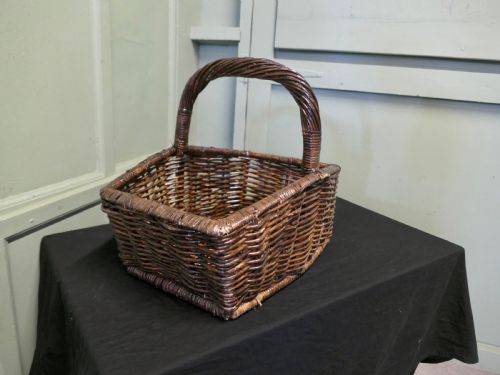
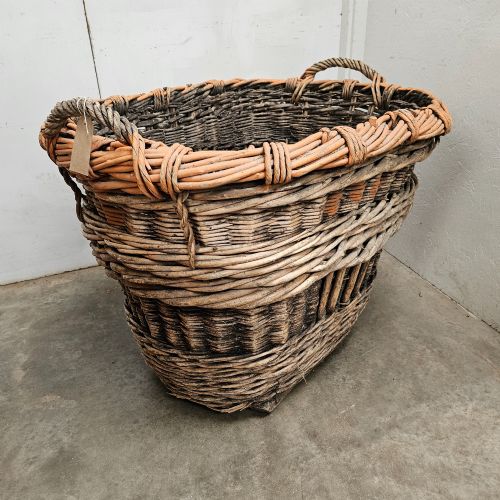
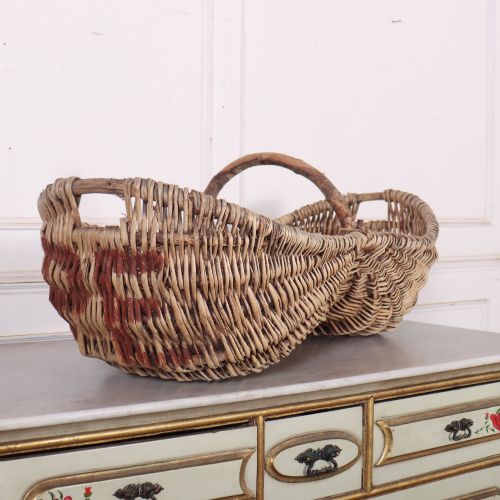
A woven willow basket serves as both a practical container and a tactile piece of history, originating from domestic, agricultural, and industrial contexts across the eighteenth, nineteenth, and twentieth centuries. When searching for a woven willow basket, buyers encounter substantial utilitarian forms such as harvest hods, laundry hampers, and log storage containers.
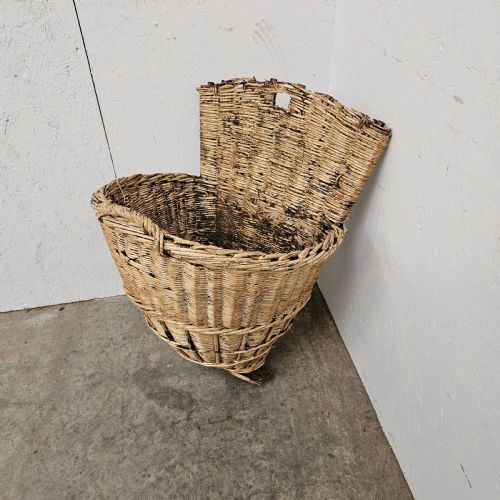
The pieces available on this page lean heavily towards French country harvesting vessels and large English or Swedish laundry and log baskets. These range from eighteenth-century vineyard hods to early twentieth-century industrial mill containers.
Originating largely from rural European traditions, these objects reflect the specific regional agricultural demands of their creation, spanning French market sellers, champagne harvests, and Swedish linen storage.
Materials and construction
Makers utilised natural plant fibres, predominantly willow, wicker, and cane, often augmented with hazel, bentwood frames, and supportive rope or leather bindings. These materials were selected for their natural flexibility and tensile strength, allowing artisans to manipulate raw stems into rigid, load-bearing structures without modern hardware.
The construction relies on traditional hand-weaving techniques where supple rods are staked and interlaced to build up walls capable of withstanding heavy agricultural loads, damp environments, and daily domestic hauling.
The listings span the eighteenth to the twentieth centuries, featuring materials such as willow, wicker, cane, hazel, rope, and leather.
Assessing quality in willow and wicker
Quality in these woven vessels rests upon the tightness of the weave, the structural integrity of the underlying frames, and the uniformity of the plant material used. Tightly packed rods and securely anchored handles distinguish robust working pieces from more decorative or fragile examples.
Patina and evidence of genuine working use separate ordinary examples from exceptional survivals, as exposure to agricultural labour or industrial environments deepens the tone of the willow and leather components.
The Woven Willow Basket Glossary
- Willow
- A flexible deciduous tree whose harvested shoots form the primary material for basketry. It provides both structural rigidity and pliability when soaked.
- Wicker
- A technique of weaving pliable plant materials into items such as baskets and furniture. It describes the finished texture rather than a specific botanical species.
- Hotte
- A traditional French backpack basket used historically for grape harvesting in vineyards. These typically feature shaped backs and shoulder straps for carrying heavy loads.
- Bentwood
- Wood that has been heated and mechanically forced into curved shapes. It often forms the rigid rims or handles of large storage containers.
Woven Willow Basket: Frequently Asked Questions
How were antique baskets used?
These vessels performed heavy lifting in agriculture, industry, and domestic estates. They hauled grapes during harvests, transported laundry, and stored firewood.
Over time, working pieces transitioned from active agricultural service to household storage and decorative placement.
How do I care for a willow basket?
Keep these pieces away from prolonged dampness and direct heat sources to prevent the natural fibres from becoming brittle. Dust them gently with a soft brush.
Applying a light, natural wax can occasionally help maintain the moisture balance of older willow and cane.
How do I date a woven basket?
Dating relies on assessing the construction style, the wear patterns, and the specific materials or regional forms present. Industrial mill baskets often date to the early twentieth century, while vineyard hods frequently span the eighteenth and nineteenth centuries.
Hardware additions like leather straps and iron or bentwood reinforcement also offer chronological clues.
Are these baskets suitable for log storage?
Many of these large vessels were built specifically for heavy materials like wood and laundry. Their robust cane and willow construction supports heavy loads.
Ensure the base and handles remain structurally sound before loading them with heavy firewood.