





Vintage Harvest Basket
A vintage harvest basket brings authentic rural utility into a modern room, offering generous storage shaped by decades of agricultural work.
Vintage Harvest Basket
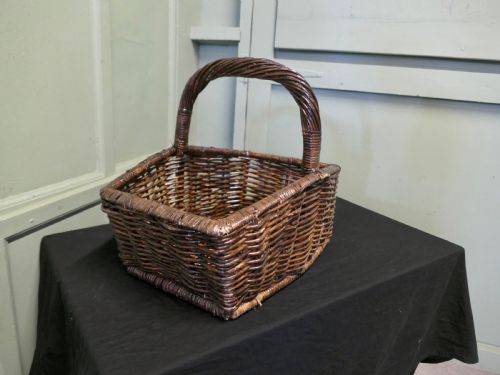
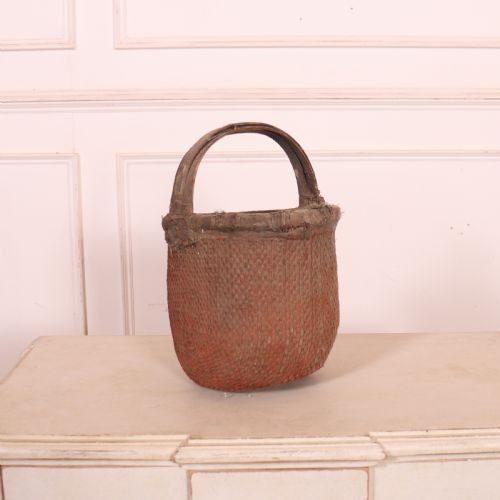
A vintage harvest basket encompasses functional agricultural containers gathered from 18th century origins through the 1920s, reflecting hard rural labour across European and Chinese regions. Buyers searching this phrase encounter sturdy wicker, willow, and timber vessels designed for gathering grapes, fruit, flowers, and truffles.
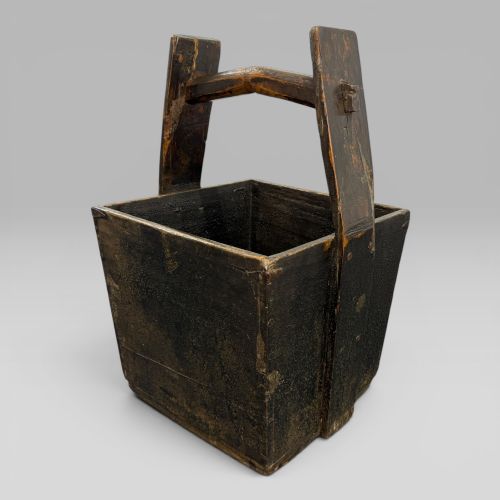
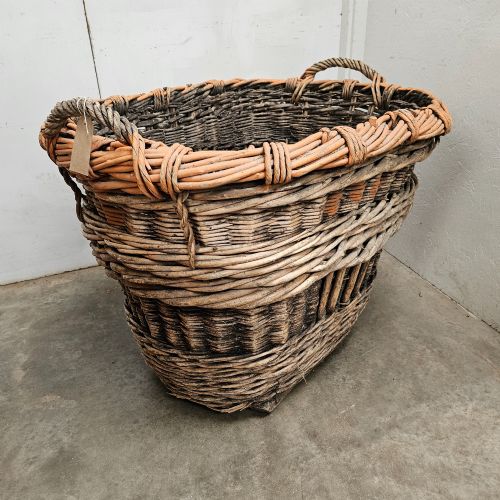
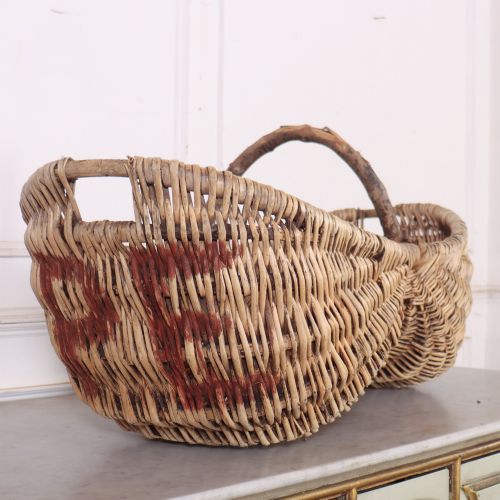
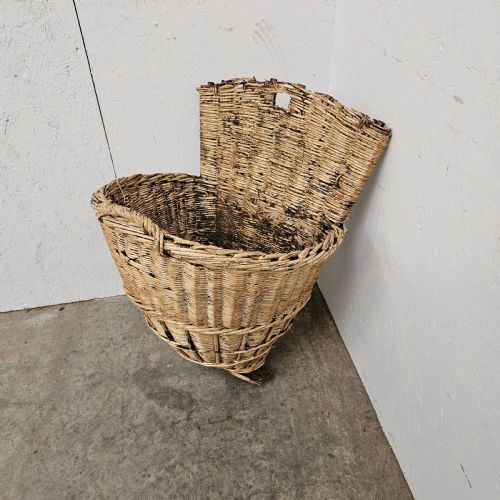
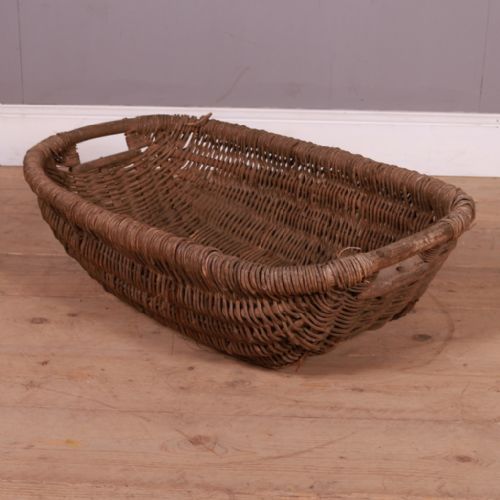
The most frequent version on this page is the French grape hod or hotte, alongside English painted woven baskets and Chinese elm carriers with handles. These utilitarian forms range from large log storage containers to specialised collecting trrugs bound in iron or constructed from oak and pine.
The diverse geographical spread covers French country, rustic farmhouse, and Chinese provincial styles, showing how agricultural communities adapted local woods and weaves to daily harvests. Each piece carries the distinct marks of its working life, functioning equally well as a decorative focal point or practical storage.
Materials and construction methods
Construction relies heavily on natural plant fibres and durable timbers, utilising willow, wicker, elm, oak, and pine. Artisans wove pliable stems into tight protective walls or joined heavy timber boards to withstand heavy loads of produce.
Reinforcement was essential for working longevity, leading makers to incorporate iron bindings, sturdy wooden handles, and protective frames. Paint finishes occasionally sealed the wood, while natural weathering developed distinct patinas across the wicker and timber surfaces.
Materials span natural wicker, willow, and elm, reinforced with iron bindings for heavy field work.
Evaluating construction and historical character
Quality rests in the structural integrity of the weave and the tightness of the timber joints, distinguishing sturdy utilitarian vessels from fragile examples. Heavier iron-bound pieces and dense elm or oak frames demonstrate superior resilience compared to lighter decorative variants.
The preservation of original surface textures, whether weathered wicker or aged paint, defines the visual appeal of an antique piece. Stronger forms with intact handles and minimal modern intervention command greater attention from collectors seeking authentic agricultural history.
The Vintage Harvest Basket Glossary
- Hotte
- A traditional deep carrying basket or hod, often carried on the back during grape harvests in French vineyards. These tall woven receptacles taper towards the base to balance the load.
- Trug
- A shallow horticultural container traditionally made from strips of wood, utilised for gathering fruit, vegetables, and garden flowers. Early versions frequently featured reinforced iron bands for added strength.
- Wicker
- A method of weaving pliable plant materials like willow, rattan, or reed into rigid baskets and furniture. This technique provides both flexibility and high load-bearing capacity.
- Grape Carrier
- A specialised agricultural vessel designed to transport freshly picked grapes from the vines to the press house. These containers appear in wicker, wood, and metal-bound configurations.
- Black Forest
- A 19th-century decorative style originating in the mountainous region of Central Europe, characterised by highly detailed carved wood figures and naturalistic motifs.
Vintage Harvest Basket: Frequently Asked Questions
How were harvest baskets originally used?
Workers carried these vessels through fields and vineyards to collect seasonal yields such as grapes, truffles, and fruit. Their shapes were engineered for specific carrying methods, whether strapped to the back or held by sturdy wooden handles.
Over decades of agricultural labour, these containers endured heavy daily use, which accounts for the robust construction and durable materials seen in surviving examples.
Are these baskets strong enough for log storage?
Many of these pieces were built for demanding agricultural work and heavy loads, making them naturally suited for holding firewood in a home. Large wooden bins and reinforced wicker hods easily accommodate logs while adding rustic texture to a hearth.
Checking the stability of the base and handles ensures the container can safely support the weight of heavy timber.
How do I date an antique harvest basket?
Dating relies on examining the tool marks, construction methods, and materials, such as hand-split pine or traditional willow weaves. 18th and 19th-century examples often display irregular hand-woven patterns and forged iron fastenings rather than modern machine production.
Appearing styles like French provincial or Victorian oak trugs provide further historical context for the period of manufacture.
What is the difference between a hotte and a trug?
A hotte is a deep, vertical carrying basket designed to sit comfortably against the back during grape harvesting. In contrast, a trrug is typically a shallower, oblong container shaped from wood strips for gathering garden produce.
Both served essential agricultural roles but were tailored to completely different methods of gathering and transport.