



Brown Wicker Basket
These brown wicker basket pieces combine practical utility with rustic charm, offering durable storage solutions shaped by nineteenth and early twentieth-century trade.
Brown Wicker Basket
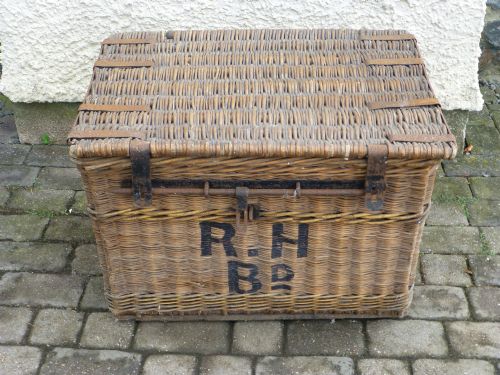
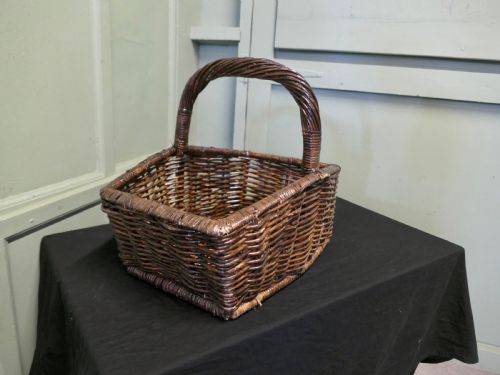
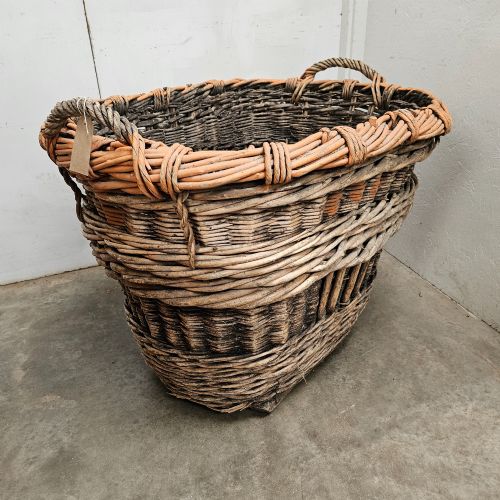
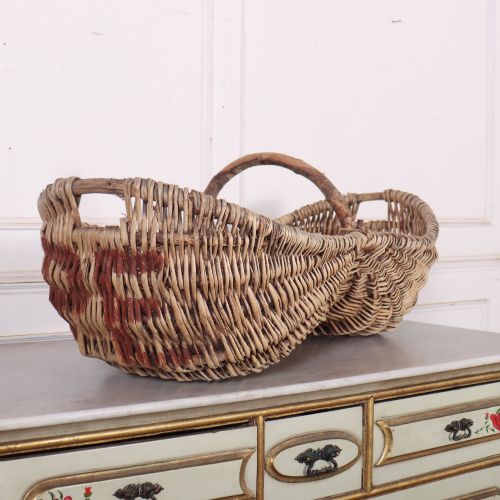
When you search for a brown wicker basket, you encounter hardworking utilitarian vessels spanning the nineteenth century up to the nineteen-thirties. These pieces originate from diverse functional roots, ranging from French harvest truks and grape-picking hoddes to heavy industrial mill containers and travelling trunks.
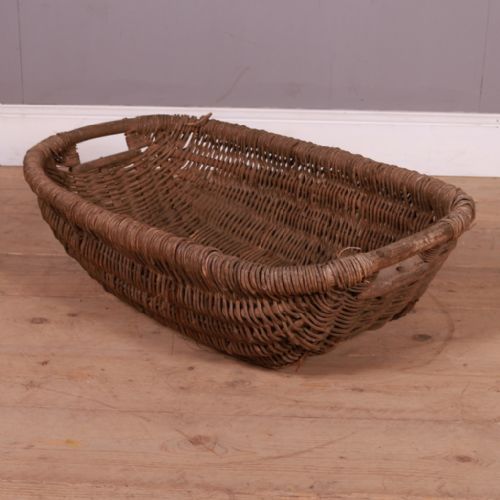
You are most likely to meet French agricultural examples and large industrial storage pieces on this page. Formats vary from deep market seller vessels to massive log receptacles intended for domestic coffee table adaptation.
The aesthetic bridges several styles including French Country, Victorian and Edwardian Industrial, and Rustic Country. Each item reflects a utilitarian history where durability mattered far more than decorative display.
How they were made
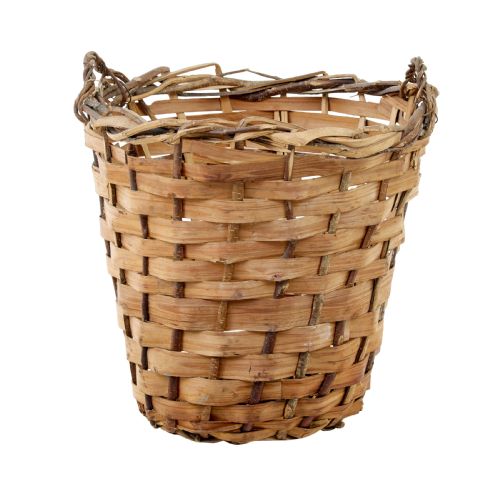
Construction relies upon natural plant materials including wicker, willow, cane, and bentwood, manipulated to create sturdy, interwoven structures. Artisans utilised flexible stems woven tightly around rigid frames to withstand heavy agricultural and industrial loads.
Iron and metal components frequently reinforce stress points such as rims, bases, and handles on larger industrial trunks and harvest hoddes. Wood occasionally forms complementary structural elements, while ceramic and porcelain appear in distinct associated items like oriental tea vessels housed in woven cases.
Among the heavy industrial trunks and grape hoddes sits a solitary ceramic tea pot wearing its own miniature wicker case.
What varies in quality
Quality rests upon the tightness of the weave and the structural integrity of the natural materials used. Denser, more uniform plant fibres indicate a higher standard of original craftsmanship capable of enduring decades of heavy labour.
The presence of original iron or metal hardware in sound condition elevates a piece beyond utilitarian wear. The survival of an uncompromised structural form, particularly in large industrial mill baskets or tall harvest hoddes, distinguishes superior examples.
The Brown Wicker Basket Glossary
- Wicker
- A technique of weaving pliable plant materials into items such as baskets and furniture. It describes the method rather than a specific botanical species.
- Cane
- Hard, glossy strips obtained from the outer portion of rattan stems. It provides rigid strength for structural framing and binding.
- Bentwood
- Wood rendered flexible by steaming or boiling and then bent into curved shapes. It often reinforces the rims and handles of large containers.
- Hotte
- A traditional French conical backpack basket used for harvesting grapes. Workers carried these heavy loads during vineyard collections.
- Industrial
- Pertaining to heavy manufacturing and commercial operations. These pieces display robust construction designed for factory or mill use rather than domestic display.
Brown Wicker Basket: Frequently Asked Questions
What were harvest baskets used for?
Agricultural workers utilised these vessels for gathering fruit, flowers, and grapes during seasonal field collections. Their sturdy construction allowed them to hold heavy, damp produce safely.
Over time, these utilitarian objects transitioned from working farms into domestic interiors for storage and decorative display.
How do I date an industrial basket?
Dating relies upon examining the materials, construction methods, and hardware ironwork typical of the nineteenth and early twentieth centuries. Wear patterns and manufacturing techniques reveal the era of production.
Industrial pieces from the nineteen-tens and nineteen-thirties display heavier frames compared to domestic items.
Are these baskets suitable for daily storage?
These robust pieces function effectively for holding logs, blankets, and bulky household items. Their original purpose demanded high durability under heavy loads.
Placing them in dry interior environments preserves the natural plant fibres against brittle drying or moisture damage.
How do I clean wicker safely?
Dusting with a soft-bristled brush or vacuuming with a low-suction attachment removes accumulated debris from the weave. Avoid soaking natural plant materials in water to prevent warping.
Gentle wiping with a barely damp cloth handles stubborn marks without harming the antique surface.