



Wool Turkish Kilim
These wool turkish kilim pieces are flatwoven floor coverings and cushions originating from Anatolia and the Balkans, prized for their traditional tribal patterns.
Wool Turkish Kilim
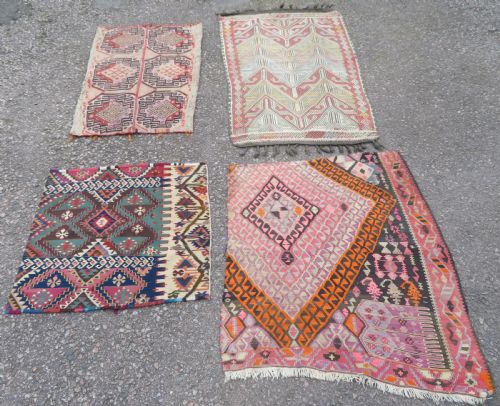
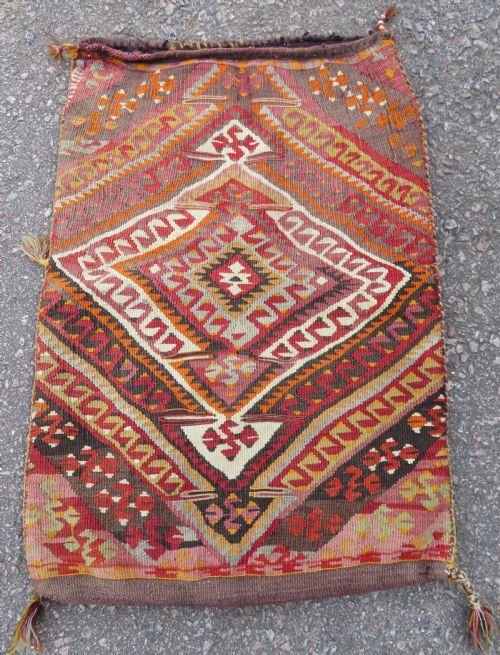
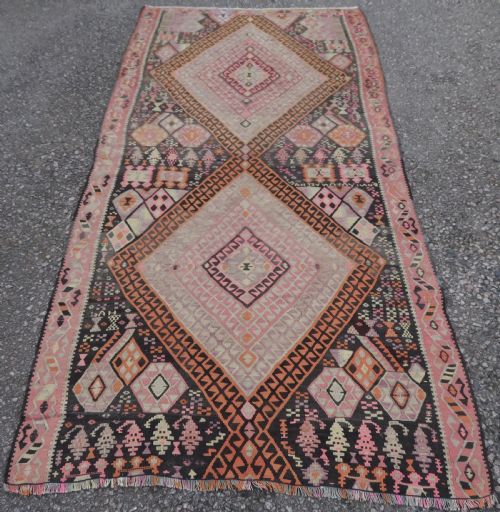
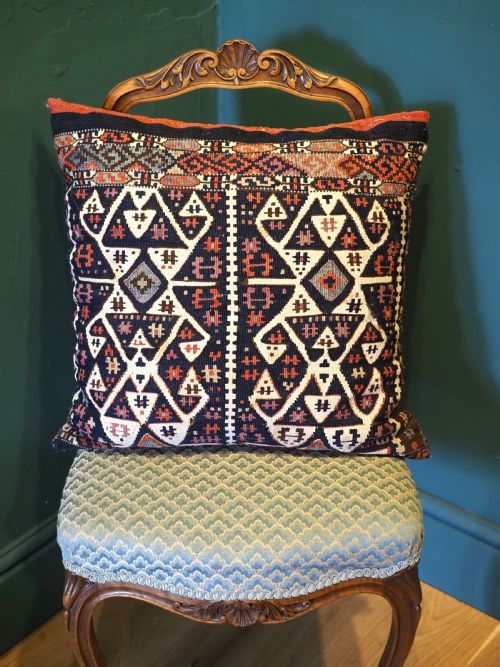
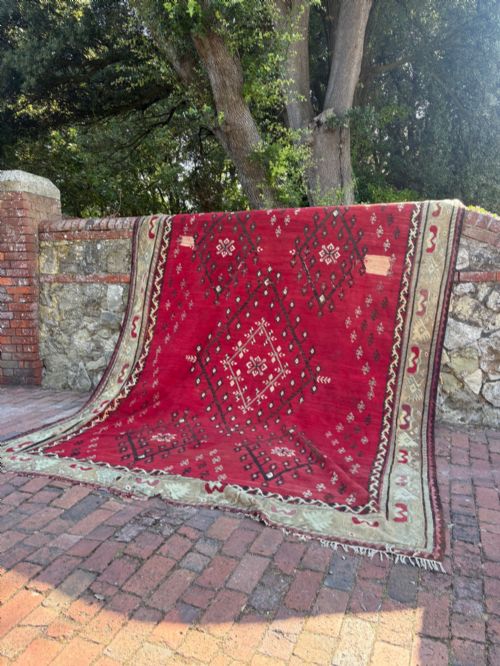
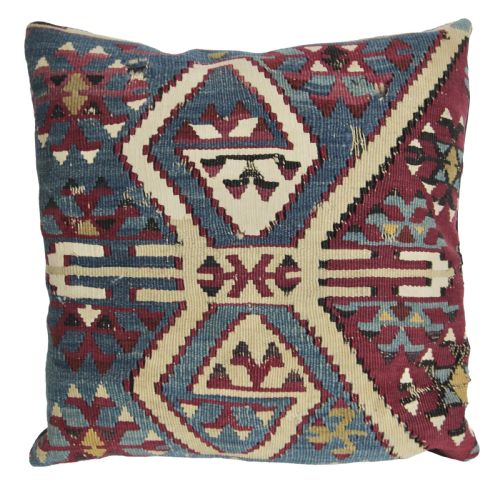
A wool turkish kilim represents a flatweave tradition spanning the nineteenth and twentieth centuries, encompassing diverse regional forms from Anatolian and Balkan workshops. Buyers encounter everything from large room-sized carpets and runners to smaller utility sacks, grain bags, and scatter cushions fashioned from cut saddle bags.
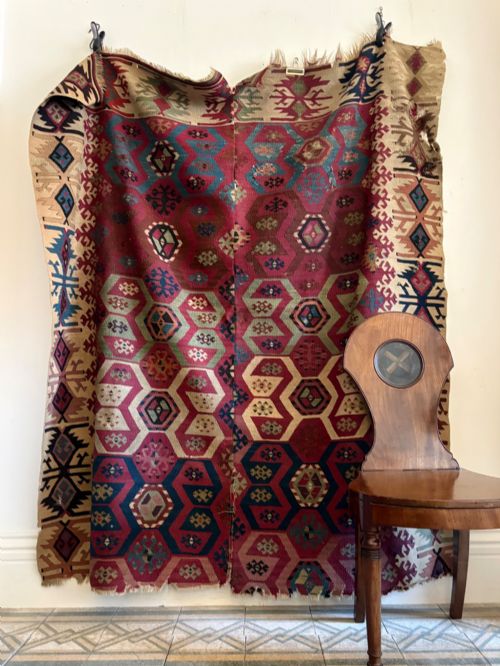
The material output ranges from expansive flatweave carpets originating in regions like Pirot and Sarkoy to specific regional formats such as Malatya, Konya, Bergama, and Mut kilims. Many examples utilise a two-part construction method, where narrower looms weave separate panels that are subsequently joined down the centre to create wide formats.
How They Were Made
These textiles rely on wool for the primary flatweave structure, frequently integrated with cotton foundations or leather accents on functional items like bags. The technique involves a slit-weave flatweaving process without a pile, occasionally supplemented by embroidered panels or cicim needlework details.
Weavers produced these rugs across various Turkish regions using hand-woven methods, resulting in sturdy structural integrity designed for practical nomadic or domestic use. The manipulation of warp and weft yarns creates sharp geometric motifs and banded designs inherent to the flatweave technique.
Wool Turkish Kilim Retail Price Guide 2026
Typical asking prices for wool turkish kilim among the pieces listed under this phrase on Sellingantiques today, from the lower quarter to the upper quarter. They describe what is for sale here now, not the wider market.
Several items began their lives as camel bags before finding new careers as scatter cushions on modern sofas.
What Varies in Quality
Quality differences emerge through the crispness of the geometric design execution, the complexity of regional patterns, and the condition of the wool weave. Examples featuring intact two-part joins and preserved border structures demonstrate superior craftsmanship compared to heavily distressed items.
The visual appeal depends on the richness and harmony of the palette, where warm soft colours and bold traditional hues elevate the piece. The integrity of the original flatweave surface, free from excessive patchwork or compromised material, dictates the standing of individual rugs and cushions.
The Wool Turkish Kilim Glossary
- Kilim
- A flatwoven carpet or rug produced without a pile through the interweaving of warp and weft threads. This technique creates a lightweight textile historically used for floor coverings, wall hangings, and utility covers.
- Cicim
- An embroidered decorative technique applied to the surface of a woven textile. It adds raised geometric patterns to the base flatweave.
- Juval
- A large tribal storage bag used by nomadic groups for household goods. These pieces are frequently repurposed into smaller decorative cushions or displayed as flatweave panels.
- Warp
- The vertical threads stretched tightly on a loom before weaving begins. The weft threads pass horizontally through these structural elements to form the fabric.
- Weft
- The horizontal threads passed through the warp on a loom to create the pattern and colour blocks of the textile. Tight packing of these threads defines the durability of the flatweave.
Wool Turkish Kilim: Frequently Asked Questions
What is a flatweave kilim?
A flatweave kilim is a textile made without pile by interweaving warp and weft threads together tightly on a loom.
This construction method yields a smooth, durable surface distinct from knotted carpets, making these pieces suitable for both floor placement and wall hanging.
How were antique kilims used?
Nomadic and village communities utilised these textiles as floor coverings, blankets, horse covers, and storage sacks for grain and clothing.
Over time, many larger bags and sacks are divided into smaller cushions or panels for modern domestic interiors.
How do I care for a wool rug?
Regular gentle vacuuming without a rotating brush roll helps remove grit and dust from the wool fibres.
Professional cleaning suited to antique textiles preserves the natural lanolin and structural integrity of the flatweave.
How do I identify regional types?
Regional attribution relies on characteristic palette choices, specific geometric motifs, and structural traits like two-part panel construction.
Comparing known formats from centres such as Sarkoy, Malatya, or Bergama aids in recognising distinct stylistic origins.