



Wool Tribal Area Rug
These wool tribal area rugs bring distinct village character and rich earthy tones into a room.
Wool Tribal Area Rug
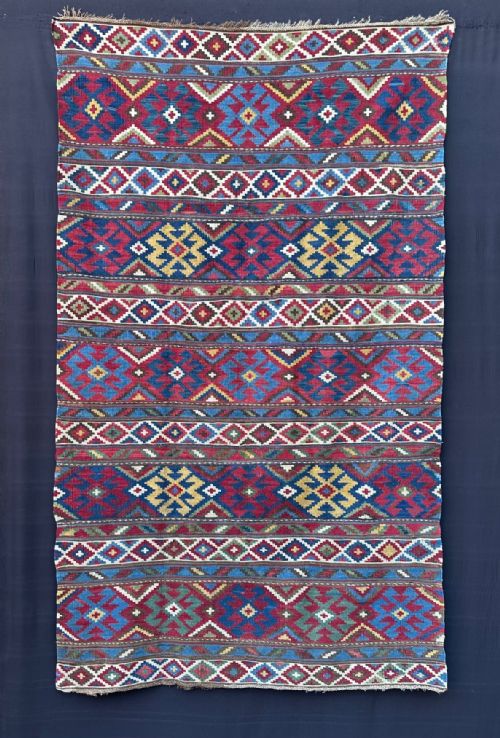
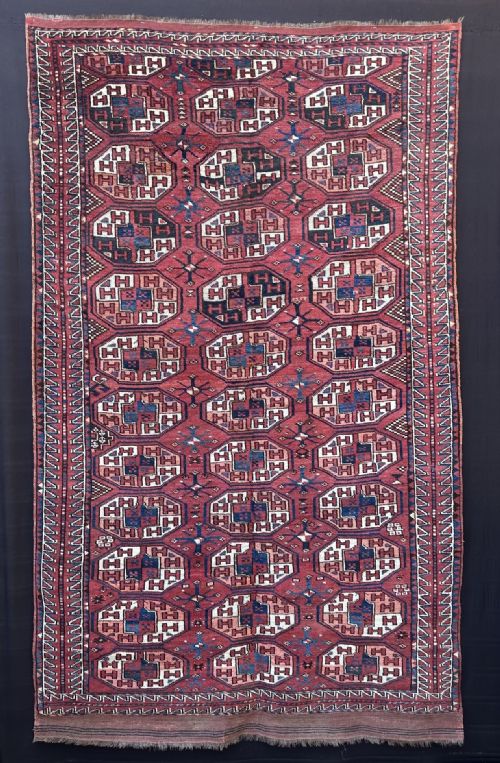
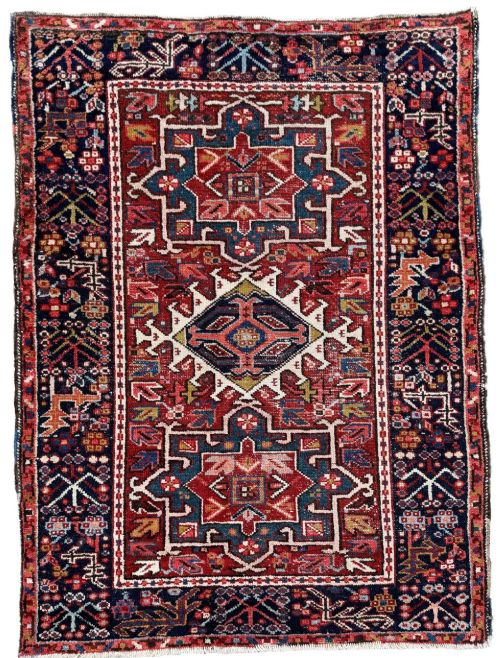
When you search for a wool tribal area rug, you encounter hand-knotted floor coverings produced by nomadic or village weavers. The examples found here span the late nineteenth century, dating from the eighteen eighties up to nineteen hundred.
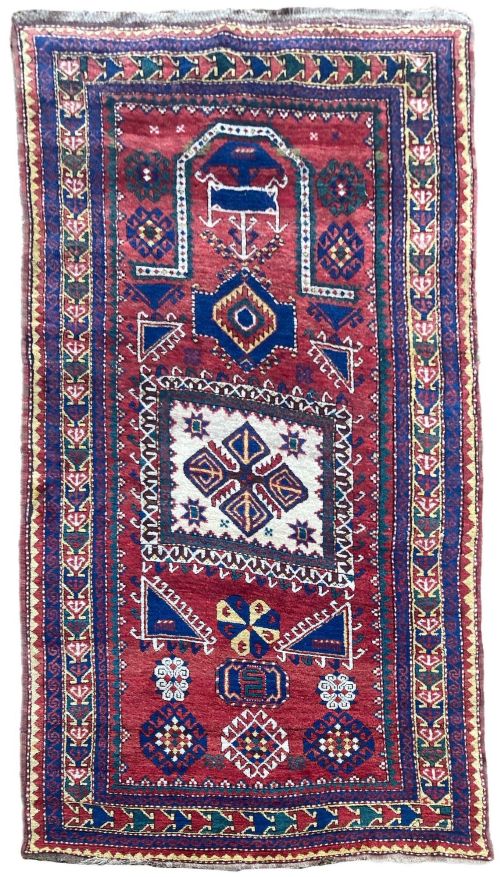
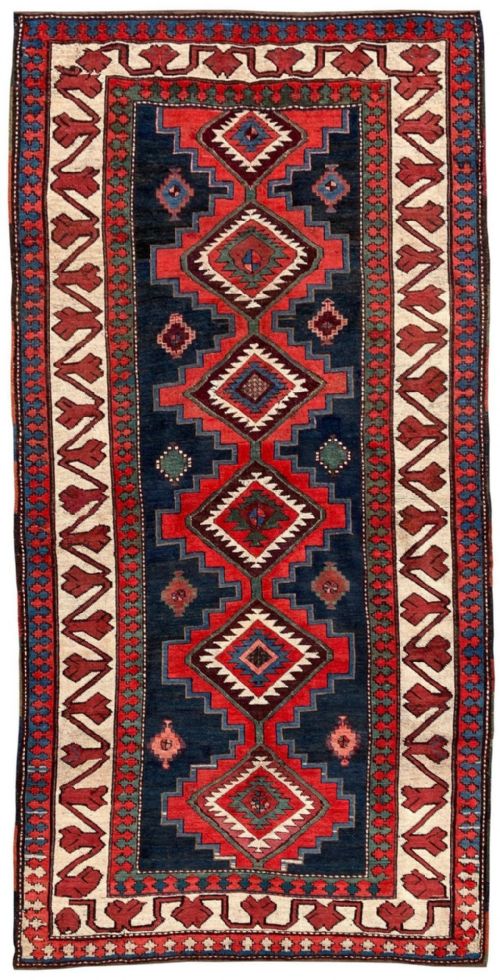
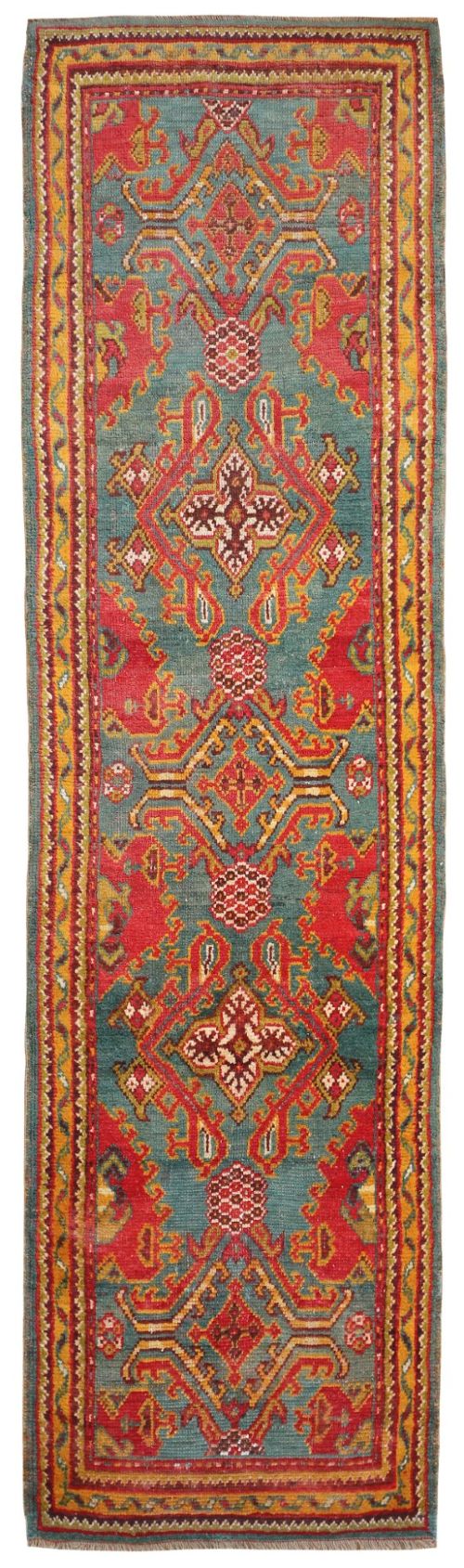
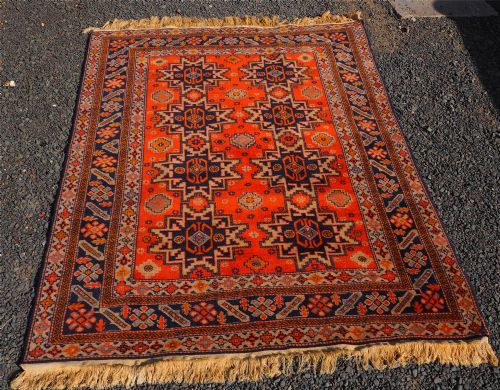
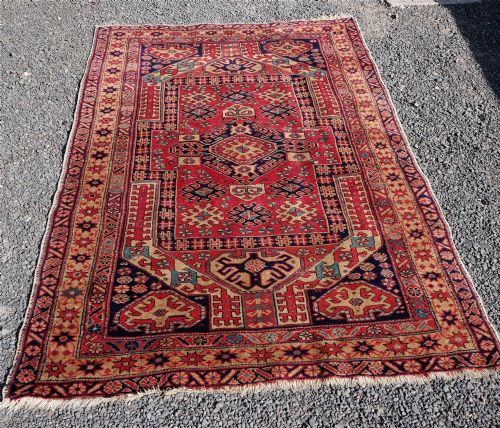
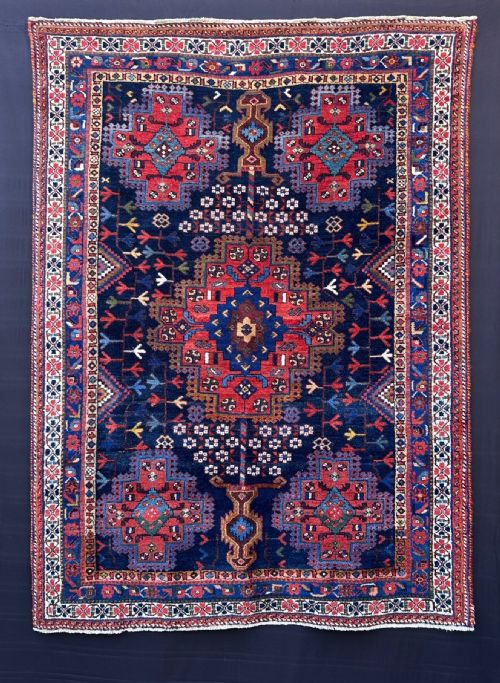
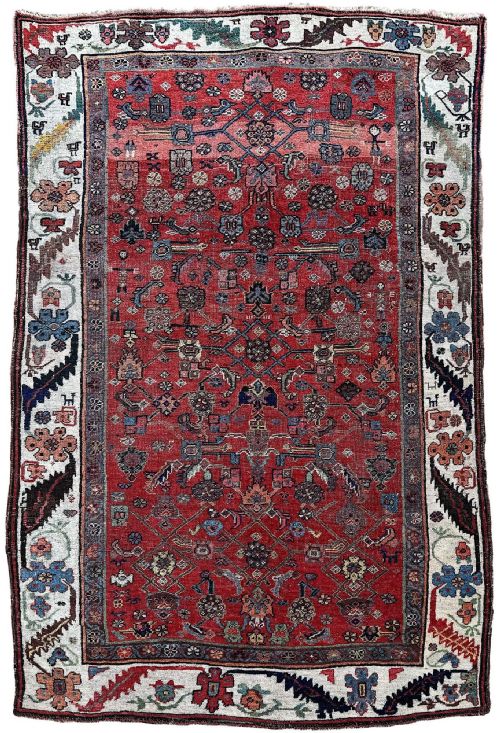
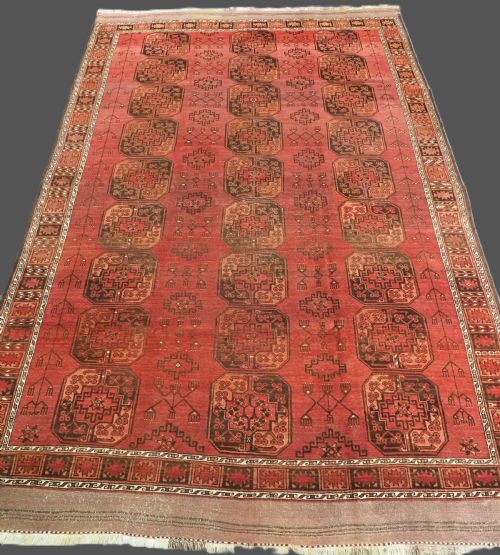
The regional styles represented include Persian tribal pieces, Caucasian rugs, Baluch tribal work, Turkmen items, and specific village designs such as Bakshaish, Khamseh, and Qashqai. Most pieces take the form of manageable area rugs, though larger main carpets also appear.
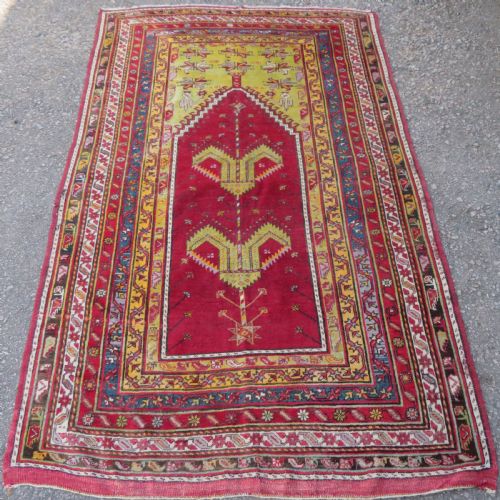
Common decorative formats include prayer rugs featuring double mihrabs, single medallions, triple medallions, and pomegranate motifs. Elongated latch hook medallions also feature prominently across the Caucasian and Kazak pieces.
How they were made
These pieces utilise traditional materials consisting primarily of wool for the pile and structure, supported by cotton foundations in specific village and tribal formats. Weavers employed natural dyes to achieve the soft colours and varied palettes seen across the nineteenth century output.
The construction relies entirely on hand-knotting techniques executed on vertical or horizontal looms by village and nomadic makers. This traditional method produces a durable textile designed for practical floor use while accommodating intricate geometric and symbolic designs.
Wool Tribal Area Rug Retail Price Guide 2026
Typical asking prices for wool tribal area rug among the pieces listed under this phrase on Sellingantiques today, from the lower quarter to the upper quarter. They describe what is for sale here now, not the wider market.
The listings on this site span three decades from eighteen eighty to nineteen hundred, covering Persian, Caucasian, and Turkmen tribal traditions.
What varies in quality
Quality in these textiles rests upon the fineness of the knotting, the precision of the geometric layout, and the depth achieved through natural dyes. Better examples display crisp drawing within medallions and prayer niches, alongside balanced colour transitions.
The condition of the wool pile and the structural integrity of the edges and foundations determine the longevity and visual impact of each rug. Superior survivals retain substantial pile density and authentic proportions despite their nineteenth century origin.
The Wool Tribal Area Rug Glossary
- Mihrab
- A niche design found in prayer rugs, often indicating the direction of prayer or serving as a protective arch motif. Double mihrab versions feature mirrored arches at both ends.
- Latch hook
- A stepped geometric motif commonly extending from medallions or border edges in Caucasian and tribal weaving. It provides a distinct jagged outline to central design elements.
- Medallion
- A central ornamental motif set into the field of a rug, appearing here in single or triple configurations. These shapes anchor the overall symmetry of the composition.
- Natural dyes
- Colourants derived from plant, insect, and mineral sources prior to the widespread introduction of synthetic alternatives. They age gracefully and develop a characteristic soft patina over decades.
Wool Tribal Area Rug: Frequently Asked Questions
How do I care for an antique rug?
Vacuum gently without using a rotating beater bar to protect the old wool pile and foundation threads. Professional cleaning suited for antique textiles preserves the natural dyes and structural integrity.
Keep the rug out of direct, harsh sunlight to prevent fading of the natural dye colours over time. Using an appropriate underlay prevents slipping and reduces friction between the floor and the base.
Can I place these rugs in high traffic areas?
These nineteenth century textiles were originally made for daily domestic use and handle moderate foot traffic well. Placing them in sitting rooms or studies allows them to function practically while remaining protected from extreme wear.
Heavily used hallways or damp spaces should be avoided to protect the vintage wool and cotton foundations from accelerated damage.
How do I identify a prayer rug?
Prayer rugs feature a distinctive mihrab arch at one or both ends, marking the sacred space of the design. This architectural motif guided the user during daily devotions in nomadic and village settings.
Such rugs are typically smaller in scale compared to main carpets, designed for individual use rather than covering an entire room floor.
What does a village rug mean?
Village rugs are produced by settled communities rather than nomadic tribes or urban manufactories, incorporating local design traditions. The weavers utilise regional motifs passed down through generations, resulting in distinctive character.
These pieces often display charming asymmetries and spontaneous colour shifts that reflect the individual maker's hand.