




Wool Nomadic Khorjin Rug
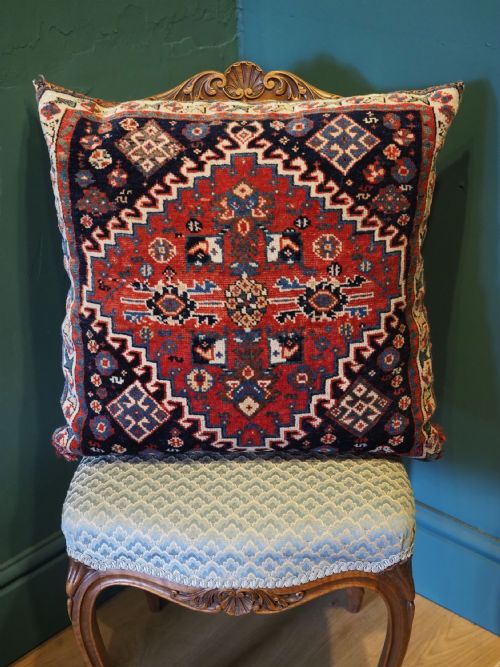
A wool nomadic khorjin rug brings handheld Persian tribal weaving into modern rooms as striking storage bags and cushion faces.
Wool Nomadic Khorjin Rug
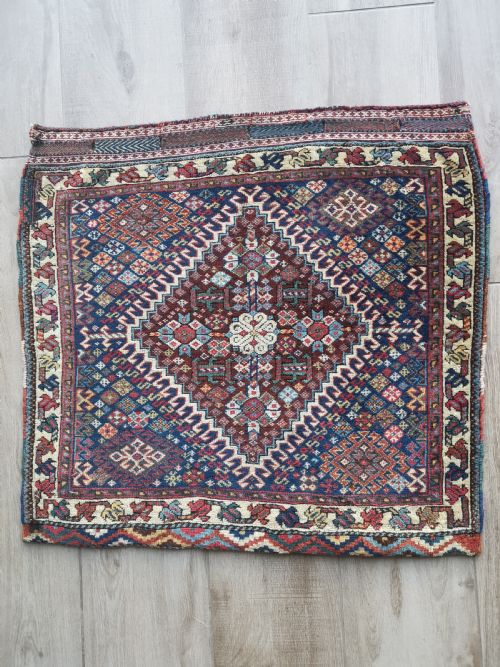
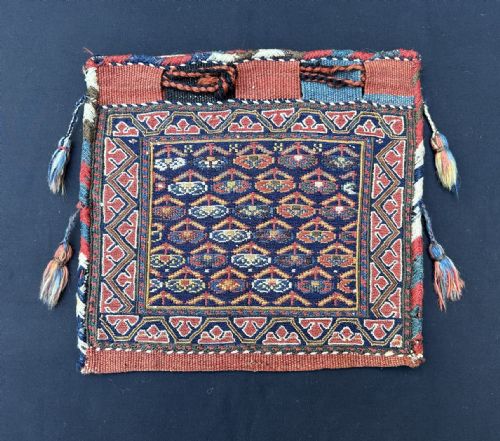
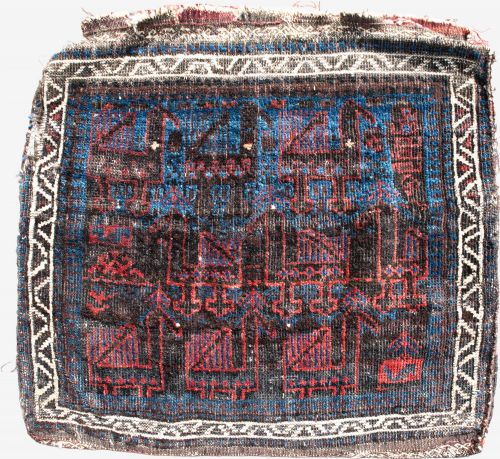
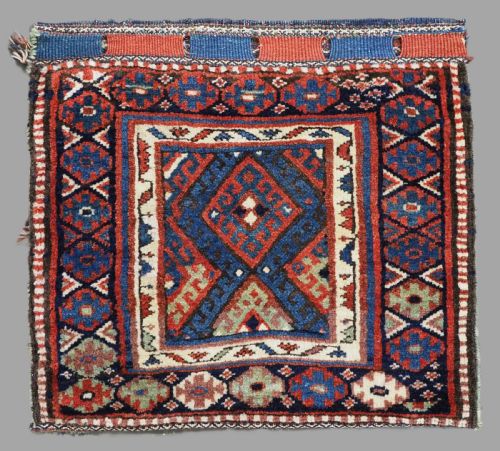
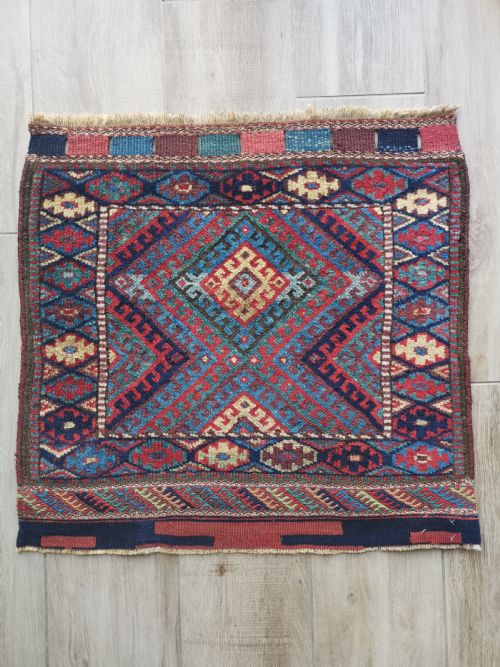
A wool nomadic khorjin rug is an antique woven saddle bag or bag face produced by tribal groups across Persia and the Caucasus during the nineteenth and early twentieth centuries. These pieces originated as functional travelling containers for pastoral nomads, woven in halves or pairs to be slung over pack animals. Buyers today encounter them either as complete double bags with their plain weave backs intact, or as single surviving bag faces and half-khorjins adapted into cushions and small wall rugs.
The selection on this page spans tribal attributions such as Qashqai, Baluch, Shahsevan, Afshar, Luri, and Jaf Kurd. Forms range from miniature personal vanity bags and bird bags to substantial saddle bag carpets and storage containers. Dating stretches primarily from the mid-nineteenth century through the early twentieth century, reflecting the peak eras of nomadic weaving traditions.
Materials and construction
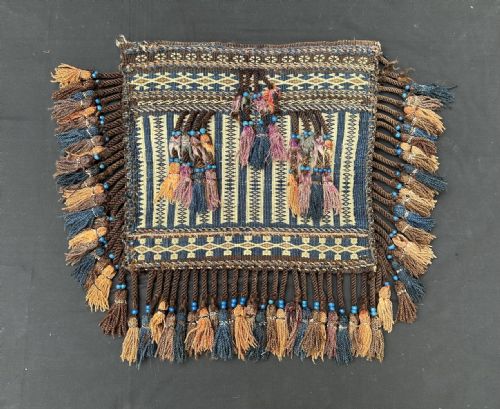
Makers utilised hand-spun wool for the pile and structure, often paired with cotton foundations and goat hair for durability along the edges. Natural dyes provide the rich colour palette, while specialised techniques like Sumac flatweave and hand-knotting create the firm, dense fabric required for animal transport.
Certain examples incorporate supplementary tactile elements such as cowrie shells, glass beads, and banded weft work designs. These additions reflect the traditional ornamentation applied by nomadic weavers to functional household objects.
Listings span nineteenth and early twentieth century production, featuring wool, natural dyes, and goat hair across Persian tribal traditions.
Factors determining quality
Quality rests upon the fineness of the knotting or weaving density, the complexity and clarity of tribal motifs like boteh or central medallions, and the preservation of original backs. Pieces displaying deeply saturated natural dyes and tight, precise geometric structures stand apart from simpler work.
Survival of complete structures, including original plain weave backs or paired saddle bags, elevates an example above isolated fragments. The crispness of the tribal attribution and the subtlety of colour variation across the field dictate the upper tier of the range.
The Wool Nomadic Khorjin Rug Glossary
- Khorjin
- A traditional Persian double saddle bag used by nomads for transport and storage. These pieces were constructed to hang across the backs of horses, donkeys, or camels.
- Bagface
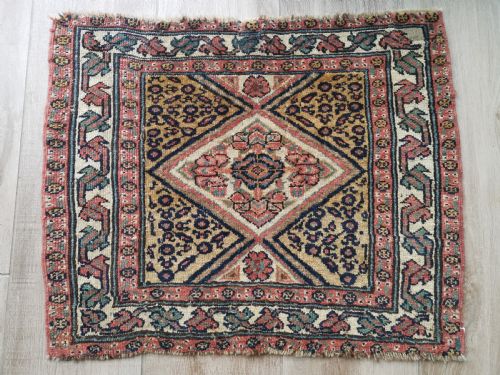
- The decorated front panel of a storage or saddle bag, which survived after the plain back wore away or was cut off. Collectors frequently frame or mount these panels as small flat textiles.
- Sumac
- A warp-wrapping flatweave technique producing a durable, textured surface without a pile. Shahsavan weavers frequently employed this method on their bags and trappings.
- Boteh
- An almond-shaped or paisley motif representing a floral shoot or cypress tree. This ancient symbol appears frequently across Afshar and Persian tribal weaving.
- Chanteh
- A small personal vanity bag or pocket used by nomads for carrying small belongings. These miniature pieces demonstrate exceptionally fine knotting and detail.
Wool Nomadic Khorjin Rug: Frequently Asked Questions
What is a khorjin rug?
A khorjin is an antique nomadic saddle bag woven by tribal groups in Persia and the Caucasus. They served as practical transport containers before being preserved as decorative textile art.
Most surviving examples seen today are either complete double bags or single bag faces adapted for display as small rugs and cushions.
How were these bags used?
Nomadic tribes slung these paired bags across pack animals to carry personal possessions, household goods, and provisions during seasonal migrations.
The sturdy construction and dense wool protected contents from weather and rough travel.
How do I style a bag face?
Bag faces function well as small decorative mats, wall hangings, or surface accents on tables and benches. Many are also mounted and stuffed to serve as floor cushions.
Their compact dimensions allow them to introduce strong tribal geometry into smaller interior spaces.
How do I identify different tribes?
Tribal attribution relies on specific structural traits, colour palettes, and distinctive motif arrangements unique to weaving groups like the Qashqai, Baluch, or Shahsevan. Regional preferences in dyes and border designs provide key clues for identification.
Familiarity with standard Kurdish, Afshar, and Luri design vocabularies helps distinguish one group's work from another.