



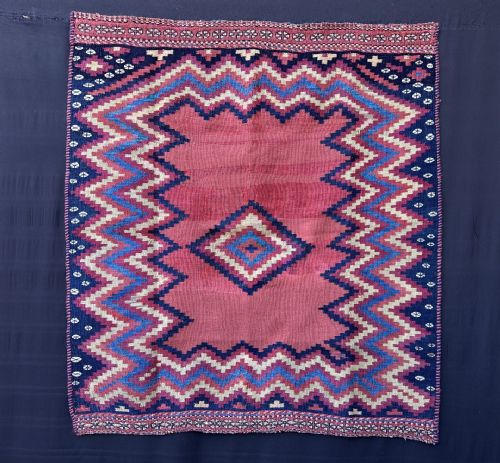


Antique Kerman Woven Textile
These antique kerman woven textile pieces are south Persian tribal works that bring intricate patterns and practical utility to a room.
Antique Kerman Woven Textile
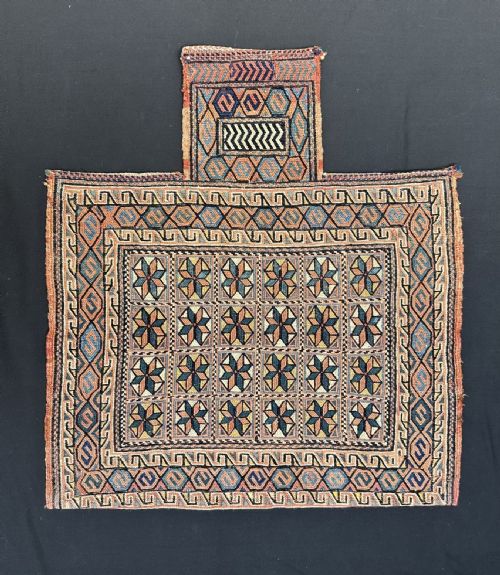
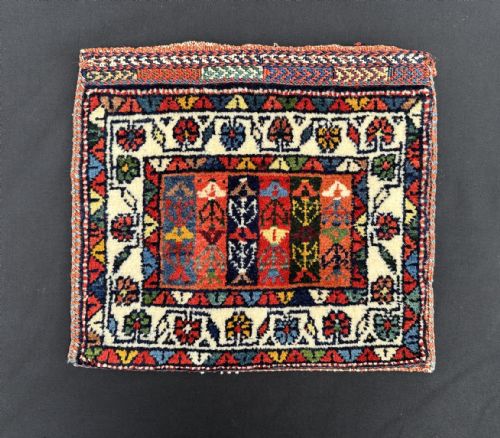
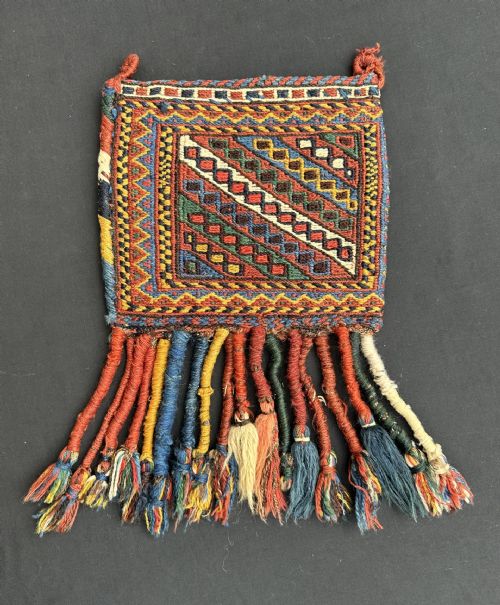
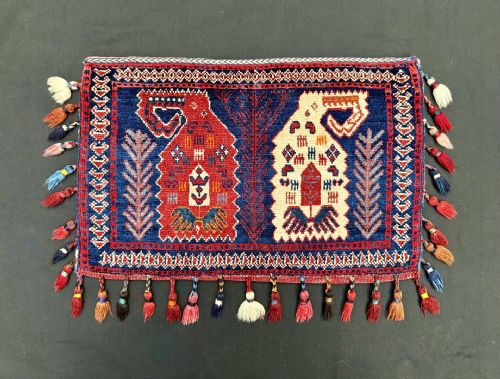
When you search for an antique kerman woven textile, you encounter utilitarian items created by the Afshar nomads and tribes across the Kerman province of South Persia. The examples on this page are predominantly portable storage forms and household pieces, including tobacco and pipe bags, salt bags, vanity bags, and bread sofreh cloths.
Production spans from the mid-nineteenth century through the early twentieth century, specifically appearing across dates such as 1860, 1880, 1900, 1910, and 1920. These pieces reflect the daily domestic and nomadic life of tribes like the Kuhi Afshars and the Qorab'i tribe from regions such as Bardsir and the Jebal Barez mountains.
The forms range from small personal bags and chantehs to half-saddlebag faces and dining cloths suitable for wall hanging or display. Buyers searching this phrase will most frequently meet vanity bags and storage pouches attributed to the Afshar nomads of South Persia.
Materials and construction
These textiles rely on fundamental materials recorded in the evidence, principally wool and cotton, combined with natural dyes. Certain functional pieces also incorporate cowrie shells for decoration and protection.
Weavers utilised traditional flatweave and pile techniques suited to nomadic life, producing durable storage pouches, saddlebags, and eating cloths. The reliance on natural dyes ensures the colour palette develops a characteristic patina over time.
Nomads kept vanity bags close at hand, meaning your salt bag once shared a tent with someone's morning pipe and tobacco.
Judging quality in these textiles
Quality rests upon the fineness of the weave and the complexity of the tribal design executed by the maker. Smaller personal pieces, such as a very fine chanteh or vanity bag, often display denser knotting or tighter flatweaving than larger utility cloths.
The survival of original elements, including cowrie shell embellishments and structural edges, distinguishes better-preserved examples. Clarity of natural dye colours and the precision of geometric patterns across regional tribal groups further separate the standard items from superior pieces.
The Antique Kerman Woven Textile Glossary
- Sofreh
- A spread or cloth used for dining or handling bread in Persian tribal households. These flatwoven textiles often feature distinctive field designs.
- Chanteh
- A small personal bag or vanity bag woven by nomadic groups for carrying small possessions. They represent some of the finer portable weaving from the region.
- Flatweave
- A textile constructed without pile by interweaving warp and weft threads. This technique produces lightweight rugs and bags suited to nomadic transport.
- Afshar
- A major Turkic tribal group residing in the Kerman province of South Persia. Their weaving is distinguished by specific geometric motifs and rich natural dyes.
- Cowrie shells
- Marine shells utilised as decorative elements on tribal bags and trappings. They were often sewn onto utilitarian items for ornamentation.
Antique Kerman Woven Textile: Frequently Asked Questions
What is a bread sofreh used for?
A bread sofreh is a flatwoven cloth traditionally used for preparing, wrapping, or serving bread within nomadic households. These textiles served a strictly domestic purpose during daily meals.
Today, collectors often repurpose these larger rectangular cloths as wall hangings or display pieces to showcase the tribal patterns.
How do I identify an Afshar tribal bag?
Afshar tribal bags are identified by their specific regional origins within the Kerman province of South Persia. They often display characteristic geometric designs and are associated with nomadic subgroups.
Materials typically include wool, cotton, and natural dyes, occasionally accented with cowrie shells for decoration.
What is the difference between a vanity bag and a salt bag?
A vanity bag, sometimes referred to as a chanteh, was a small personal pouch used by nomads for carrying small everyday items. These pieces frequently exhibit fine weaving and portable dimensions.
Salt bags served a specific utilitarian function within the tent or household for storing rock salt, usually featuring a narrower neck or distinct structural shape.
How should I display a textile bag at home?
Textile bags and half-saddlebag faces can be mounted on custom display supports or hung securely from a wall. Ensure the hanging method distributes the weight evenly across the wool and cotton structure to prevent distortion.
Keep pieces away from direct sunlight to protect the natural dyes from fading over time.