





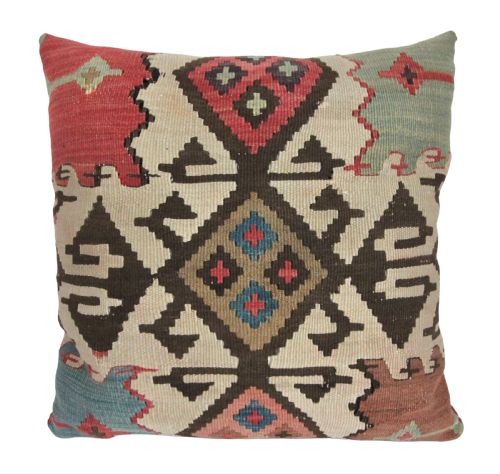
Wool Kilim Cushion
A wool kilim cushion brings flatweave nomadic textiles into contemporary interiors as functional floor and sofa furnishings.

Wool Kilim Cushion
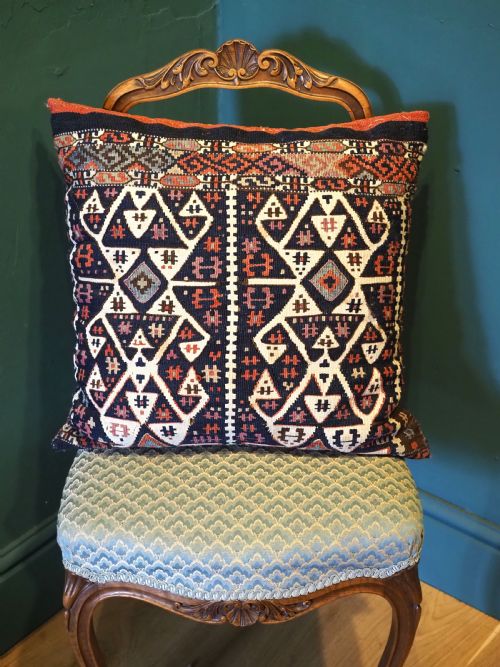
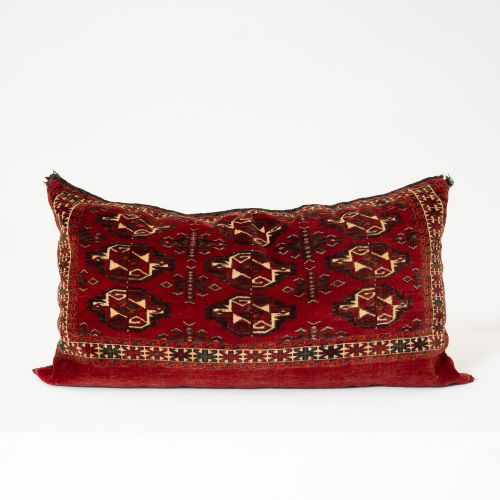
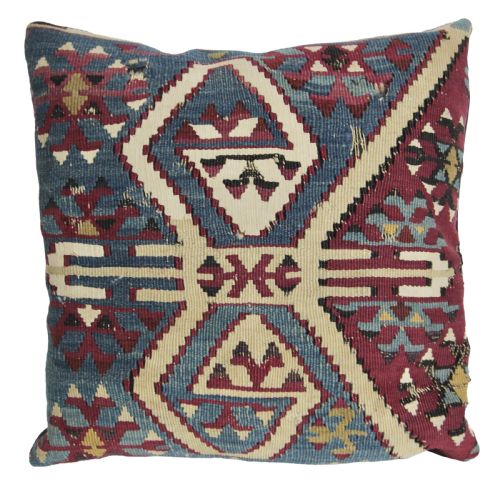
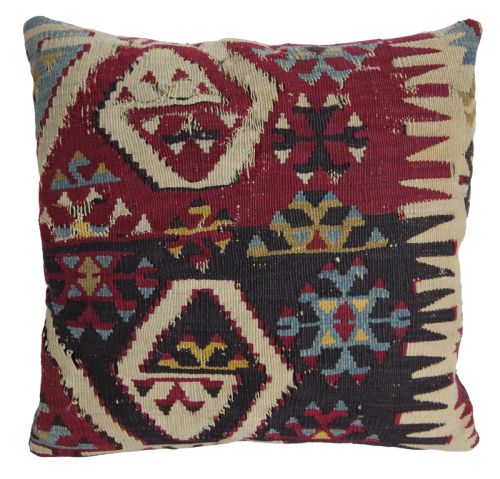
A wool kilim cushion is constructed from antique and vintage flatweave textiles, repurposed from utilitarian nomadic objects such as saddle bags, storage sacks, and grain bags. When buyers search for a wool kilim cushion, they encounter pieces originating from tribal groups across Anatolia, Persia, and Central Asia, including Turkmen, Bakhtiari, Kurdish, and Qashqa'i nomadic traditions. These textiles date from the mid-nineteenth century through the early twentieth century, carrying the distinct geometric patterns and field designs of their makers.
The most common formats on this page are individual cushion covers and paired pillows fashioned from repurposed bag faces and flatweave panels. Pieces range from square formats measuring around forty-five centimetres to longer rectangular runner dimensions derived from torba and mafrash fragments. Many retain original wool or cotton backing materials, while others incorporate traditional elements like tassels and banded weft work designs.

Quality factors in flatweave textiles
Quality in a wool kilim cushion rests upon the tightness of the weave, the clarity of the tribal motifs, and the integrity of the original textile fragment. Superior examples display fine, even weft compaction and sophisticated dye work, reflecting the skill of specific tribal groups from regions such as the Chahar Mahal valley or Fars province. The distinction between an average decorative pillow and a collectable textile lies in the complexity of the banded design and the survival of original borders, tassels, and structural elements.
The source material itself dictates much of the inherent value, with complete bag faces retaining intact composition outperforming simple random-cut remnants. Pieces utilising hand-spun wool with deep natural dye saturation exhibit a visual depth and tactile weight absent in later commercial reproductions. Conservation standards also influence quality, as professional mounting that respects the historic textile without altering its primary face preserves the integrity of the piece.
Materials recorded across the inventory include hand-spun wool, cotton, goat hair, and natural dyes utilised in nomadic bag faces.

Bakhtiari Tribes·Luri Bakhtiari Tribes·Qashqa'i Nomads·Shahsavan Kilim Bags·Turkmen Chuval
The Wool Kilim Cushion Glossary
- Kilim
- A flatweave textile produced without a pile by tightly interweaving warp and weft strands. This technique creates a smooth, durable fabric utilised across the Near East and Central Asia.
- Tacheh
- A traditional tribal wheat sack or storage container from Western Persia, frequently woven by Luri and Bakhtiari groups. These functional bags provide dense geometric panels ideal for cushion conversion.
- Chuval
- A large Turkmen storage bag used within nomadic tents for bedding and household possessions. Surviving faces feature characteristic guls and banded flatweave designs.
- Torba
- A smaller Central Asian storage bag or hanging sack, typically wider than it is tall. They display intricate banded weft work and geometric motifs.
- Mafrash
- A rectangular storage chest panel or bedding bag produced by nomadic tribes in Persia and Anatolia. These pieces exhibit striking horizontal stripe patterns and flatweave structures.
Wool Kilim Cushion: Frequently Asked Questions
What is a kilim cushion?
A kilim cushion is a soft furnishing made from antique or vintage flatweave textile fragments, typically sourced from nomadic tribal rugs and storage bags.
These pieces combine historic wool fabrics with supportive backing materials to create decorative cushions for chairs, sofas, and floors.
How do I clean a wool cushion?
Wool flatweave textiles require gentle handling and professional specialist cleaning rather than standard domestic washing.
Regular light vacuuming through a mesh guard helps remove surface dust without disturbing the hand-spun fibres or natural dyes.
Are these cushions made from old rugs?
Many cushions are constructed from repurposed nineteenth and early twentieth-century nomadic items such as saddlebags, wheat sacks, and storage torbas.
This method gives historic tribal textiles a new functional purpose while preserving authentic geometric designs and natural wool materials.
How do I identify tribal origins?
Tribal attribution relies on specific geometric motifs, colour palettes, and structural weaves characteristic of regions like Western Persia or Anatolia.
Comparing the border designs and symbol placement helps distinguish between Turkmen, Bakhtiari, and Qashqa'i nomadic traditions.