



Wool Bag Face Panel
When you handle a wool bag face panel, you touch the nomadic heritage of Central Asian and Persian tribal weavers who turned utility into art.
Wool Bag Face Panel
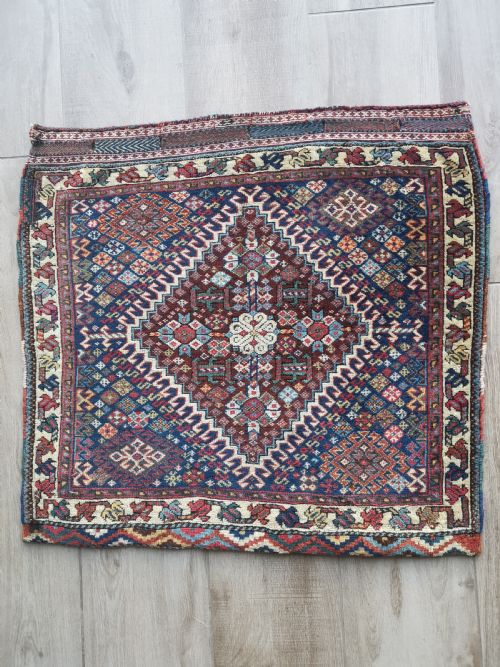
A wool bag face panel represents the front of a functional storage sack, torba, chuval, or mafrash used by nomadic tribes for household organisation and transport. When tribes settled or moved, these utilitarian fronts were often preserved as textile art while the utilitarian backs deteriorated.
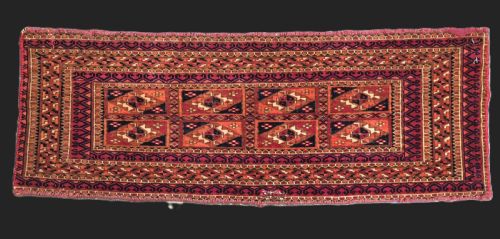
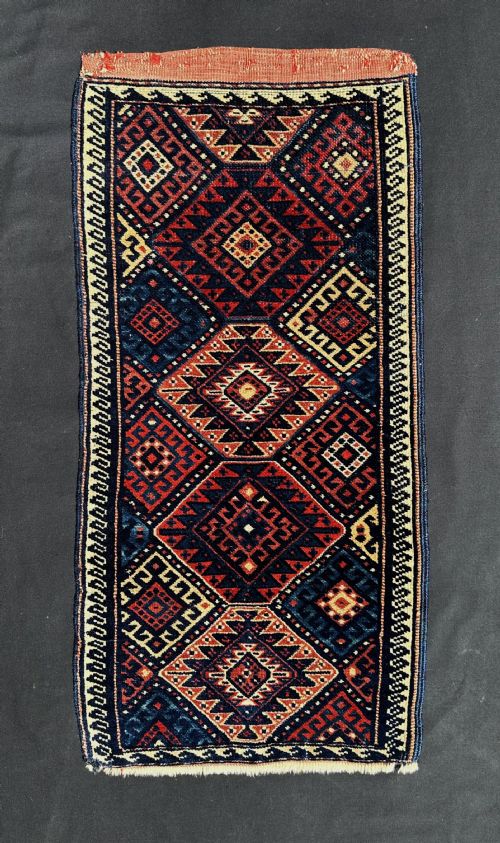
You will encounter pieces originating from Turkmen groups such as the Tekke, Yomut, Ersari, Saryk, and Chodor, alongside Persian confederations including the Qashqai, Shahsavan, Baluch, and Afshar. These examples span periods from the nineteenth century into the early twentieth century.
The survival of a wool bag face panel depends on its original role as part of a tent-hanging storage system or saddlebag. Tribal weavers constructed these pieces to withstand daily nomadic life while displaying clan identity through specific motifs and structures.
How they were made
Weavers relied principally on hand-spun wool for the pile and foundation, occasionally incorporating cotton and silk for contrast or structural strength. Natural dyes and vegetable dyes provided a deep palette derived from local plants and minerals.
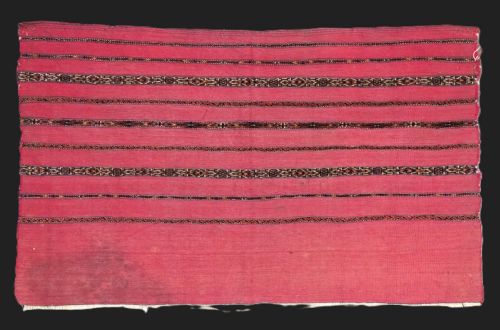
Techniques varied between piled knotting and flatwoven structures like sumac or band weaving, depending on whether the item functioned as a tent bag or a transport sack. The density of the weave directly reflected the intended durability and status of the storage piece.
Listings feature nineteenth-century Turkmen and Persian tribal bag faces utilising hand-spun wool and natural vegetable dyes.
What varies in quality
Quality rests in the precision of the drawing and the clarity of tribal motifs such as guls, birds, or tree designs. Finer knots and tighter foundation weaves distinguish superior examples produced by master weavers within the tribe.
The vibrancy and saturation of the natural dye palette determine the visual impact of the surface. Pieces that retain deep crimson tones, whites, and contrasting shades demonstrate superior material selection and mordanting skill.
The Wool Bag Face Panel Glossary
- Torba
- A small horizontal Turkmen storage bag used for domestic goods inside the tent. These items typically feature distinctive tribal gul patterns across the face panel.
- Chuval
- A large tent storage bag used for bedding and clothing. These pieces often display multiple rows of major guls.
- Mafrash
- A rectangular storage container or travel bag face panel utilised by nomadic groups for transit. They frequently employ banded flatweave designs or piled technique.
- Gul
- A medallion motif repeated across tribal carpets and bag faces to identify specific clans or lineages. Variations in gul drawing help attribute pieces to groups like the Tekke or Yomut.
- Sumac
- A warp-wrapping flatweave technique that produces a durable, textured surface without pile. Shahsavan weavers employed this method for intricate pictorial and geometric bag faces.
Wool Bag Face Panel: Frequently Asked Questions
How were wool bag face panels used?
Nomadic families utilised these items as storage sacks inside tents for bedding, clothing, and household goods. They hung along the lattice walls or rode upon pack animals during migrations.
Over time, the decorative fronts survived while the plain wool backs wore out through daily use. Collectors now preserve these surviving panels as textile art.
How can I tell different tribal designs apart?
Tribes distinguished themselves through specific repeating motifs known as guls, as well as distinct colour palettes and border arrangements. Turkmen groups like the Tekke and Yomut favoured octagonal medallions in deep reds and browns.
Persian nomadic groups such as the Shahsavan and Qashqai incorporated birds, dragons, and sharper geometric or sumac structures. Studying these recurring design markers clarifies regional origins.
How should I care for a textile panel?
Keep textile panels out of direct sunlight to prevent natural dyes from fading over time. Gentle vacuuming through a mesh screen removes surface dust without damaging the wool fibres.
Avoid hanging heavy pieces by single points to prevent distortion of the foundation weave. Professional textile conservators can advise on appropriate mounting methods.
What dates are typical for these pieces?
Most surviving tribal bag faces date from the nineteenth century through the early twentieth century. Nineteenth-century examples often display greater depth in natural dye colours and finer hand-spun wool.
Weaving traditions continued into the decades around nineteen hundred, reflecting traditional tribal patterns before settlement altered production methods. Dating relies on material analysis, wool quality, and structural wear.