


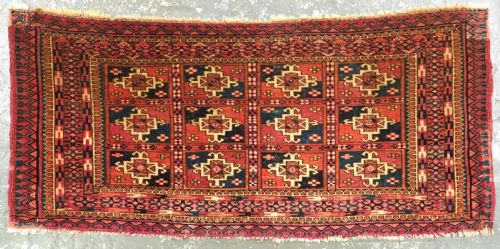
Tekke Carpet Fragment
These tekke carpet fragment pieces are historic Central Asian tribal textiles offering striking geometric design and rich natural dyes.
Tekke Carpet Fragment
When you search for tekke carpet fragment, you encounter historic Turkmen tribal weavings created across the nineteenth and eighteenth centuries. These items typically comprise surviving portions of larger bags and storage items such as torbas, chuvals, and mafrash faces from Central Asia.
The selections available here focus heavily on Turkmen tribal work, specifically originating from nomadic groups in the Merv Oasis and wider region. Pieces manifest as fragments or complete bag faces repurposed as wall hangings and textile art.
Makers utilised traditional formats including repeating gul motifs and curled leaf patterns on wool foundations. These textiles represent the rich material culture of Central Asian nomad groups from periods spanning the eighteenth to the late nineteenth century.
How they were made
Weavers constructed these items using wool foundations combined with natural dyes to achieve deep colour saturation. Artisans knotted and wove these materials meticulously, resulting in structures that range from standard to very fine weaves.
Production relied on traditional tribal techniques native to Central Asian nomads, incorporating durable materials designed for functional domestic use within camps. Natural dye recipes yielded the characteristic palettes observed across these historical textiles.
Listings feature wool and natural dye materials across periods spanning from the eighteenth century through the 1880s.
What varies in quality
Quality rests primarily on the precision of the weave and the complexity of the drawing within the primary motifs. Finer knotting and sharper delineation of design elements distinguish superior examples.
Colour vibrancy and the condition of the natural dyes significantly influence the visual impact of each surviving textile piece. Excellent drawing combined with rich, well-preserved hues marks the upper tier of these tribal works.
The Tekke Carpet Fragment Glossary
- Torba
- A small hanging bag used by Turkmen tribes for domestic storage inside a yurt. These items often feature prominent gul medallions.
- Chuval
- A large storage bag produced by nomadic weavers in Central Asia. They frequently display multiple major guls across the face.
- Gul
- A primary octagonal medallion motif repeated across Turkmen carpets and bag faces. Each tribal group utilised distinct variations of this design.
- Natural Dyes
- Organic colouring agents derived from plants and insects used historically in Central Asian textiles. These substances produce stable, harmonious hues over centuries.
Tekke Carpet Fragment: Frequently Asked Questions
What is a tekke carpet fragment?
A tekke carpet fragment is a surviving portion of a historic Turkmen nomadic weaving, typically originating from bag faces like torbas or chuvals.
These pieces preserve traditional tribal designs, natural dyes, and wool construction from nineteenth and eighteenth-century Central Asia.
How were these tribal textiles used?
Nomadic groups utilised these items primarily as functional storage bags inside tents or dwellings for bedding and household possessions.
Today, collectors mount these surviving fragments as textile art and wall hangings to display their historical designs.
How do I care for a textile fragment?
Protect these historic wool items from direct sunlight to prevent natural dye fading and fibre degradation over time.
Mount the pieces securely using conservation-grade methods without applying direct adhesive or tension to the historic structure.
How can I identify tribal origins?
Attribution relies on examining the specific gul motifs, border patterns, and structural weave characteristics unique to each Central Asian group.
Tekke and Salor designs exhibit particular geometric arrangements that distinguish them within nineteenth-century tribal weaving.