

Wooden Windsor Dining Chairs
These wooden windsor dining chairs bring robust vernacular character and practical seating to the dining table.
Wooden Windsor Dining Chairs
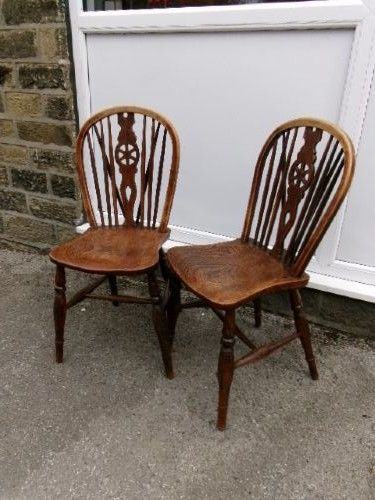
Wooden windsor dining chairs are traditional seating forms defined by a solid wooden seat into which the legs, back spindles, and bow or comb are wedged directly. Buyers searching this phrase encounter numerous variations intended for everyday domestic use, particularly kitchen and farmhouse dining sets.
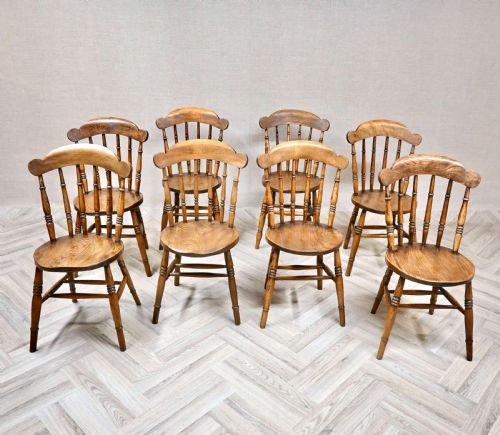
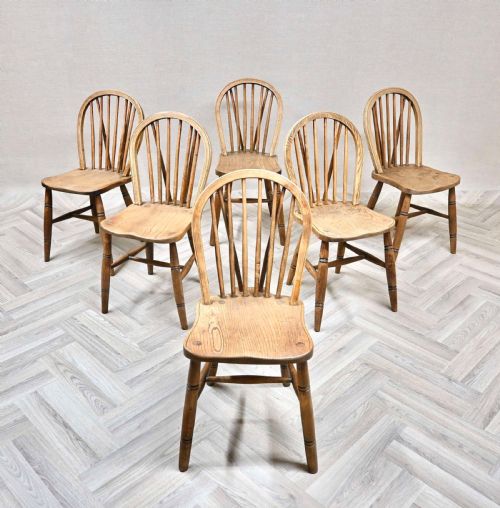
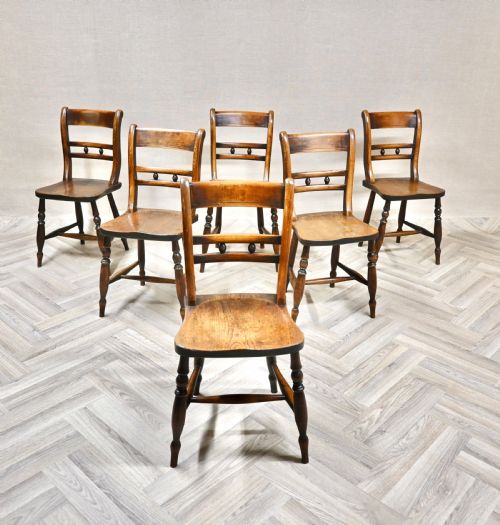
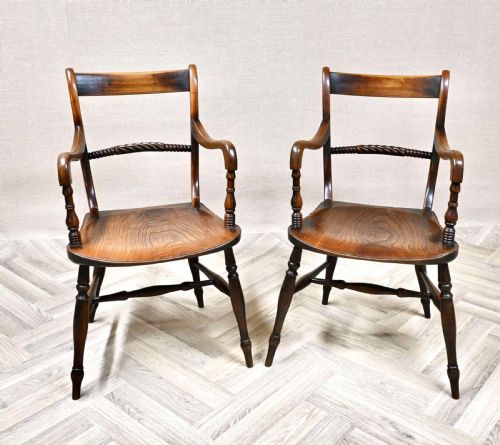
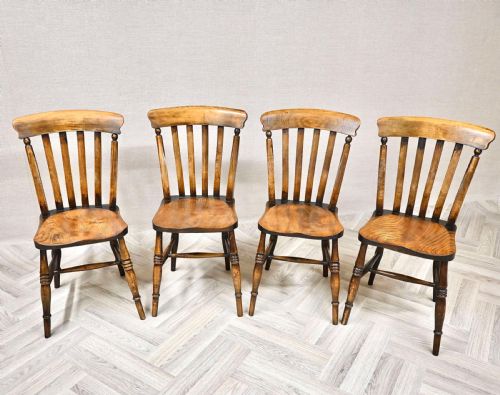
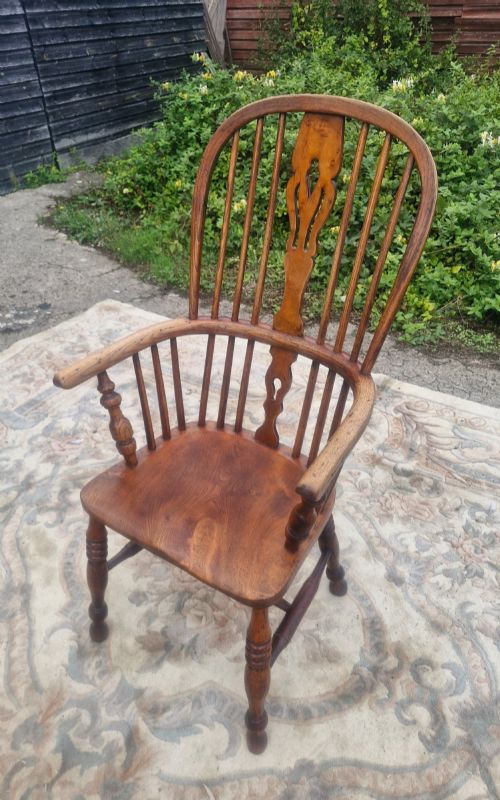
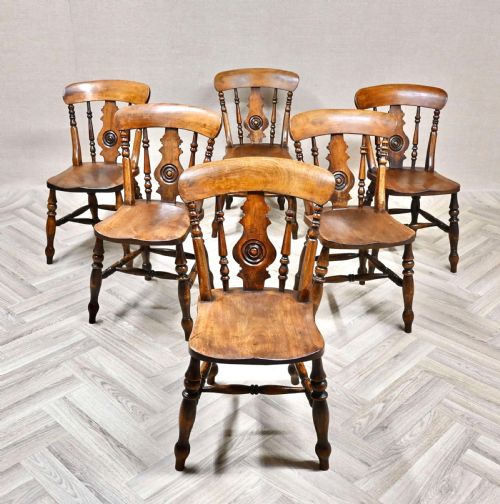
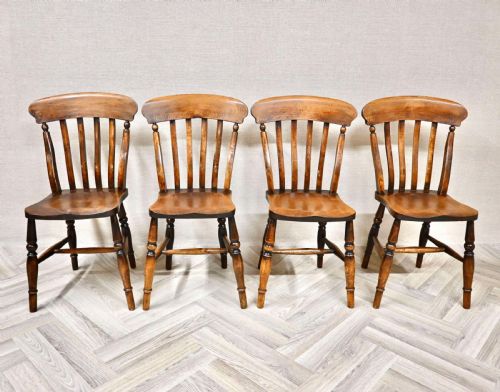
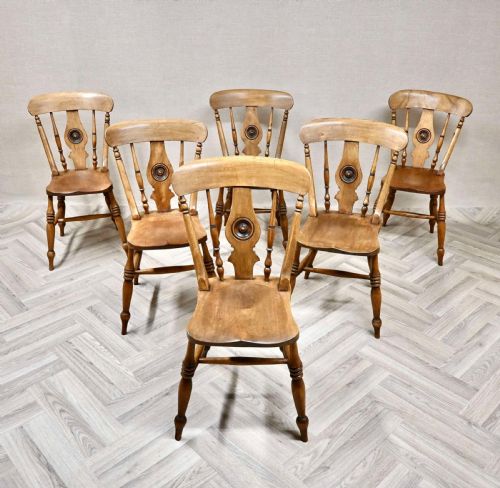
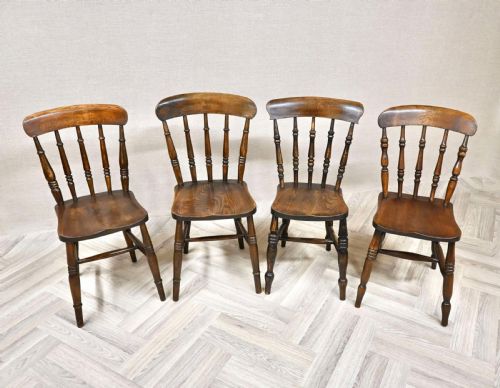
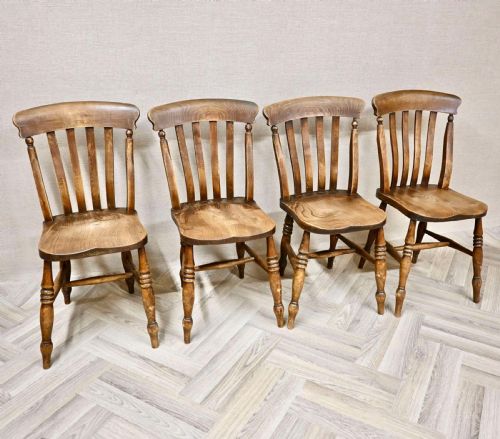
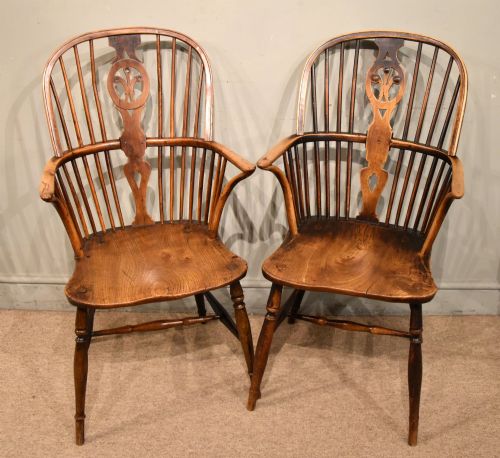
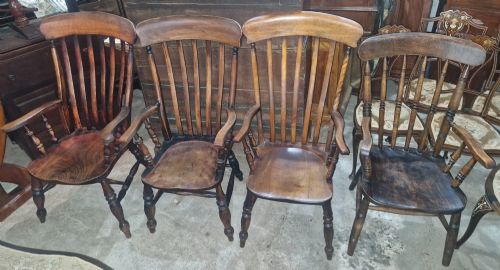
The selections span distinct regional patterns and periods, ranging from nineteenth century country examples to early twentieth century utility pieces. Common configurations include wheel backs, bar backs, hoop backs, and lath backs, with occasional high back armchairs and smokers bows appearing among the standard dining chairs.
Originating largely from English rural workshops and manufacturing centres like High Wycombe, these chairs reflect enduring vernacular traditions. They serve both functional dining purposes and decorative roles in traditional or eclectic interiors.
What varies in quality
Quality in these chairs lies in the depth of the sculpted saddle seat and the grace of the steam-bent back construction. A well-proportioned hoop or comb back with balanced splats shows superior craftsmanship compared to stiffer, heavier industrial interpretations.
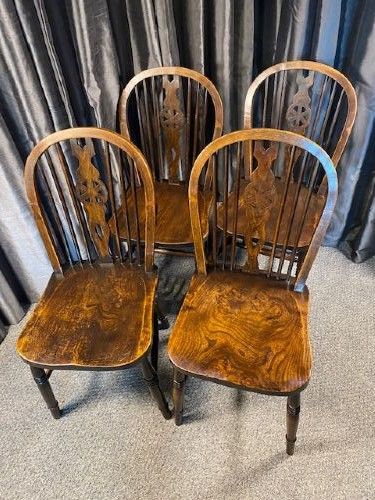
The choice and figuring of the timber also dictate the standard of the piece, particularly where rich yew wood or heavily grained elm is selected. Intricacy in the turnings of arm supports, legs, and central vase splats distinguishes workshop production from simpler vernacular output.
Early chairmakers occasionally tested elm seat thickness by sitting on them while drinking a pint of ale.
The Wooden Windsor Dining Chairs Glossary
- Penny seat
- A saddle-shaped wooden seat base featuring a circular indentation resembling an old coin, shaped for comfort. This technique indicates traditional hand-carving work on the solid elm base.
- Wheel back
- A Windsor chair style incorporating a pierced splat carved in the shape of a spoked carriage wheel. This decorative motif became popular during the nineteenth century in kitchen and dining seating.
- Hoop back
- A continuous bentwood frame forming the top rail and arm supports in a single fluid arc. It provides substantial structural strength while maintaining a clean profile.
- Smokers bow
- A low-backed Windsor armchair with a rounded continuous arm rail and turned spindles, also known as a captain's chair. These were traditionally utilised in smoking rooms, parlours, and commercial public houses.
- Lath back
- A chair design featuring horizontal flat wooden slats fitted into the back frame instead of vertical turned spindles. This vernacular style offers distinct visual weight and back support.
Wooden Windsor Dining Chairs: Frequently Asked Questions
What defines a windsor chair?
A windsor chair is constructed with a solid wooden seat into which the legs and back components are inserted independently rather than utilising a conventional framed chair skeleton.
This method produces a sturdy and durable piece of furniture where the load-bearing elements lock securely into the heavy timber seat slab.
Are these chairs comfortable for daily dining?
The saddle-shaped wooden seats are ergonomically carved to contour to the body, making them surprisingly comfortable for regular meal times without requiring cushions.
Many examples feature high backs or supportive armrests that offer reliable posture support during extended sitting periods.
How do I date an antique windsor chair?
Dating relies on observing construction marks, timber combinations, and the specific style of the back splat or turning details. Nineteenth-century examples often display broader elm seats and hand-turned ash spindles that differ from later industrial production methods.
Regional variations and tool marks left by local makers provide additional clues regarding the approximate decade of manufacture.
Can I mix different windsor chair styles around a table?
Mixing various windsor styles, such as pairing wheel back dining chairs with a matching barback armchair at the head of the table, creates an authentic harlequin seating arrangement.
Historical domestic settings frequently accumulated chairs over time, resulting in compatible sets united by shared materials like elm, ash, and beech.