
Victorian Windsor Side Chairs
Victorian Windsor side chairs bring honest country character to a dining table, pairing sturdy vernacular timber construction with timeless spindle-backed utility.
Victorian Windsor Side Chairs
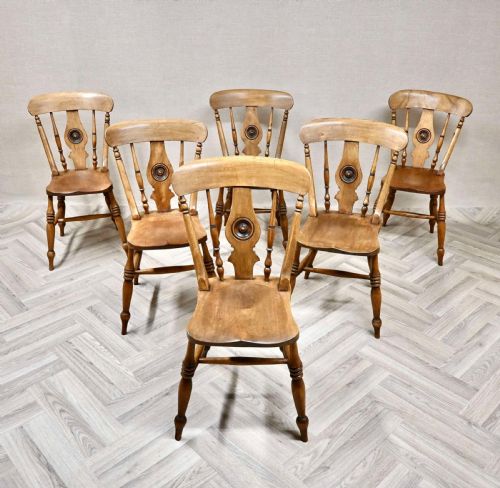
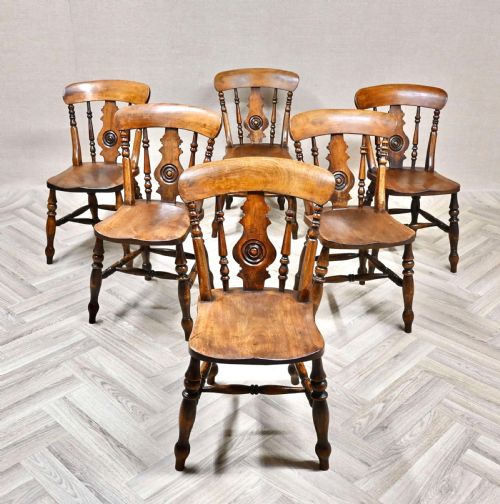
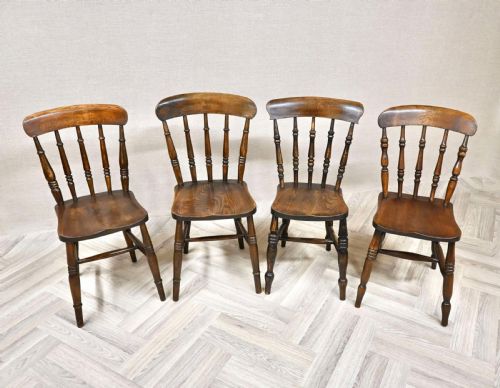
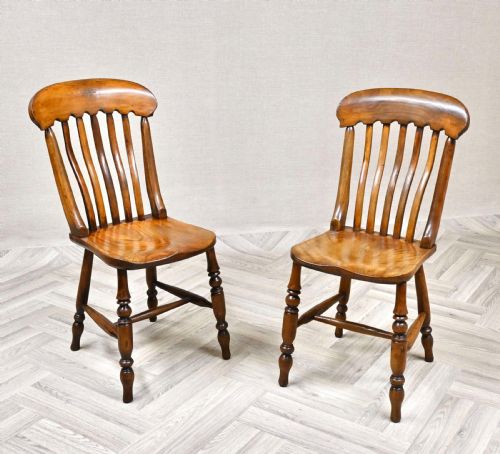
Victorian Windsor side chairs represent the robust tradition of English country seating, designed primarily for kitchen and farmhouse dining tables. These pieces emerge in various regional formats across the nineteenth century, ranging from simple stick backs to distinct ornamental splats.
Materials and construction
Makers utilised a combination of native timbers, predominantly pairing elm for shaped seats with ash, beech, or oak for the spindles, legs, and bentwood bows. This mixed-wood approach exploited the specific structural strengths of each tree.
Joinery relied on traditional stick construction where turned legs and back spindles fit directly into bored holes within a solid timber seat. Steam bending shaped the continuous bows and crest rails characteristic of the form.
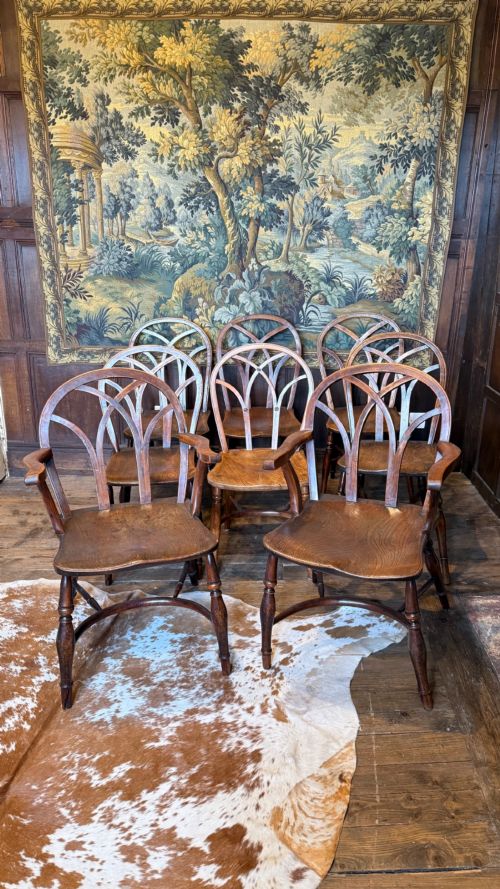
The documented styles span English Country, Rustic Farmhouse, Gothic Revival, and Eastlake traditions.
Assessing quality
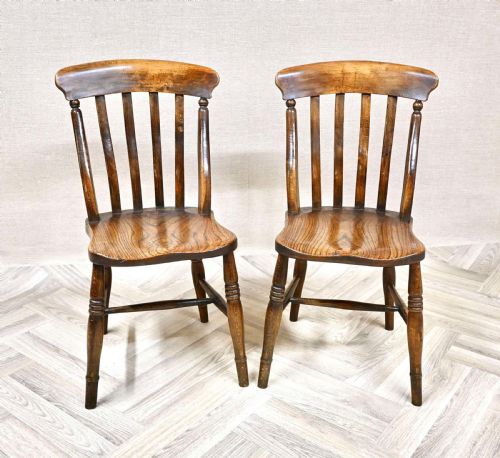
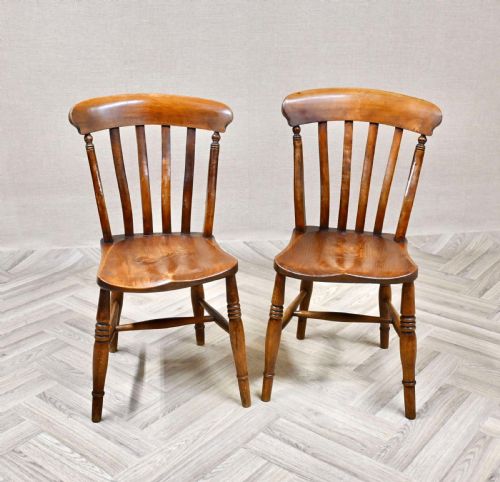
Quality rests upon the selection of timber and the harmony of the turning, particularly in the crispness of the spindles and the substantial thickness of the elm seat. Matching sets exhibit consistent hand-turned details across all members rather than casual replacements.
The integrity of the structural joints and the subtlety of the bow's curve separate standard utilitarian seating from finer regional workshops, such as those originating in the Thames Valley.
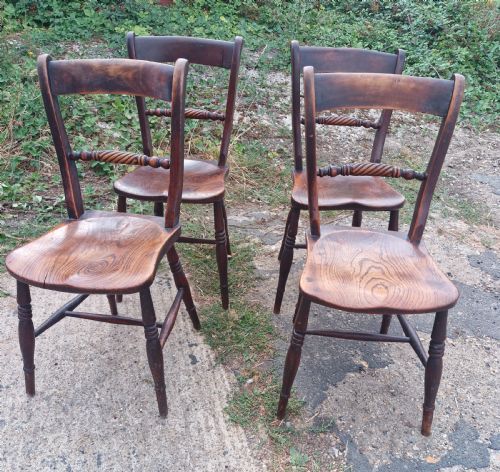
Worksop
The Victorian Windsor Side Chairs Glossary
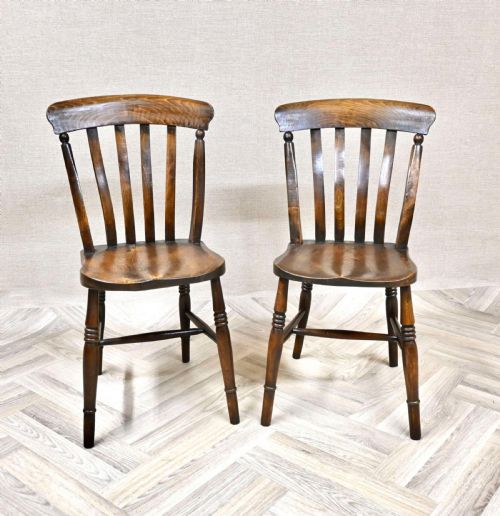
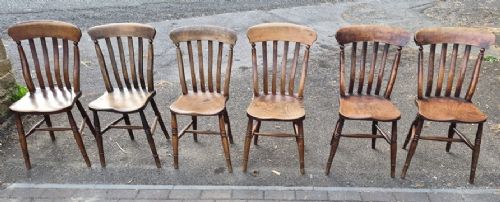
- Lathback
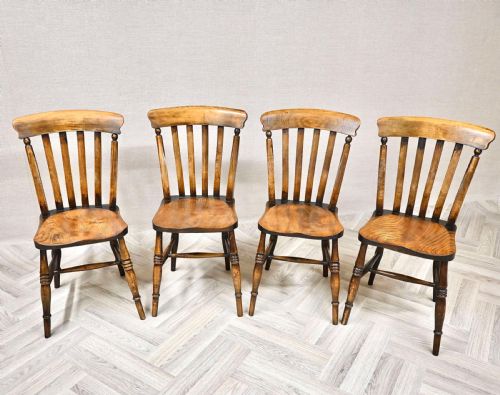
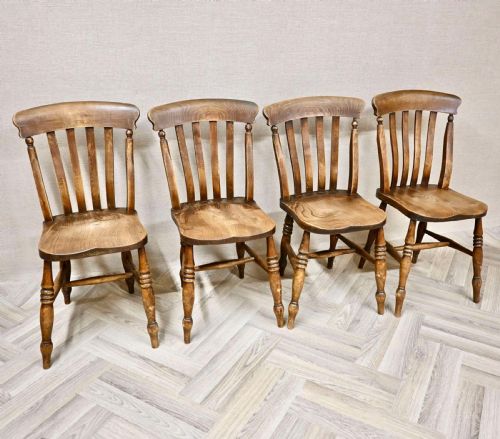
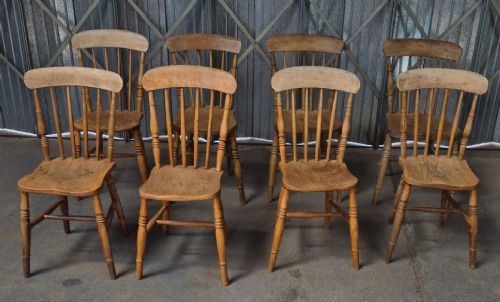
- A chair back featuring vertical wooden slats, or laths, pegged into the seat and top rail. This design provides a sturdy and comfortable support for daily dining.
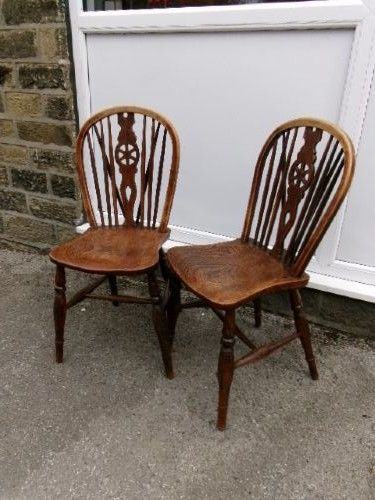
- Wheelback
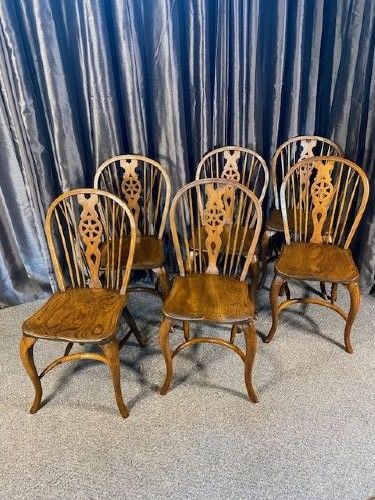
- A style incorporating a pierced splat shaped like a cartwheel, often detailed with carved spokes. This decorative motif gained immense popularity during the nineteenth century.
- Stick back
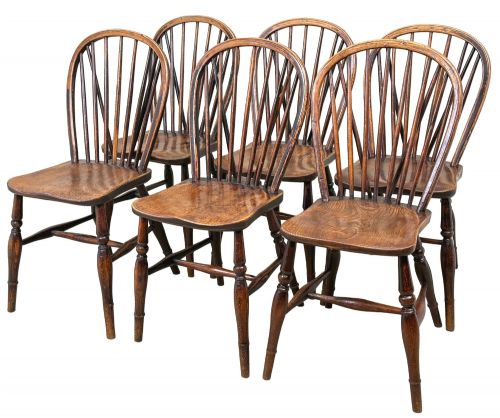
- A minimalist form where multiple turned spindles form the entire backrest without a central splat. These rely on precise timber placement for rigid support.
- Penny seat
- A saddle-shaped wooden seat featuring a circular depression carved into the centre, resembling a large coin. This shaping enhances sitting comfort on solid timber.
- Thames Valley
- A regional style associated with refined Windsor chair production in southern England. These pieces typically display graceful proportions and multiple native woods.
Victorian Windsor Side Chairs: Frequently Asked Questions
What is a Windsor chair?
A Windsor chair is a form of wooden seating where the legs and back spindles are pegged directly into a solid carved seat rather than a traditional frame.
This construction method produces a resilient piece well-suited to rigorous daily use in country kitchens and farmhouses.
How do I spot a Thames Valley Windsor chair?
Thames Valley examples typically display finer turning, a combination of elm, ash, and yew, and particularly graceful proportions.
These chairs reflect the sophisticated regional craftsmanship found in southern English workshops during the nineteenth century.
Are these chairs comfortable for daily dining?
The saddle-shaped wooden seats, often called penny seats, are ergonomically carved to fit the body comfortably during long meals.
While lacking upholstery, their supportive spindle backs and sturdy frames make them practical for everyday kitchen table use.
How do I care for antique elm and ash timber?
Maintain the wood by applying occasional clear beeswax to nourish the dry grain and preserve the historic surface patina.
Keep the chairs away from direct heat sources and extreme humidity fluctuations to prevent the shrinkage and loosening of pegged joints.