




Beech Kitchen Dining Chairs
These beech kitchen dining chairs bring honest vernacular strength to a table, offering sturdy everyday seating shaped by traditional English and continental workshop methods.
Beech Kitchen Dining Chairs
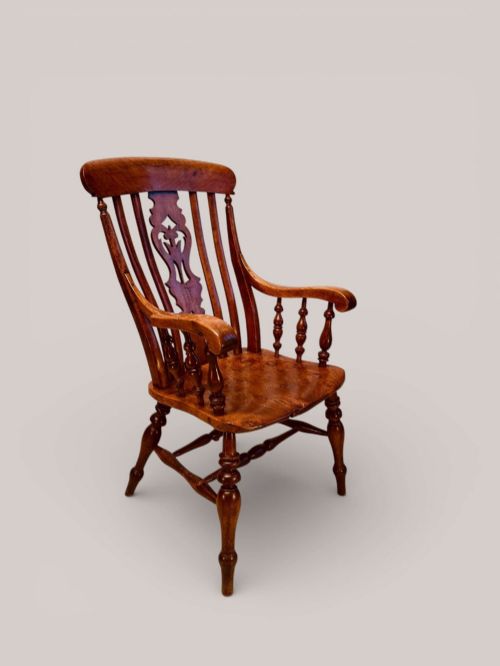
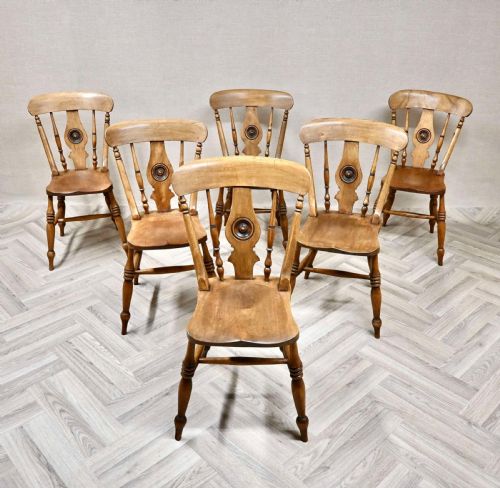
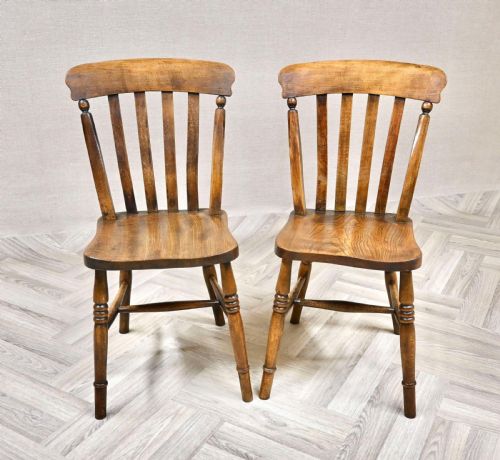
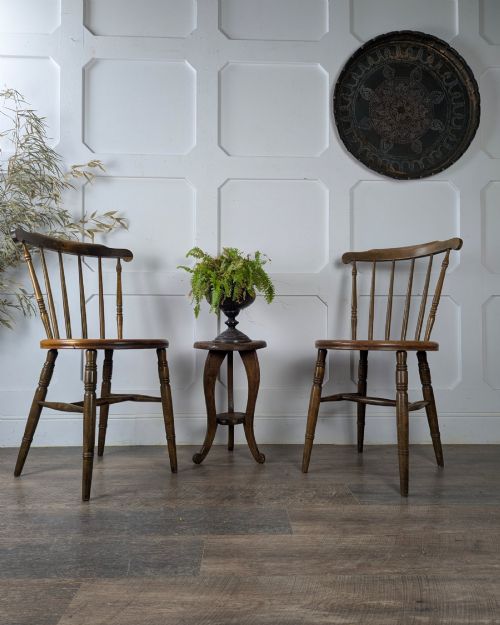
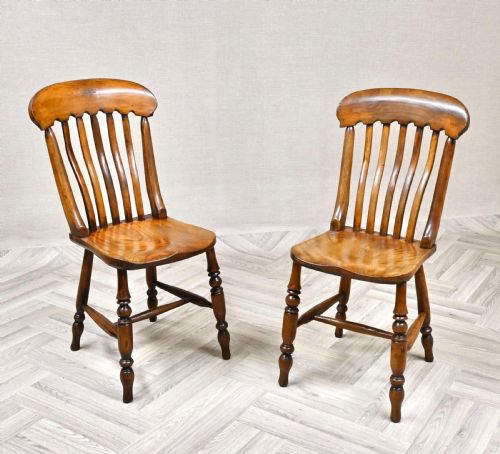
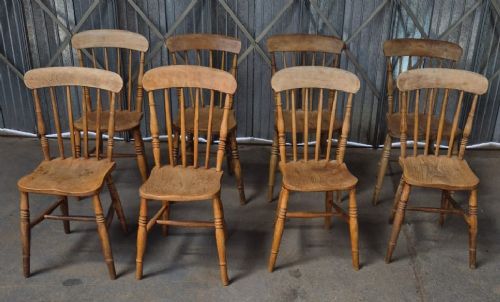
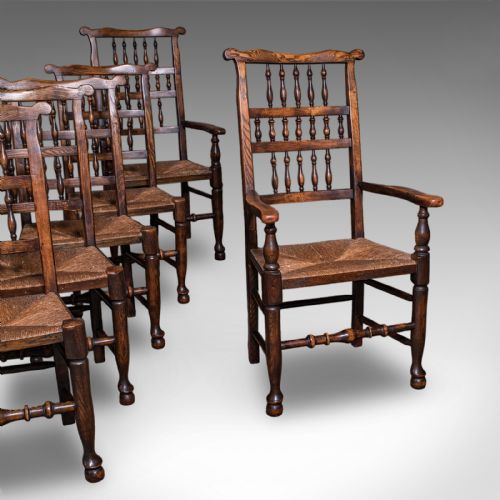
Beech kitchen dining chairs encompass robust vernacular seating designed for domestic daily use, spanning nineteenth-century farmhouse styles to mid-century utility forms. When searching for beech kitchen dining chairs, buyers encounter various traditional regional patterns including Windsor stick backs, lath backs, and wheel backs.
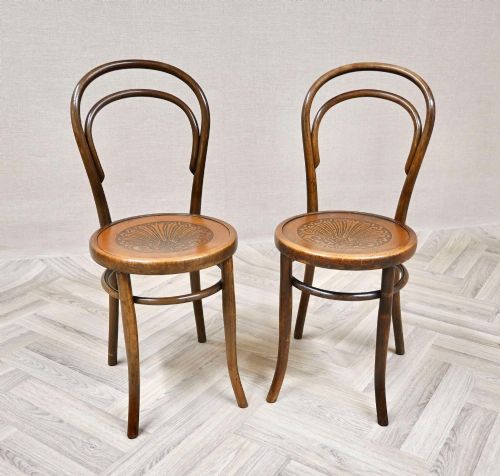
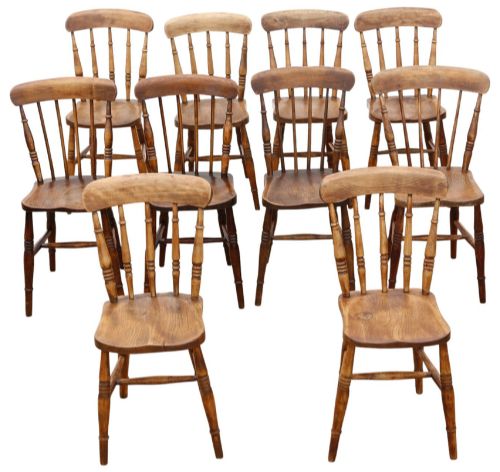
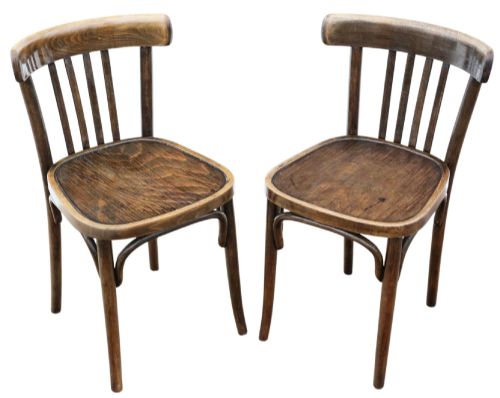
The selection ranges from single pairs up to substantial harlequin sets of ten, often combining beech with elm, ash, or oak. Nineteenth-century country chairs dominate the selection, alongside early twentieth-century station types and mid-century bentwood bistro models.
These forms served practical domestic and commercial functions in kitchens, dining rooms, and reception spaces. The frequent appearance of Windsor and ladder-back configurations highlights a long-standing reliance on turned spindles and bent timber.
Assessing Quality and Character
Quality in these chairs rests upon the integrity of the original construction and the balance of mixed-timber pairings. Examples featuring well-matched grain, tight joints, and retained original turnings stand apart from pieces with extensive structural replacement.
The depth of patination on exposed timber surfaces indicates age and sustained domestic use. Sets that retain uniform proportions across multiple chairs demonstrate superior original workshop execution compared to mismatched assemblies.
Beech Kitchen Dining Chairs Retail Price Guide 2026
Typical asking prices for beech kitchen dining chairs among the pieces listed under this phrase on Sellingantiques today, from the lower quarter to the upper quarter. They describe what is for sale here now, not the wider market.
Penny chairs once stood in rows to receive a coin admission fee at public lecture halls before finding their way into domestic kitchens.
Thonet·Dinco
The Beech Kitchen Dining Chairs Glossary
- Windsor
- A traditional chair construction featuring a solid wooden seat into which the legs and back spindles are directly fitted. These chairs often incorporate steam-bent bow backs for structural support.
- Lathback
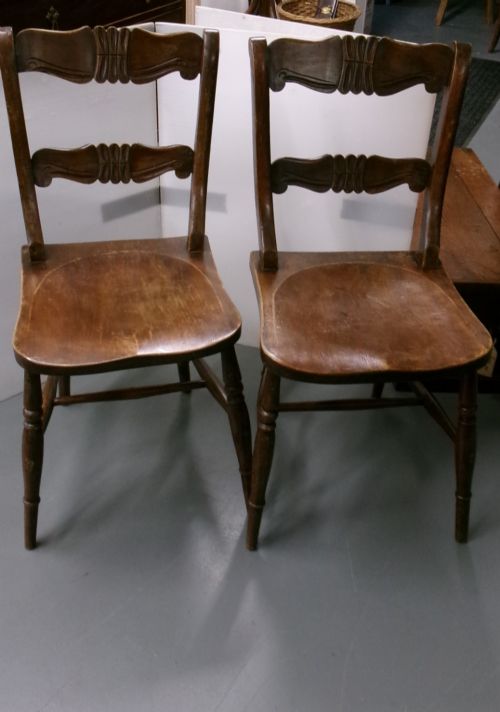
- A chair design featuring horizontal flat wooden slats across the backrest rather than vertical spindles. This regional variation provides sturdy support for daily kitchen use.
- Harlequin set
- A collection of dining chairs that match in general style and period but vary slightly in minor details, often gathered over time. Such sets offer a traditional solution for larger seating arrangements.
- Bentwood
- Furniture formed by steaming timber until pliable and bending it into curved shapes using metal straps and moulds. This technique defines lightweight bistro and cafe seating from the late nineteenth and mid-twentieth centuries.
- Stick back
- A minimalist chair style where turned vertical wooden rods form the backrest, secured into a solid timber seat. These pieces rely on clean joinery and straightforward geometry.
Beech Kitchen Dining Chairs: Frequently Asked Questions
How do I care for antique beech chairs?
Maintain the timber by applying natural beeswax sparingly and buffing with a soft cloth to preserve the surface. Keep the chairs away from direct heat sources and sudden humidity changes to prevent timber movement.
Check the joints periodically to ensure the turned components remain tightly fitted into the solid wooden seats. Regular gentle cleaning prevents dust accumulation in the carved and turned crevices.
What is a harlequin set?
A harlequin set is a group of dining chairs that share a common period, material, and general silhouette but differ in minor decorative details. These groupings formed naturally as households acquired additional matching seating over time.
Such sets bring character to a dining room while maintaining visual harmony through shared timber types like beech and elm.
How can I date a wooden kitchen chair?
Dating relies on examining tool marks, construction methods, and timber combinations visible on the underside of the seat. Nineteenth-century examples often display hand-turned spindles and adze marks, whereas twentieth-century pieces show different machine tolerances.
Comparing the specific configuration of the backrest and the wear patterns on the footrests helps place the chair within Victorian, Edwardian, or mid-century production eras.
Are these chairs suitable for daily dining?
Most antique beech kitchen chairs were built for heavy domestic use and remain durable for everyday dining. Solid wood seats and pegged joinery provide the necessary structural resilience for regular sitting.
Ensuring the undercarriage and stretchers remain secure guarantees long-term stability in a modern household setting.