


Wooden Wall Plate Shelf
A wooden wall plate shelf brings orderly warmth to a kitchen, displaying earthenware plates against sturdy timber.
Wooden Wall Plate Shelf
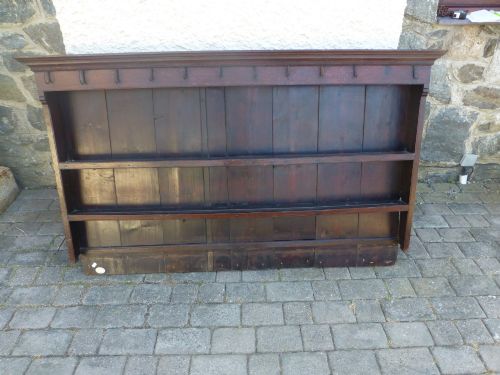
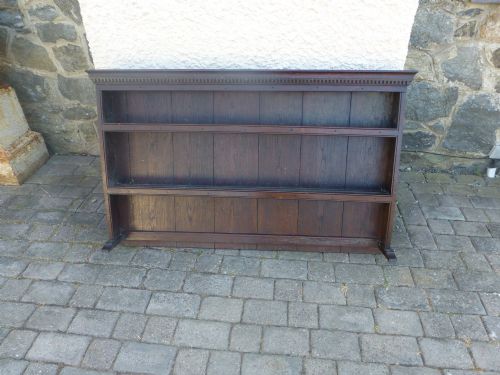
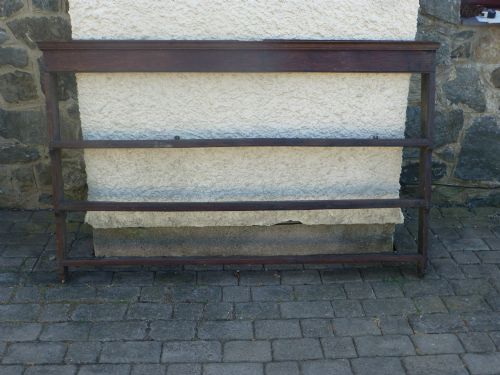
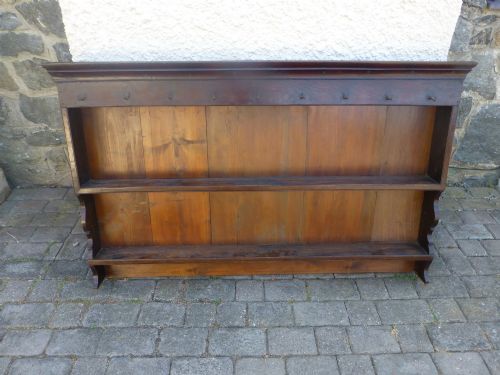
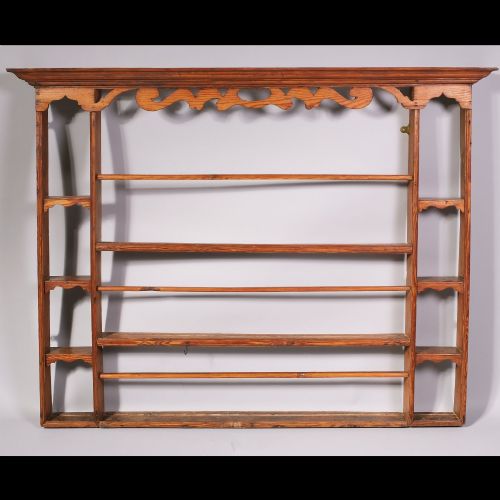
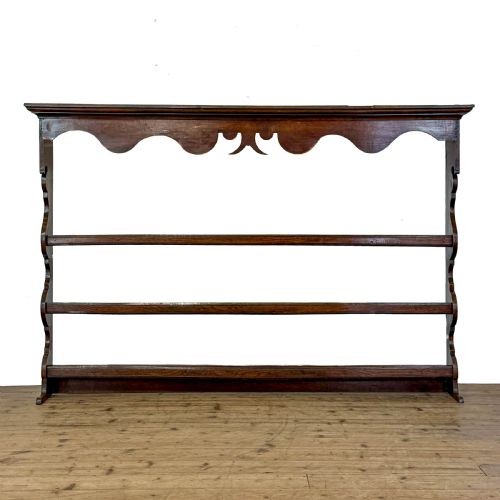
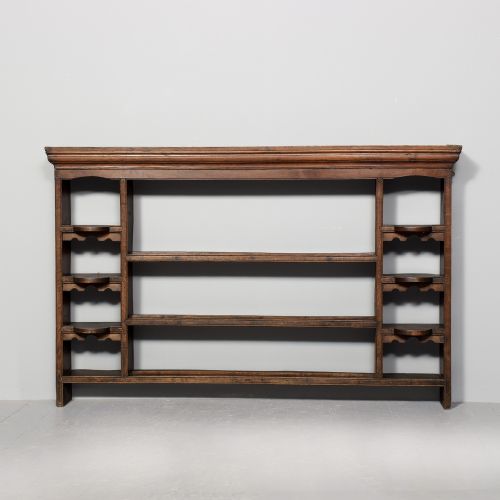
A wooden wall plate shelf serves to store and display domestic ceramics safely upon a kitchen or dining room wall. These pieces range from simple planked boards to architectural dresser racks designed to support heavy delftware.
The versions most commonly met here belong to the eighteenth and nineteenth centuries, constructed predominantly in oak or pine for domestic use. Many derive from country workshops, reflecting regional English furniture traditions.
How they were made
Makers utilised solid timbers such as oak, pine, and mahogany, shaping boards with hand saws and planes. Joints were typically pegged or nailed, depending on whether the piece was meant for formal display or utility.
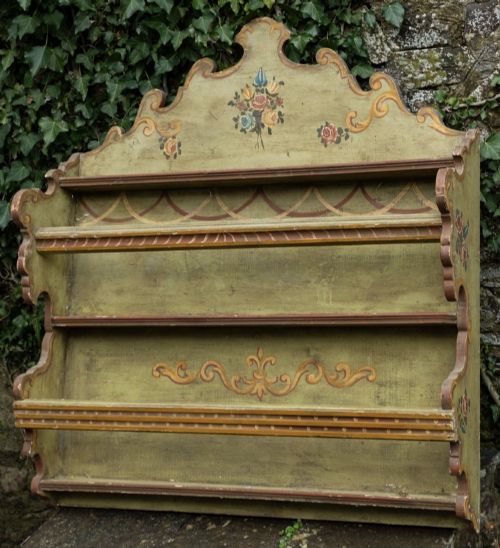
Surface treatments varied from plain waxed timber to painted finishes like Little Greene or traditional hand-mixed pigments. Details such as carved mouldings, fretwork, and inlay occasionally elevated a utilitarian rack into a decorative furnishing.
One cheerful early twentieth-century shelf arrives finished in Pompeian Ash, proving that historic kitchen walls were rarely dull.
What varies in quality
The quality of a wooden wall plate shelf rests upon the choice of timber and the integrity of its construction. Heavy oak boards with deep grooves and intact pegging represent a higher standard than thinner, later pine iterations.
Proportion and surface preservation also dictate distinction, as unaltered patination and original backboards hold greater integrity. Pieces retaining architectural details like Corinthian columns or crisp carving demonstrate superior craftsmanship.
The Wooden Wall Plate Shelf Glossary
- Delft rack
- A wall-mounted shelving unit specifically designed with grooves or rails to hold plates upright. These racks kept earthenware visible and accessible in traditional kitchens.
- Marquetry
- The art of applying small pieces of veneer to a structure to form decorative patterns. This technique appears on more formal hanging shelves.
- Cornice
- The ornamental moulding running around the top edge of a wall shelf. It provides a finished architectural profile to the piece.
Wooden Wall Plate Shelf: Frequently Asked Questions
How were wooden wall plate shelves mounted?
These shelves were traditionally secured directly to kitchen or dining room walls through pre-drilled holes in the backboards or via integrated hanging brackets. Their primary function was holding heavy earthenware plates safely under daily domestic use.
Because they bore substantial weight from ceramics, secure attachment to wall studs or masonry was essential. Many surviving examples retain their original hanging points for this reason.
Can these shelves hold modern dinner plates?
Most antique wooden wall plate shelves accommodate standard modern plates within their timber grooves and retaining rails. However, deeper contemporary dinnerware may occasionally exceed the ledge depth of older country racks.
It is sensible to check the groove width and ledge depth before placing heavy ceramics on display. Eighteenth and nineteenth-century earthenware was often thinner than modern stoneware.
How do I care for an antique plate shelf?
Regular dusting with a dry, soft cloth protects the timber surface and prevents grime accumulation in carved mouldings. Avoid placing these shelves in areas subject to excessive moisture or direct heat from stoves.
Applying a traditional beeswax polish periodically helps nourish dry oak or pine. This maintains the natural lustre of the wood without sealing the historical surface.
What is the difference between an 18th-century and Edwardian rack?
Eighteenth-century plate racks are generally constructed from solid oak or pine with pegged joints and simple, functional proportions. They often show the rustic marks of hand tools and heavy domestic service.
Edwardian interpretations tend to incorporate revival styles, lighter painted finishes, or decorative fretwork influenced by the Arts and Crafts movement. Their construction methods reflect early twentieth-century workshop practices.