

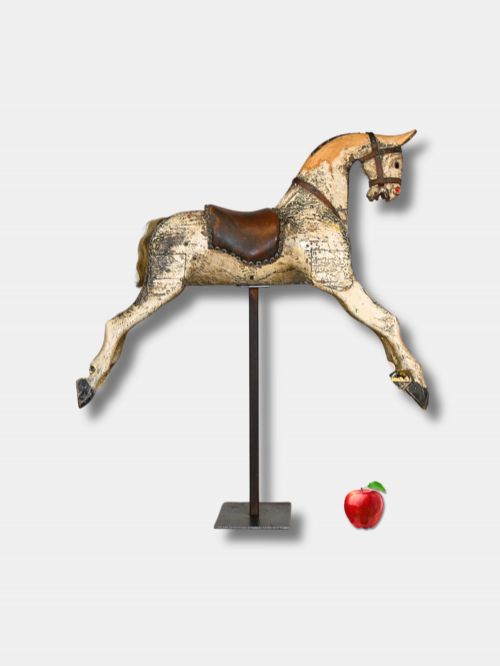


Wooden Toy Rocking Horse
A wooden toy rocking horse brings century-old craftsmanship and play into a room.
Wooden Toy Rocking Horse
Construction and Materials
Carvers shaped bodies primarily from pine and solid wood, joining sections to support the weight of a child rider. Structural stability relied on internal iron or metal brackets and rods, particularly where the horse met the wooden rocker base or safety stand.
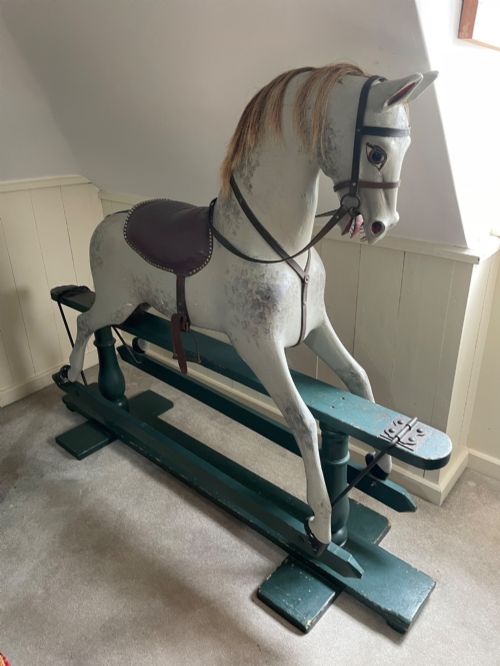
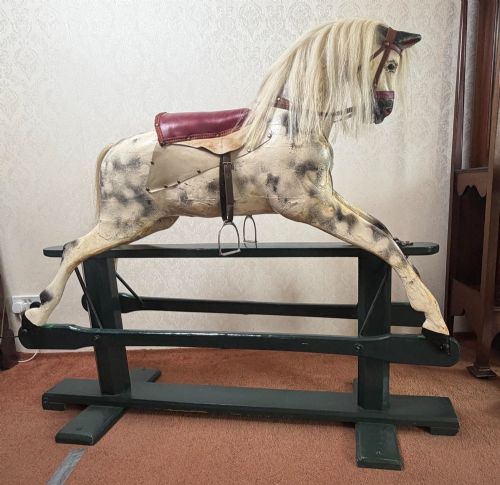
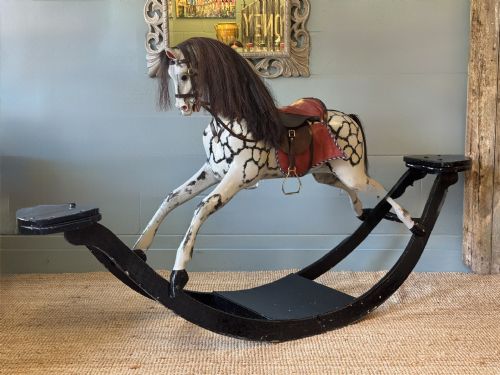
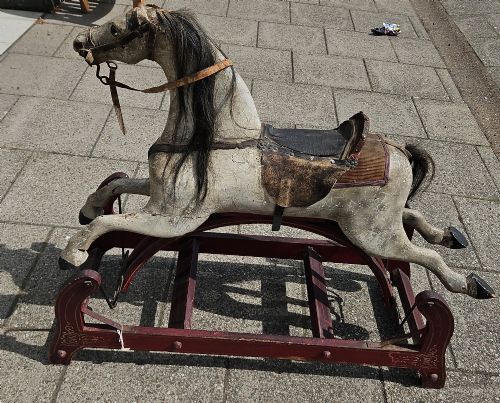
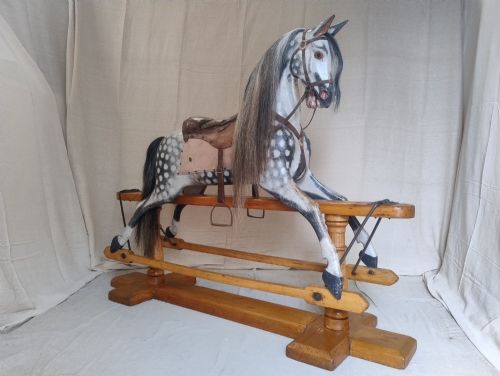
Surfaces received layers of paint, sometimes depicting dappled markings, while details like leather tack and horsehair manes completed the form. Many surviving pieces retain traces of this original paint, showing the wear of active play over generations.
Wooden Toy Rocking Horse Retail Price Guide 2026
Typical asking prices for wooden toy rocking horse among the pieces listed under this phrase on Sellingantiques today, from the lower quarter to the upper quarter. They describe what is for sale here now, not the wider market.
Listings feature wooden toy rocking horses spanning the 18th century through the 1940s, utilising pine, iron, leather, and horsehair.
Evaluating Quality
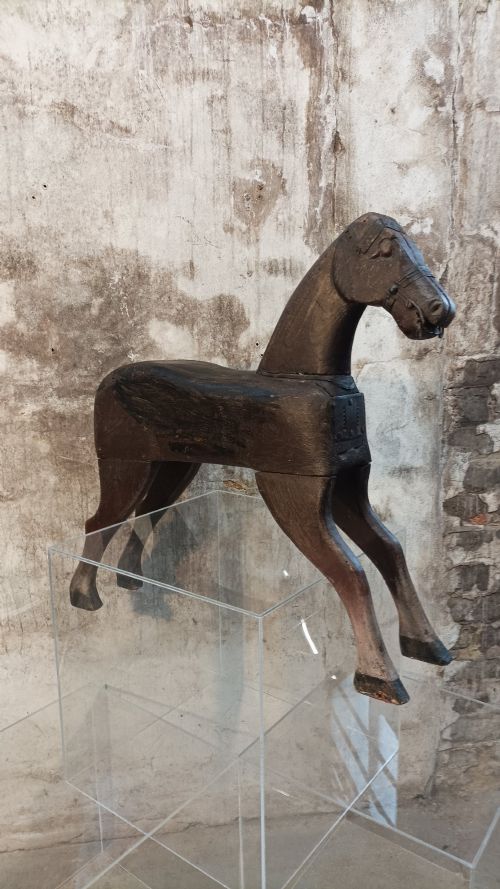
Quality rests in the sculptural depth of the carving, particularly the expression of the head and the musculature of the body. Workshop pieces by known makers display anatomical precision, whereas primitive or folk art examples rely on charm and simplicity.
The survival of original surfaces, including early paint, leather elements, and horsehair manes, distinguishes superior examples. Pieces retaining their original rockers or stands hold greater historical integrity than those altered or rebuilt later.
G & J Lines·F.H. Ayres·Collinson·Lines Bros Sportiboy
The Wooden Toy Rocking Horse Glossary
- Bow rocker
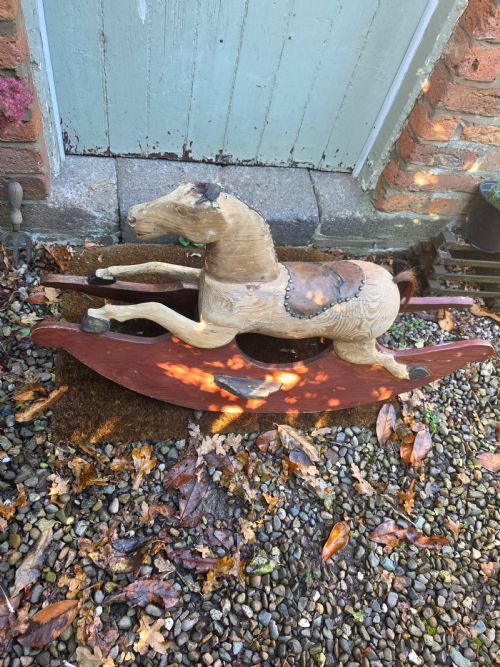
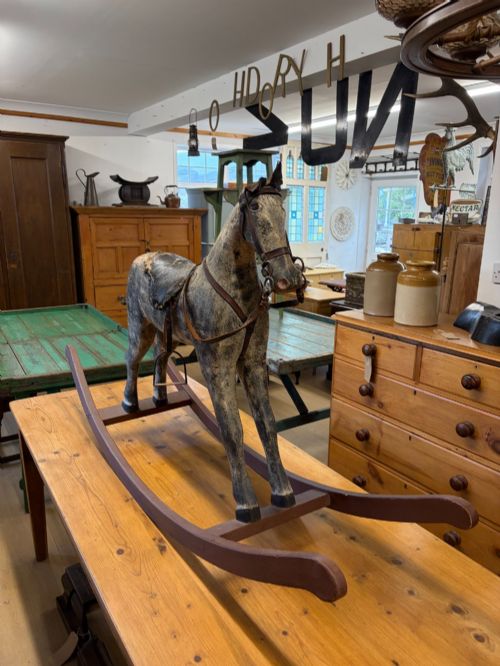
- A curved wooden arc attached to the feet of a rocking horse allowing it to sway back and forth. This traditional form predates the enclosed safety stands introduced in later decades.
- Dappled
- A painted spot pattern applied to the body of a rocking horse to imitate a grey horse's coat. Makers built up these patterns in layers over a base coat.
- Folk art
- Objects created by self-taught makers or anonymous workshops without formal academic training. These pieces prioritize expressive form and regional style over strict naturalism.
- Tack
- The harness, bridle, and saddle fittings attached to a riding horse. On antique toys, these are typically fashioned from leather and metal components.
- Safety stand
- A rigid wooden frame holding the horse on swinging irons rather than curved rockers. This design prevented the horse from tipping over during vigorous play.
Wooden Toy Rocking Horse: Frequently Asked Questions
How do I date a wooden toy rocking horse?
Dating relies on construction methods, paint layers, and the style of the rocker base. Earlier 19th-century examples often feature bow rockers and primitive hand-carved pine bodies.
Later pieces from the Edwardian and interwar periods introduced mechanical swing stands and refined workshop production marked by makers like Ayres or Lines.
Are these horses safe for children to ride?
Antique rocking horses are primarily valued as decorative sculptures and historical objects rather than modern nursery toys. Their aged wooden joints and iron components may not meet contemporary safety standards for active play.
Collectors generally place them in living spaces or display areas to preserve their original paint, leather, and horsehair elements.
What is the difference between folk art and workshop horses?
Folk art horses are naive, individually carved pieces often made by anonymous makers with simpler tools and distinctive regional styles. They emphasise character over strict anatomical accuracy.
Workshop horses come from established firms like Collinson or G & J Lines, utilising standardised construction, sophisticated carving, and factory-applied dappled paint.
How should I care for original paint and horsehair?
Keep the piece away from direct sunlight and steady moisture to prevent the wood from splitting and the original paint from flaking. Gentle dusting with a dry cloth is sufficient for maintenance.
Avoid chemical cleaners or abrasive treatments, as preserving the untouched surface safeguards the history of the object.