



Vintage Dapple Grey Horse
These vintage dapple grey horse pieces bring traditional craftsmanship and character into a room.
Vintage Dapple Grey Horse
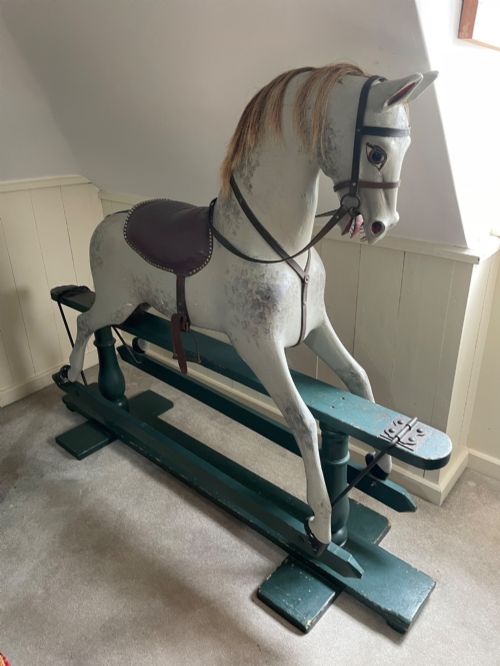
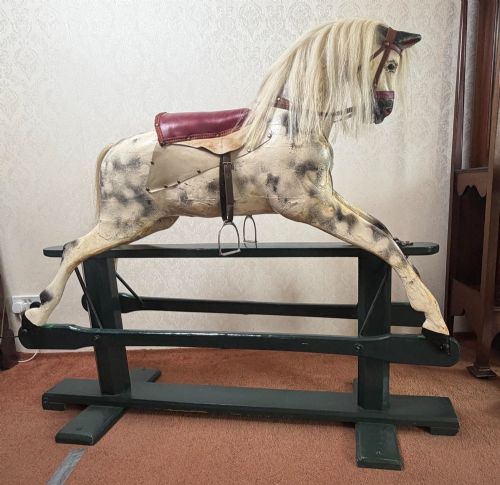
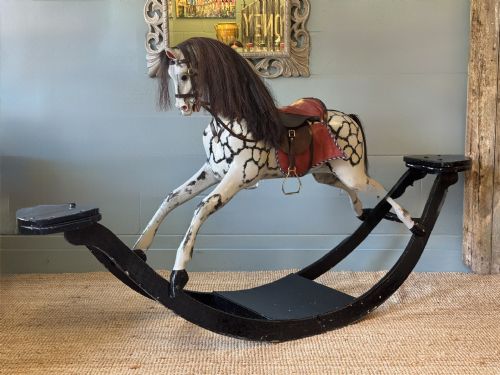
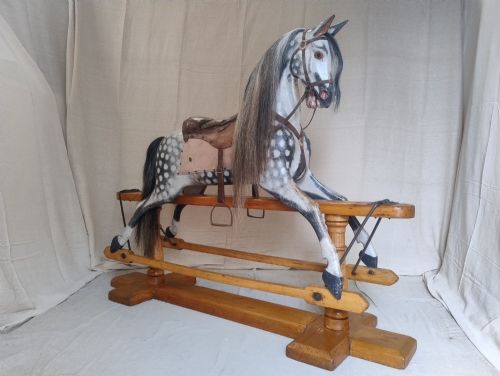
When you search for a vintage dapple grey horse, you encounter carved wooden rocking horses and related folk art pieces spanning the late nineteenth century through to the mid-twentieth century. The selection ranges from substantial Victorian examples mounted on curved wooden rockers to interwar and later works by notable makers.
Rocking horses form the majority of these listings, often featuring painted dappled surfaces alongside leather tack, real horsehair manes, and glass eyes. Alongside these carved wooden figures, occasional works such as period watercolours appear to complete the range.
How they were made
Makers shaped these animals primarily from carved pine and other woods, constructing the bodies around sturdy internal wooden or iron frameworks. Artisans then applied gesso and paint to achieve the characteristic dapple grey finish before adding tactile details.
Real horsehair provided the manes and tails, while leather and metal components formed the saddles, bridles, and stirrups. Glass eyes completed the lifelike appearance, anchored securely within the carved wooden heads.
Vintage Dapple Grey Horse Retail Price Guide 2026
Typical asking prices for vintage dapple grey horse among the pieces listed under this phrase on Sellingantiques today, from the lower quarter to the upper quarter. They describe what is for sale here now, not the wider market.
The documented periods span from the Victorian era through the Edwardian years and the interwar period.
What varies in quality
Quality rests upon the depth of the carving, the proportion of the animal, and the survival of original surface details such as the painted dapple pattern. Pieces retaining their original rockers, tack, and glass eyes command greater attention from collectors.
Maker attribution also elevates a piece, with documented works from established London firms displaying superior joinery and anatomical definition compared to anonymous workshop alternatives.
G & J Lines of London·F.H.Ayres·Collinson·Lines Bros
The Vintage Dapple Grey Horse Glossary
- Rocking horse
- A toy or decorative carving mounted on wooden bows or a safety stand designed to swing backward and forward. These figures often imitate real horses in posture and tack.
- Gesso
- A plaster mixture applied to the carved wooden body to provide a smooth base for painting. This layer holds the fine details of the dapple grey pattern.
- Folk art
- Utilitarian or decorative objects created by traditional craftsmen rather than academic artists. These pieces often display idiosyncratic charm and regional techniques.
- Curved rocker
- The wooden bow underneath a traditional rocking horse that allows it to glide across the floor. Early examples frequently utilise these curved timber arcs.
Vintage Dapple Grey Horse: Frequently Asked Questions
How old is my rocking horse?
Dating relies upon examining construction methods, nail types, and the style of the carving. Earlier nineteenth-century examples often feature curved wooden rockers and distinct anatomical proportions.
Later twentieth-century iterations shift toward safety stands and different maker marks. Comparing these physical traits against known workshop timelines helps narrow down the decade.
Are these horses safe for children?
Most antique rocking horses serve primarily as decorative items or collector pieces rather than modern toys. Their historical construction and aged materials may not meet contemporary safety standards.
Gentle use is sometimes possible depending on the structural integrity of the wooden frame and rockers. Professional assessment ensures the internal ironwork remains secure.
What is dapple grey?
Dapple grey describes a coat colour featuring dark grey spots or rings over a lighter grey or white base. In these pieces, artisans painted this pattern meticulously over a gesso ground.
Surviving examples show varying brushwork and spot densities depending on the workshop and period. This decorative finish remains a defining visual trait for the category.
How do I care for wooden horses?
Maintaining these pieces requires stable indoor humidity and protection from direct sunlight to prevent wood splitting and paint fading. Regular dusting with a soft, dry cloth preserves the gesso and surface finish.
Leather tack benefits from occasional suitable conditioning to prevent cracking. Avoid harsh chemical cleaners on any part of the painted surface.