



Wooden Toilet Glass
A wooden toilet glass provides a clear reflection and brings warmth to a dressing surface.
Wooden Toilet Glass
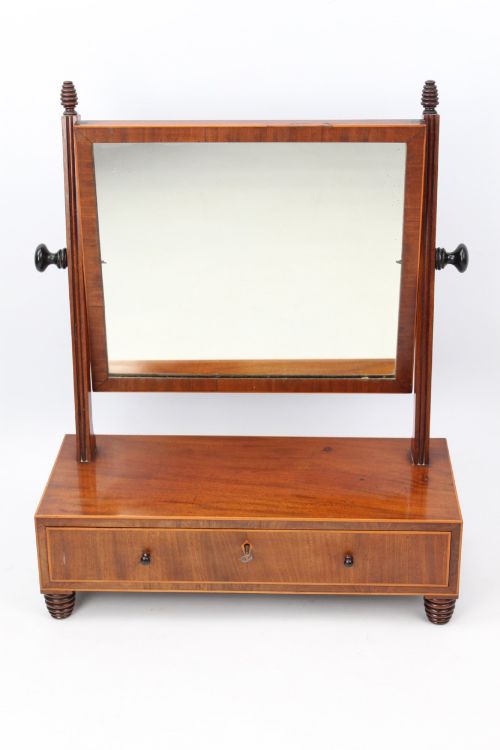
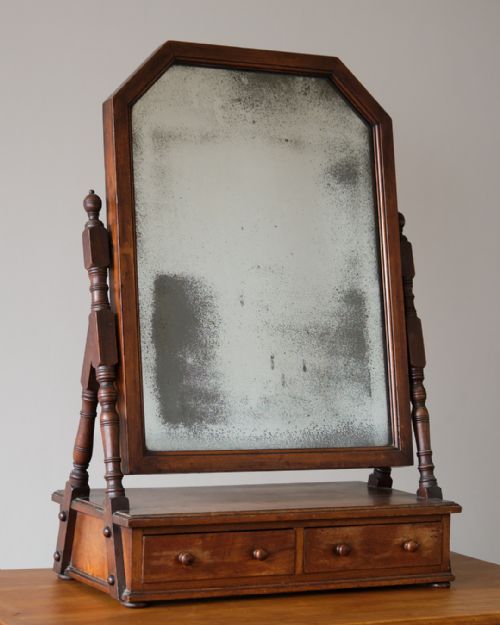
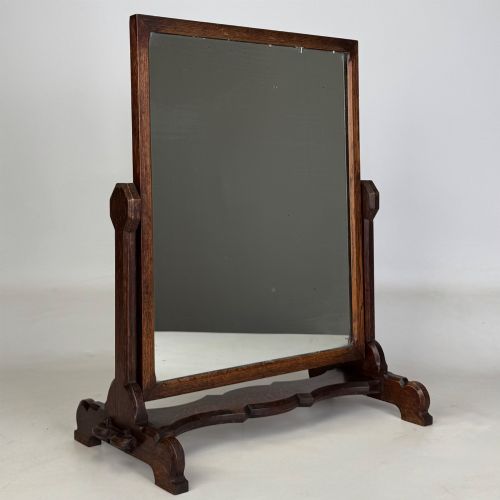
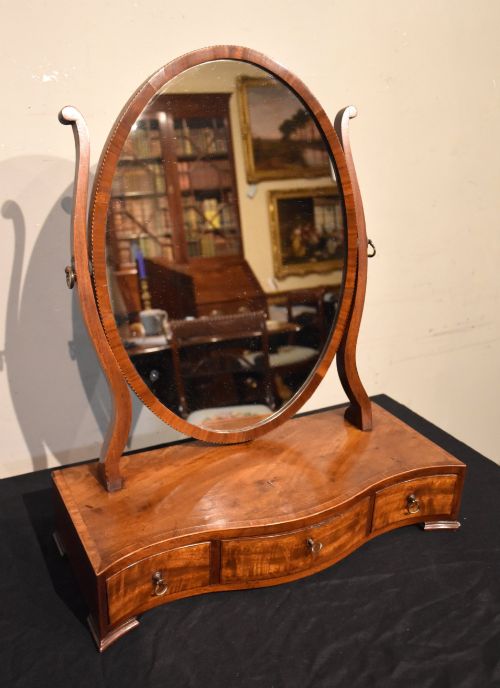
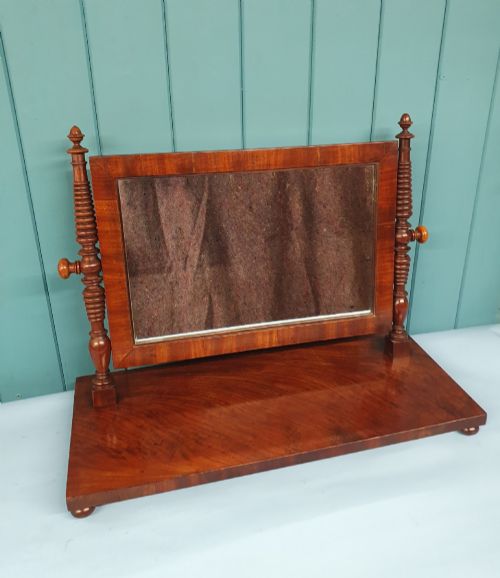
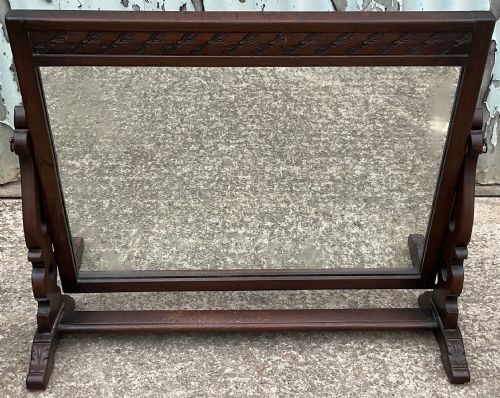
A wooden toilet glass is a tabletop or box-mounted mirror designed for grooming, commonly appearing in forms such as dressing table mirrors, toilet mirrors, and swing mirrors. These pieces sit upon chests or dressing tables, offering adjustable angles through side pivots set into upright arms.
The pieces on this page span several centuries, with particular strength in Georgian, Regency, and Victorian examples. Mahogany and walnut dominate the selection, often accompanied by brass fittings and occasionally incorporating storage drawers at the base.
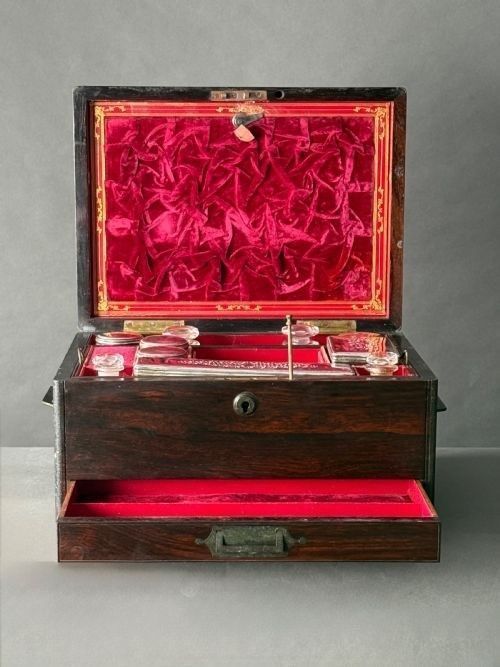
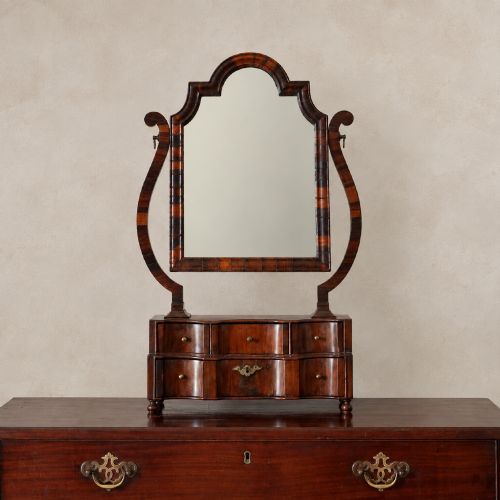
Formations range from simple rectangular swing plates to elaborate serpentine fronts with inlaid details. Buyers also encounter portable variations, including vanity boxes and dressing cases fitted with glass plates.
Construction and Materials
Cabinetmakers constructed these frames primarily using dense hardwoods such as mahogany, walnut, and rosewood, sometimes applying marquetry or ebony inlay for decorative contrast. Timber selection dictated the weight and durability of the upright supports and the stability of the box base.
Mirrors utilise genuine mirror glass secured within shaped wooden frames, suspended between upright posts using brass screw caps and pivots. The base often contains small drawers constructed with traditional dovetail joints to house personal items.
The listings span the 18th, 19th, and early 20th centuries, featuring forms in mahogany, walnut, oak, and rosewood.
Distinctions in Quality
Quality rests upon the choice of timber figure, the crispness of any inlay work, and the structural integrity of the pivoting mechanism. Finer examples display carefully matched veneers and robust framing that prevents the mirror plate from sagging over time.
The proportion between the glass plate and the wooden base distinguishes standard utilitarian pieces from exceptional ones. Superior items integrate the drawer box harmoniously with the upright supports, using refined mouldings and original brass hardware.
Heal & Sons·Gillows
The Wooden Toilet Glass Glossary
- Swing mirror
- A mirror hung on side pivots allowing the glass plate to tilt back and forth. This mechanism relies on brass screws or threaded bolts set into upright arms.
- Serpentine front
- A curved furniture front shaped in a continuous undulating line resembling a snake. This profile appears frequently on the drawer bases of Georgian dressing mirrors.
- Cheval mirror
- A full-length freestanding floor mirror supported by four legs and vertical posts. Unlike a toilet glass, it stands independently on the floor.
- Marquetry
- Decorative veneer work forming pictorial or geometric patterns using various coloured woods. It often decorates the base sections of Dutch and English mirrors.
Wooden Toilet Glass: Frequently Asked Questions
What is a wooden toilet glass?
A wooden toilet glass is a portable mirror designed to sit on a table or chest for personal grooming. These pieces combine a wooden frame and support structure with a tilting glass plate.
Most examples include a small box base equipped with drawers for storing small accessories. They gained widespread popularity during the Georgian and Victorian periods.
How do I date a wooden toilet mirror?
Dating relies on observing the timber species, construction joints, and the style of the mirror frame. Georgian and Regency pieces frequently utilise mahogany or walnut with delicate proportions and brass hardware.
Later Victorian and Edwardian examples often feature heavier mouldings and different framing profiles. Comparing the mirror plate characteristics and internal drawer construction helps confirm the period.
Where should I place a toilet mirror?
These mirrors suit placement on top of dressing tables, chests of drawers, or sideboards where they provide a functional reflective surface. Their compact footprint allows them to fit easily onto various wooden surfaces throughout a room.
Ensure the supporting surface is stable and level to support the weight of the frame and pivoting glass plate safely.
What is the difference between a toilet mirror and a vanity box?
A toilet mirror focuses primarily on a swiveling glass plate mounted above a supportive base or drawers. In contrast, a vanity box or dressing case is designed as a portable container that encloses compartments and often incorporates a mirror within the lid or interior fittings.
Both forms utilise fine hardwoods like mahogany and walnut, serving similar grooming purposes through different mechanical arrangements.